The dream is easy to sell. You unpack once, settle into your cabin, and let the river carry you through Europe while castles, vineyards, Christmas markets, medieval towns, and grand cities pass slowly outside your window. But when we looked closely at European river cruise complaints, a more complicated story appeared behind the glossy brochures.
This does not mean European river cruising is bad. Many travelers love it, and many come home with exactly the kind of memories they hoped for. The problem is that river cruising is often sold as effortless, elegant, and premium. When the real experience falls short of that promise, the disappointment can feel much bigger because the price is so high.
For our latest video, we looked specifically at guests who rated their river cruise average, poor, or terrible. These were not the glowing five-star reviews used in marketing. These were the voices of travelers who paid real money, took the trip, came home, and felt something important had gone wrong.
What stood out was not one isolated bad experience. It was the repetition. Different cruise lines, different rivers, different years, but the same frustrations appeared again and again. Food that did not feel premium. Excursions that involved more bus time than expected. Ships docking away from town. Balcony views blocked by another ship. Itinerary changes that turned a dream river cruise into something closer to a coach tour.
One sentence appeared in spirit across many of these reviews: we should have known before we booked.
That is the purpose of this article. Not to scare you away from river cruising, but to help you ask better questions before you pay a deposit.
What Disappointed River Cruise Guests Reveal
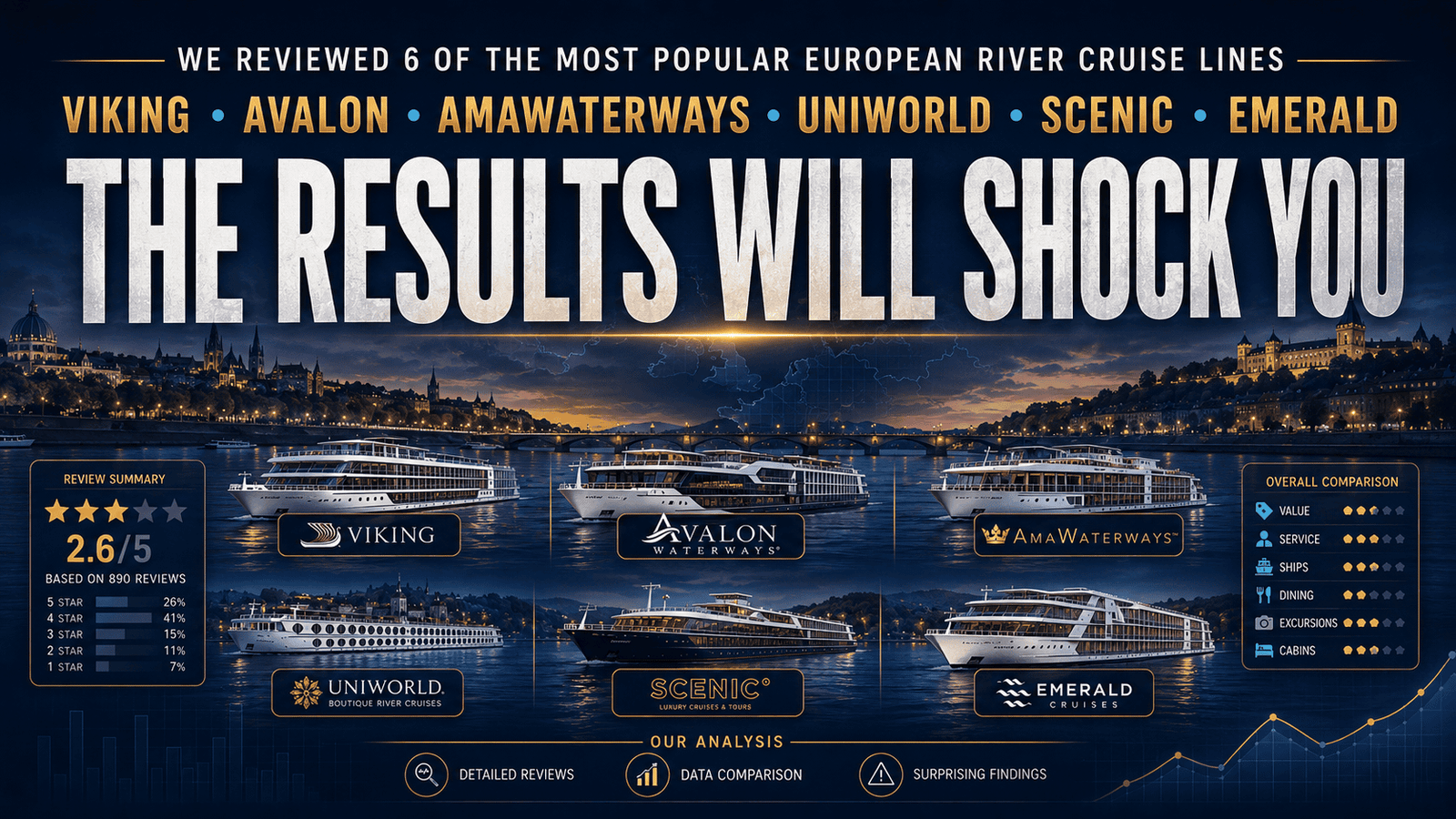
Disappointed guests are some of the most useful people to listen to when planning an expensive trip. They are not selling the dream. They are explaining where the dream broke down.
Many negative reviews did not say the entire cruise was terrible. That is important. In fact, some travelers praised the scenery, the guides, the crew, the cabins, or the destinations. Their frustration came from the total experience not matching what they believed they had purchased.
A river cruise can look simple from the outside. The ship moves. You relax. Europe appears. But behind the scenes, river cruising depends on many moving parts: water levels, locks, bridges, docking slots, local regulations, bus transfers, guide schedules, dining capacity, and ship positioning. When those moving parts work well, the trip can feel seamless. When they do not, the weaknesses become very visible.
This is why reviews matter. One bad review can be personal. Ten bad reviews can be noise. But when the same problems appear repeatedly across different brands and routes, they become warnings.
Those warnings do not automatically mean you should avoid a cruise line. They mean you should understand the risk before booking. A traveler who knows there may be coach transfers, fixed dining times, rafting at docks, or itinerary changes is much less likely to feel blindsided than someone who expected the brochure version every day.
European River Cruise Complaints: The Expectation Gap
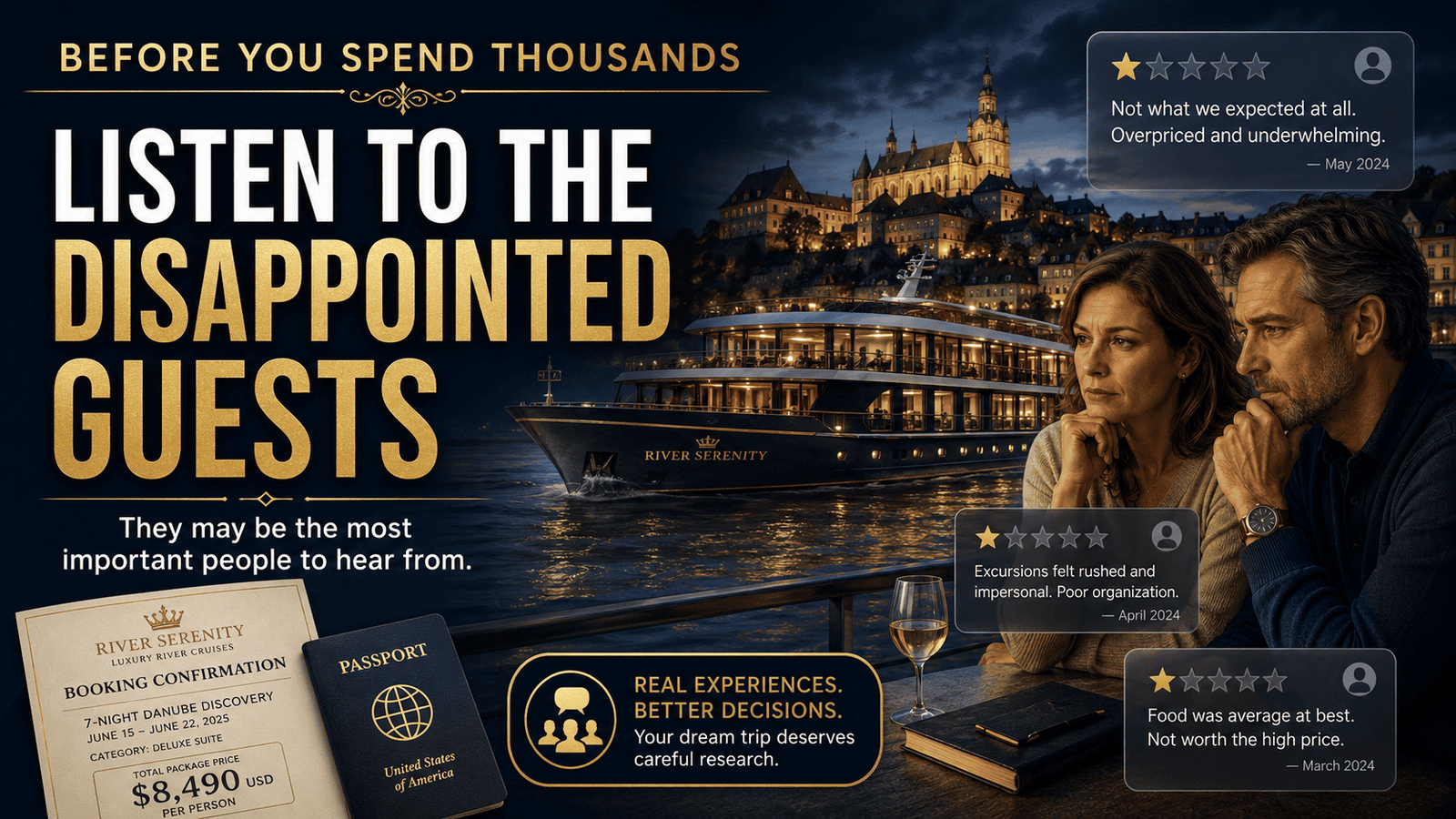
The first major pattern in the negative reviews was the expectation gap. This is the space between what travelers thought they were buying and what they actually experienced onboard.
River cruise marketing is powerful. It shows elegant interiors, regional meals, attentive service, wine on the table, and Europe drifting past the window. It often creates the feeling that everything will be smooth, refined, and easy.
But many lower-rated reviews described something more ordinary. Guests were not always saying the ship was bad. They were saying it did not feel as premium as the price or marketing suggested.
That difference matters. If a budget hotel feels average, many people accept it. If a luxury-priced cruise feels average, average can feel like failure. The higher the price, the higher the expectation. The more polished the marketing, the more painful it feels when the reality is rushed, crowded, delayed, or underwhelming.
This is one of the most important lessons from European river cruise complaints. The problem is often not one single failure. It is the slow accumulation of small mismatches. Dinner is not quite as good as expected. The ship docks farther away than expected. The included tour feels shorter than expected. The balcony view is not what was imagined. The sun deck closes for part of the cruise. Each issue may be understandable on its own, but together they can change how the whole trip feels.
Before booking, do not only ask whether a cruise line is “good.” Ask what kind of experience it is realistically able to deliver on the exact route, ship, season, and cabin category you are considering.
Food Was One of the Biggest Warning Signs
Food appeared again and again in disappointed guest reviews. That matters because dining is a major part of the river cruise promise.
Many cruise lines describe regional menus, fresh ingredients, local wines, and meals inspired by the places you are visiting. Guests imagine long, relaxed dinners after a day exploring Europe. They expect the dining room to feel like part of the journey.
Some travelers do experience that. But many disappointed guests described food that felt bland, cold, repetitive, overcooked, undercooked, too salty, or simply not special enough for the price paid.
The issue was not only taste. It was also flexibility. River ships are small, so there is often one main dining room, one main dinner period, and limited alternatives. If dinner disappoints, you may not have many other onboard options. Unlike a large ocean ship, there may not be several restaurants, casual venues, or late-night choices.
One of the most revealing complaints involved a guest who believed dinner was available during a broad time window. They waited for the opening rush to pass, arrived later, and found that some courses were no longer available. Instead of a full dining experience, they felt they were given what was left.
That kind of detail matters because it changes the feeling of hospitality. A premium cruise should not feel like guests are being punished for arriving later within the advertised dining period.
Before booking, look closely at how dining works. Is dinner fixed or flexible? Are there alternative venues? Is there casual dining? Is room service available? Are regional dishes a major feature or more of a marketing phrase? The answers can make a big difference once you are onboard.

When a River Cruise Starts to Feel Like a Bus Tour
Another repeated complaint was the “bus tour problem.” Many guests thought they were buying a river cruise but felt that parts of the trip became more like a coach tour.
The brochure image is beautiful. The ship docks beside a charming old town. You walk off the gangway and everything is right there: cafés, cathedrals, markets, vineyards, and historic streets.
Sometimes that really happens. But not always.
Many disappointed guests described ships docking outside town, in industrial areas, across the river, or far enough away that coach transfers were needed. Some bus rides were short. Others were one or two hours each way. When river conditions or delays affected the schedule, some guests felt they spent more time being moved by road than sailing by river.
This does not mean coach transfers are always bad. Some destinations cannot be reached directly by ship. Some travelers enjoy guided touring by coach. The issue is expectation.
If a cruise itinerary requires significant bus time, guests should understand that before they book. A traveler who expects to step directly into the heart of each destination may feel disappointed if the reality involves industrial docks, early departures, and long transfers.
Christmas market cruises are a good example. The dream is evening lights, festive music, warm drinks, and time to wander. But some reviewers described arriving before markets fully opened, leaving before the atmosphere built, or having far less free time than expected.
Before booking, ask how much coach time is built into the itinerary. Also ask whether the ship usually docks near town or whether transfers are common. You may not get a guarantee, but the answers can help you understand what kind of trip you are really buying.
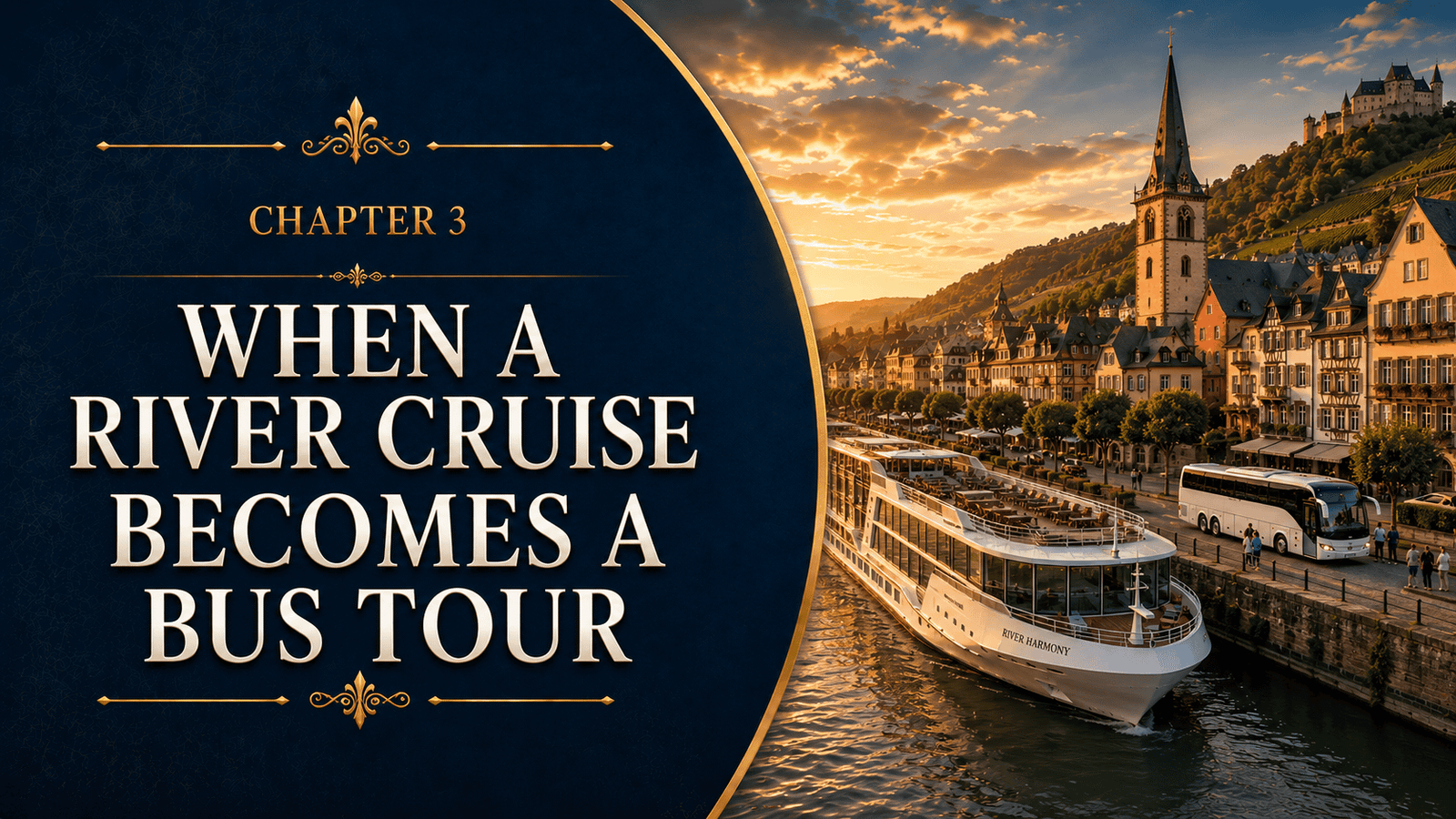
Docking, Locks, Bridges, and the Reality of River Travel
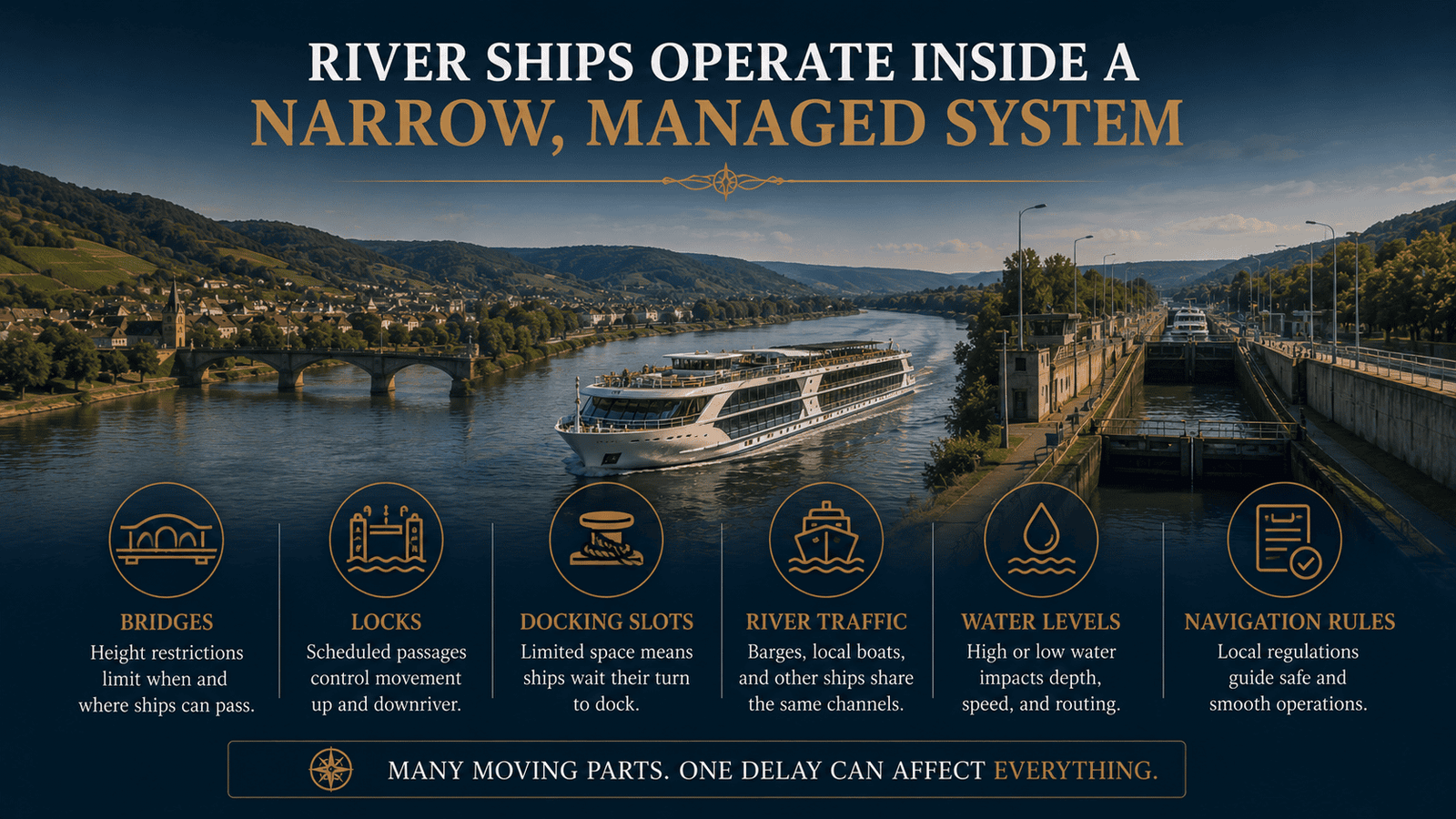
River cruising is very different from ocean cruising. Ocean ships face their own challenges, but river ships operate inside a narrow managed system. They must deal with bridges, locks, docking slots, river traffic, water levels, and local navigation rules.
Locks are one of the best examples. A river ship cannot simply arrive and pass through whenever it wants. Traffic has to be managed. If a ship is delayed earlier in the day, it may lose its timing window. That can affect the next port, the next excursion, and sometimes the entire itinerary.
Low bridges create another issue. On some routes, the sun deck has to be closed for safety. Several disappointed guests mentioned the upper deck being unavailable for much of the cruise. That matters because the sun deck is one of the few open-air public spaces on a river ship.
If the sun deck is closed for days, the experience changes. You may still be cruising through Europe, but you have lost one of the main places where passengers expect to sit outside and enjoy the scenery.
These operational details rarely receive much attention in marketing, but they affect daily life onboard. They are not always signs of bad service. Often, they are part of the reality of river travel. But travelers should know they can happen.
The more you understand the operational limits, the less likely you are to feel misled if the schedule changes.
The Balcony View Problem Many First-Time Cruisers Miss
Many first-time river cruisers pay extra for a balcony, French balcony, or panoramic window because they imagine waking up to castles, vineyards, and riverbanks outside their room.
Sometimes that is exactly what happens. A beautiful river view can be one of the best parts of the trip.
But one of the most common surprises in European river cruising is rafting. This is when river ships dock side by side because port space is limited. When that happens, your balcony may not face the river. It may face another ship directly.
Sometimes the ships are close enough that passengers can see straight into each other’s cabins. Several reviewers said they had to keep their curtains closed, which made the expensive view feel almost unusable.
This is not necessarily the fault of one cruise line. Rafting is part of river cruising. The problem is that many travelers do not know about it before booking.
A balcony cabin does not guarantee a private river view every day. It gives you the possibility of a better view when conditions allow. That difference may sound small, but it matters if the balcony price is a major part of your booking decision.
Before paying extra, ask yourself how much the balcony matters to you. If the idea of occasionally facing another ship would ruin the value, you need to think carefully about whether that upgrade is worth it.

When the Itinerary Changes Completely
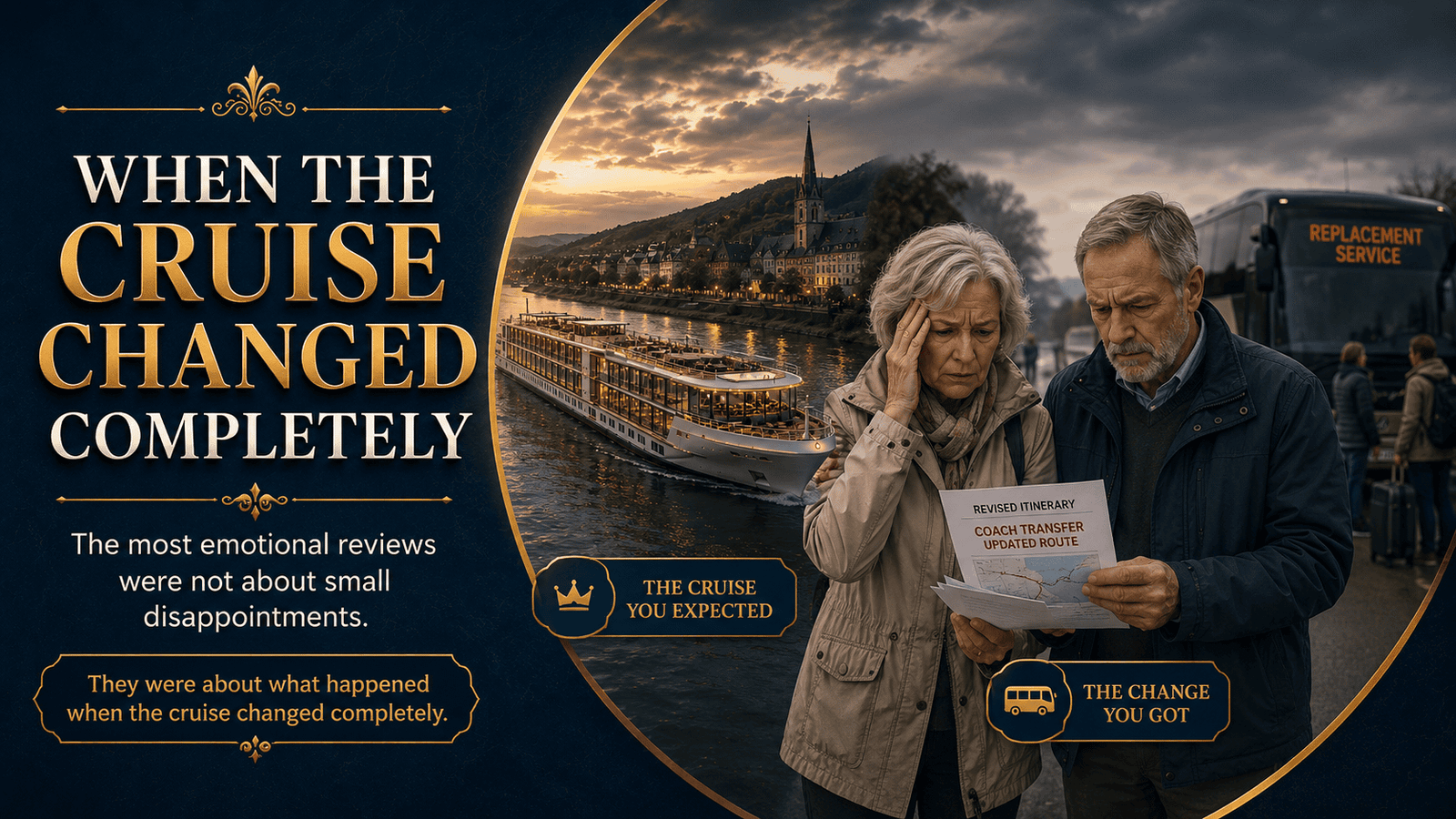
The most emotional reviews were often about major itinerary disruptions. These are the moments when the cruise changes so much that guests feel they did not receive the trip they paid for.
River cruising is fragile. High water can stop ships from passing under bridges. Low water can make sailing unsafe. Locks can break. Docking slots can change. Sometimes passengers have to switch ships, move to hotels, or continue between ports by coach.
Some of this is outside the cruise line’s control. No company controls the river, the weather, or every lock on the route. Safety must come first.
But cruise lines do control communication, contingency planning, and compensation. That is where many disappointed guests became frustrated.
Some reviewers described cruises that became mostly bus-based because the ship could not complete the route. Others said they were moved to another ship mid-cruise and felt the replacement was not equal to the one they had booked. For passengers, that is not a minor adjustment. They paid for a river cruise, not a coach tour with ship transfers added in.
Refunds and compensation were another sensitive issue. Some guests said they received no cash refund or only a future cruise credit. But if a traveler has lost trust in a company, future credit may not feel like compensation. It may feel like being asked to spend more money with the same brand after a disappointing experience.
Before booking, ask what happens if the ship cannot sail. Will you be moved to another ship? Placed in hotels? Transported by coach? Is cash compensation possible, or only future credit? These are uncomfortable questions, but they are much easier to ask before you pay than after the itinerary has fallen apart.
Why Communication Matters as Much as Compensation
Many guests understand that river conditions can change. They know safety comes first. What they often cannot accept is feeling uninformed, dismissed, or told too late.
Several negative reviews described passengers being given vague explanations, receiving updates only after problems were obvious, or arriving for embarkation to discover the ship was not where they expected. Others said advertised experiences were replaced with little notice or explanation.
This matters because river cruising is a trust-based product. Guests are paying the cruise line to manage many details they cannot manage themselves: ports, guides, buses, docks, locks, transfers, luggage, timing, and route changes.
When something goes wrong, passengers want to feel that the company is being honest with them. They want to know what is happening, what options they have, and whether the company already knew there was a risk before the cruise began.
Good communication does not remove disappointment, but it can reduce anger. Poor communication can make even understandable disruptions feel disrespectful.
This is why recent reviews are so useful. They can reveal whether a cruise line handles problems clearly and professionally or whether guests repeatedly feel left in the dark.

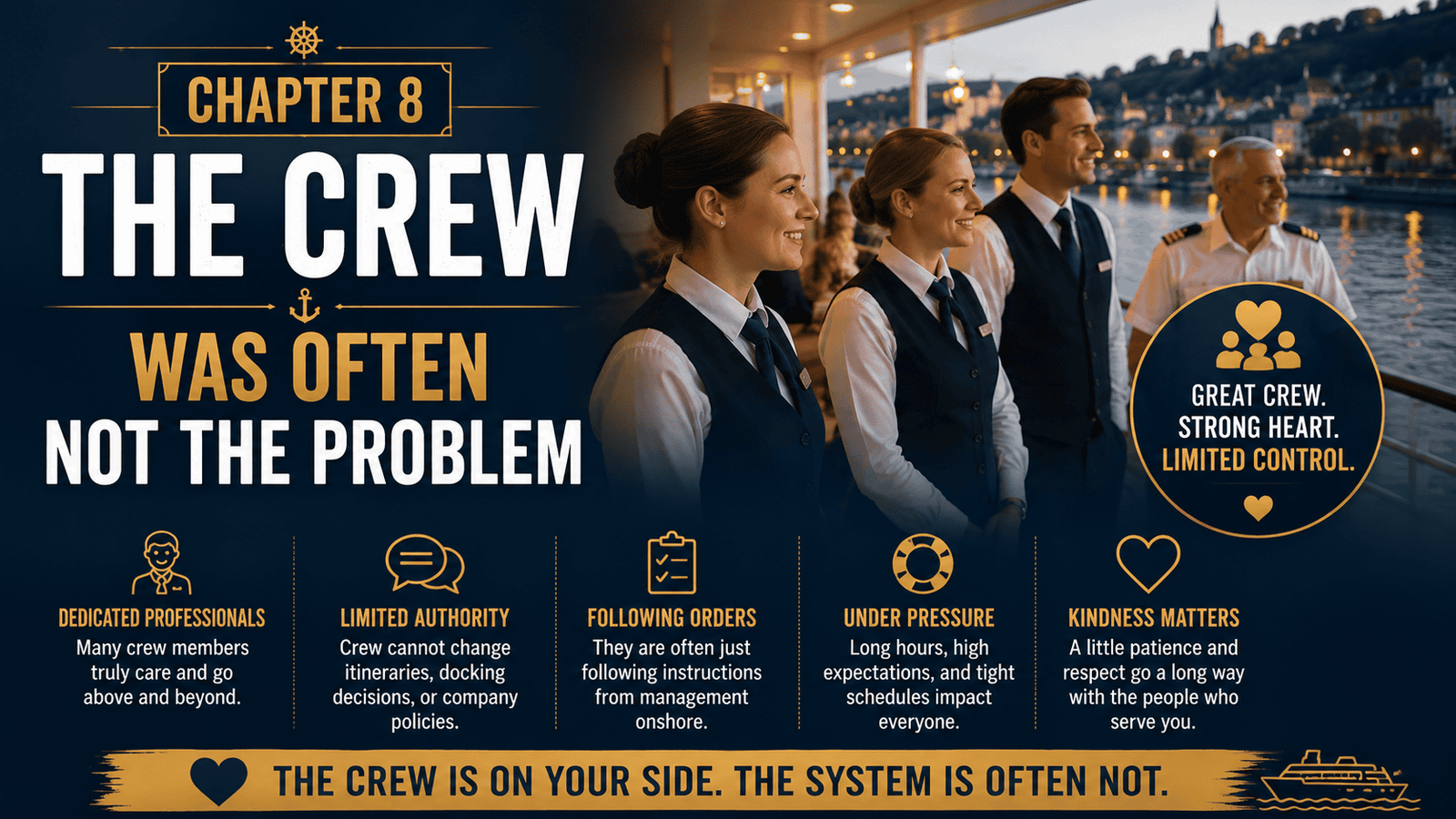
The Crew Often Was Not the Problem
One of the most interesting patterns in disappointed reviews was that many guests still praised the people onboard.
Even in negative reviews, passengers often mentioned hardworking waiters, kind housekeepers, helpful cabin attendants, knowledgeable guides, and crew members trying to make the best of difficult situations. That tells us something important.
Many complaints were not really about individual staff. They were about the structure of the product.
A waiter cannot fix a poor docking location. A housekeeper cannot change the itinerary. A guide cannot control river levels. A cruise director may not be able to change a corporate compensation policy. The crew may be doing everything they can while still working inside a system that disappoints guests.
This is why it is important to separate service from product design. A cruise can have wonderful crew members and still have problems with dining structure, excursion planning, communication, or itinerary resilience.
When reading reviews, pay attention to that distinction. If guests repeatedly praise the staff but criticize the same operational issues, the problem may be deeper than one bad sailing.
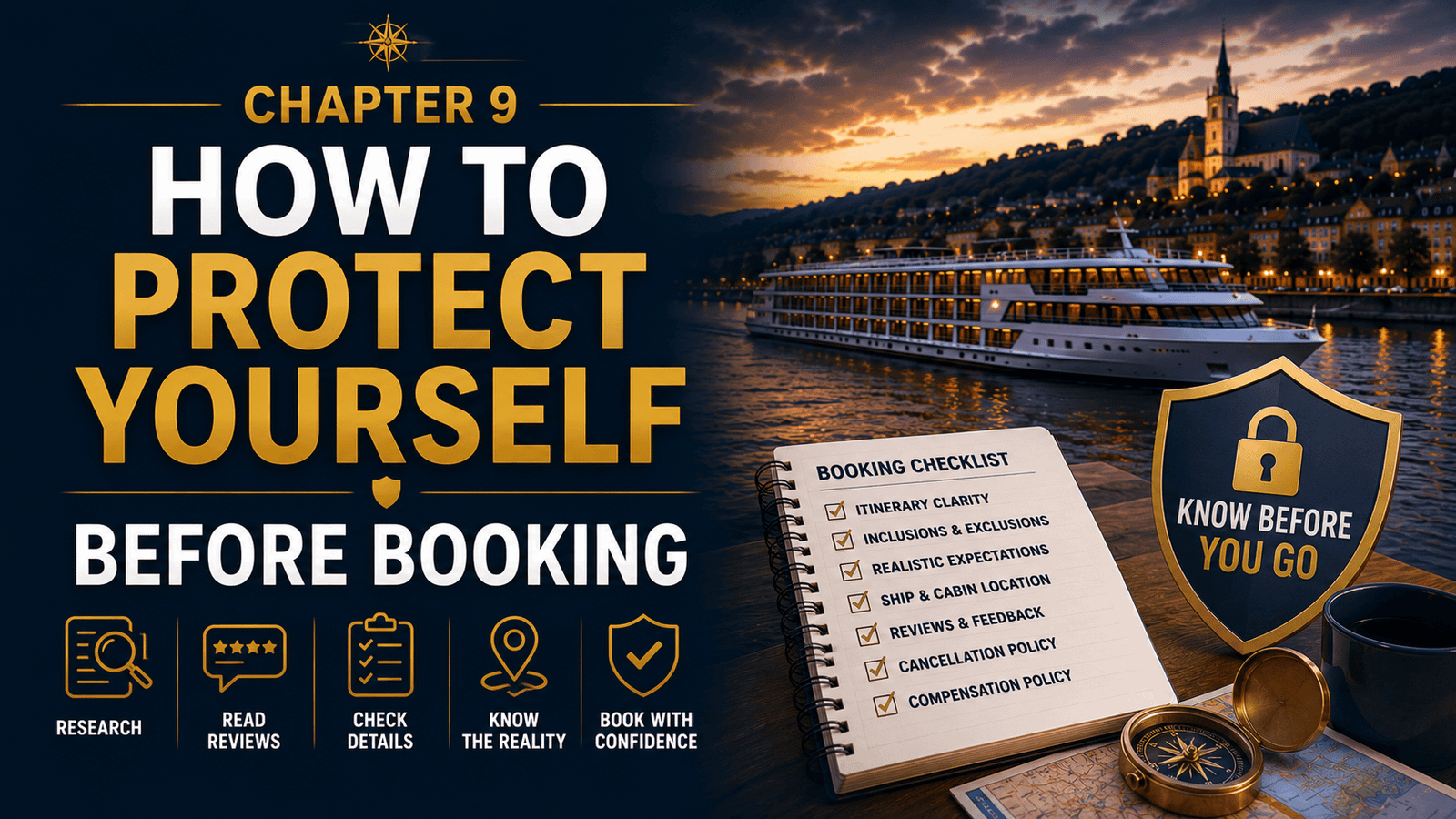
Questions to Ask Before You Book
The biggest lesson from European river cruise complaints is simple: ask practical questions before you book, not emotional questions after you are disappointed.
Do not only ask, “Is this a good cruise line?” Ask about the exact ship, exact route, recent reviews, docking locations, included excursions, dining setup, cabin category, and disruption policy.
Look for patterns in reviews. Are guests repeatedly mentioning long bus rides, industrial docks, rushed excursions, limited free time, closed sun decks, food complaints, or poor communication? One review may not matter. Repeated themes should make you pause.
Ask how much bus time is built into the itinerary. Ask whether tours are mostly walking tours, panoramic coach rides, or inside visits. Ask what is actually included in the fare: drinks, gratuities, transfers, premium excursions, casual dining, bikes, and airport support.
Dining deserves special attention. Is there one dinner time or flexible dining? Are there alternative restaurants? If you arrive later, is the full menu still available? Is the food a major strength of the line, or simply adequate?
Most importantly, ask what happens if the ship cannot sail. This is the question many travelers miss. River cruising is beautiful, but it depends on river conditions. You need to know the backup plan before you need it.
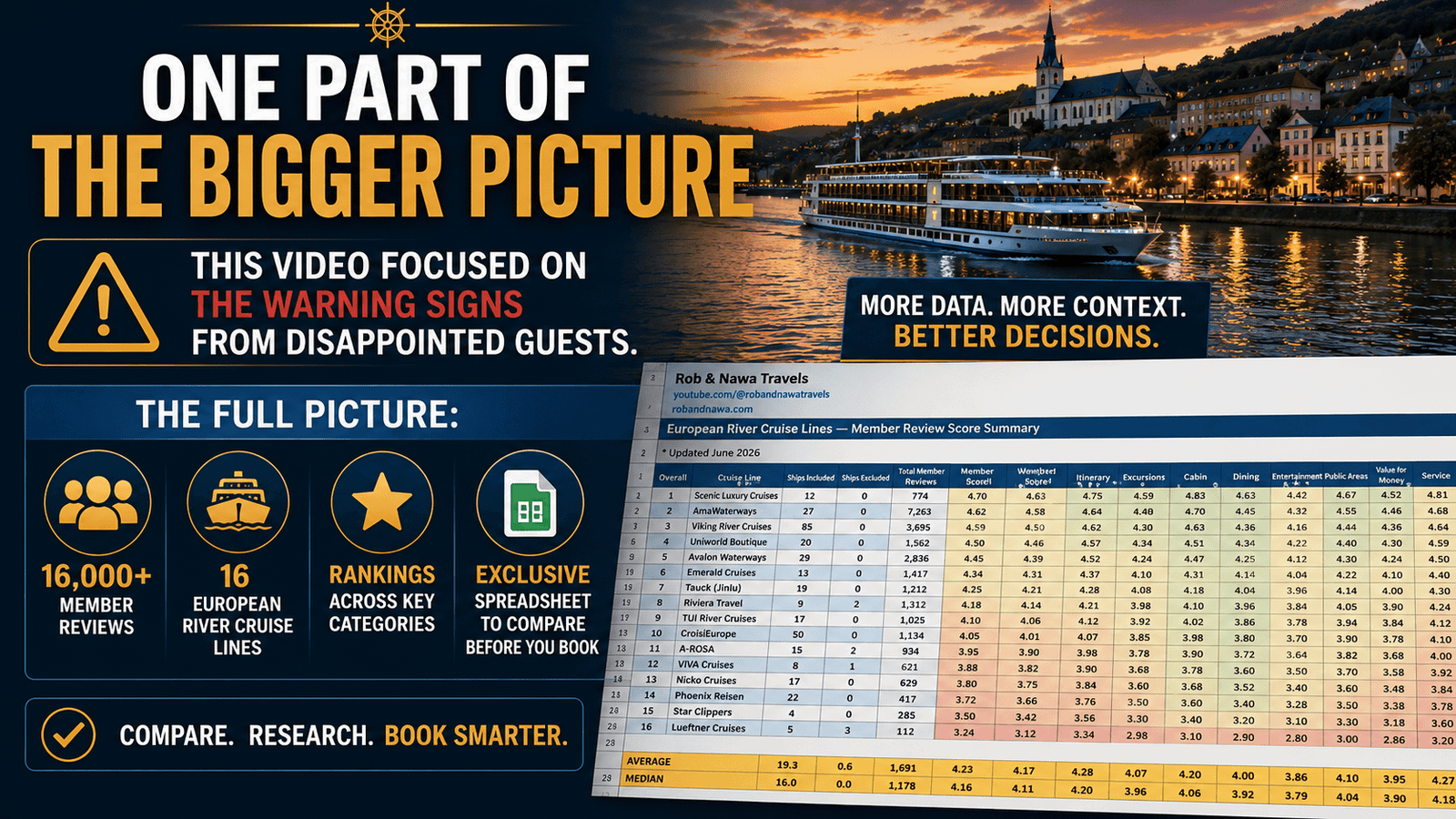
Use Our Free River Cruise Comparison Spreadsheet
To help travelers compare the wider market before booking, we created a free river cruise comparison spreadsheet. It is designed to help you look beyond advertising and compare ships, scores, categories, and key differences before making a decision.
You can view the spreadsheet here: https://docs.google.com/spreadsheets/d/1HKdD_7YA3rUWLk5AE1iXBCb6d2DC_hPW1Y0df3ZOM7Y/edit?usp=sharing
Use it as a planning tool alongside recent reviews for the exact ship and route you are considering. The spreadsheet can help you narrow the field, but recent passenger feedback can help you understand what the experience feels like in real life.
You may also want to read our wider European river cruise resources, including our European river cruise comparison guide at https://trustytraveltips.com/european-river-cruise-comparison-guide/ and our main European river cruise comparison at https://trustytraveltips.com/european-river-cruise-comparison/
When you are ready to compare current river cruise options, you can also check availability through Cruise Direct here: https://trustytraveltips.com/go/river
Some links may be affiliate links, which means we may earn a commission if you book through them, at no extra cost to you.
Final Thoughts: Listen to the Disappointed Guests Too
It is easy to focus on the dream of river cruising. And to be fair, that dream can be real. Many travelers do glide through Europe, enjoy beautiful scenery, meet excellent crew, eat memorable meals, and come home delighted.
But expensive trips deserve careful planning. The disappointed guests are worth listening to because they reveal the weak points that marketing often leaves out.
They show where expectations fail. They show where communication breaks down. They show how a balcony can lose its value, how a cruise can become bus-heavy, how dining can feel less premium than expected, and how itinerary changes can turn a dream holiday into a stressful experience.
The purpose of reading European river cruise complaints is not to become negative. It is to become prepared.
A well-prepared traveler knows that not every dock is scenic, not every balcony view is private, not every tour begins beside the old town, and not every itinerary is guaranteed. That traveler asks better questions, reads recent reviews, compares inclusions, and understands the backup plan before booking.
That is how you protect your money, your expectations, and your holiday.
A European river cruise can still be a wonderful way to see the continent. But the best trip is not the one with the prettiest brochure. It is the one where the reality matches what you understood before you paid.