
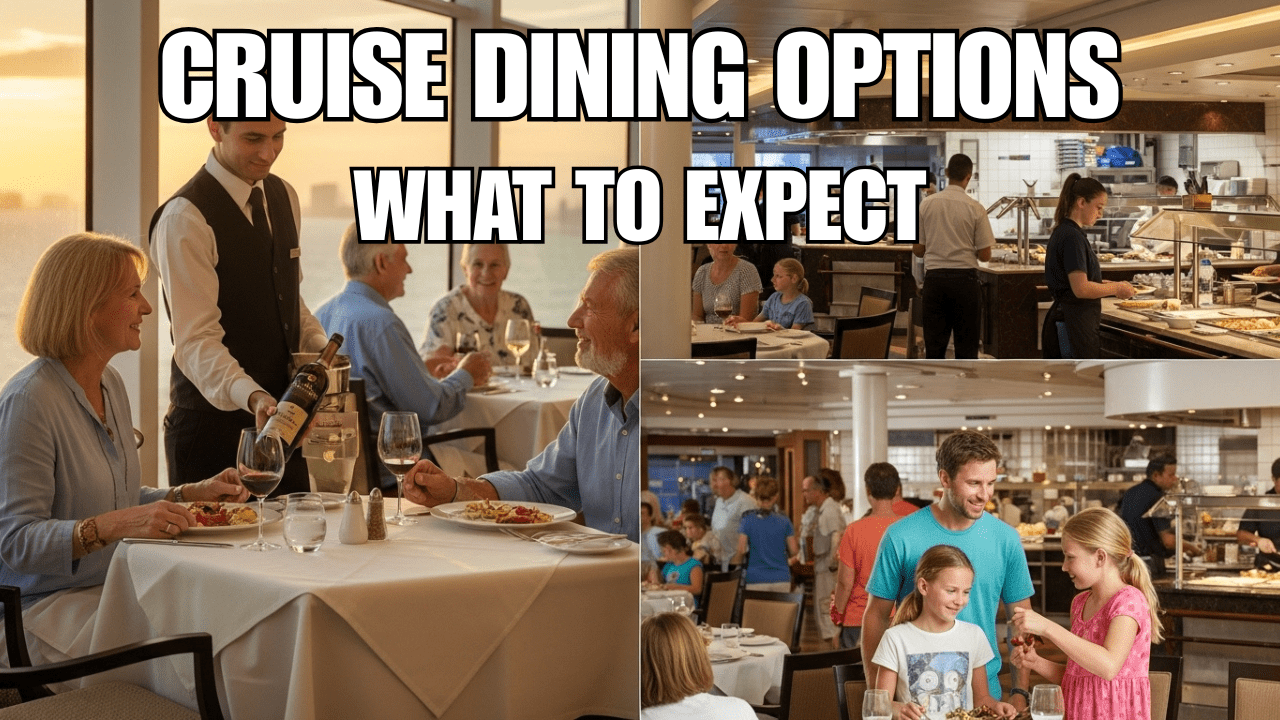
Choosing a cruise isn’t just about the itinerary or the ship size – your overall experience can be dramatically shaped by the cruise dining options on board. From casual buffets and main dining rooms to white-tablecloth speciality venues and 24/7 room service, each cruise line – and each “star level” – offers something different.
In this guide, we compare dining on 3, 4 and 5 star cruise ships – or what the cruise industry typically calls budget, premium and luxury cruise lines. We look at premium lines popular with senior travellers (Viking, Regent, Saga) versus more family- and mainstream-oriented brands (Disney, Carnival and similar). You’ll learn what’s usually included in the base fare, how speciality restaurants work, what to expect from room service, and how dining reservations are handled.
If you’re comparing cruise lines more broadly beyond just dining, our complete guide to the best cruise lines for seniors looks at comfort, inclusions, service levels and overall value across premium and luxury brands.
Plan & Book Your Cruise (Including Dining)
Before you dive into the finer points of cruise dining options, it helps to have the rest of your trip organised. These are the tools we personally use to book cruises and everything around them:
- Cruises: Compare cruise lines, ships and itineraries – including what’s included at mealtimes – on CruiseDirect. It’s an easy way to see deals across multiple lines in one place.
- Flights: Use KAYAK to find flights to and from your embarkation port, including budget carriers and smaller sites other engines often miss.
- Hotels: Book pre- and post-cruise stays near the port or in the city centre with Booking.com, which usually has a large range of properties and flexible cancellation.
- Tours & shore excursions: Compare ship tours with independent options on GetYourGuide. You’ll often find small-group or skip-the-line tours that fit neatly around dining times.
- Travel insurance: Cruises bundle flights, hotels and onboard spending, so we like flexible cover from VisitorsCoverage to protect the whole trip.
- Spending money: We use a Wise travel card for low-fee international payments and good exchange rates when tipping in restaurants and paying bar bills in port.
If you’d like a broader overview of how different cruise lines operate worldwide, the Cruise Lines International Association (CLIA) provides industry-level information on cruise standards, ship types and guest experience.
Understanding Cruise Dining Options by “Star” Level
3 Star Cruise Lines (e.g., Carnival, many mass‑market brands)
On typical 3 star or mass‑market cruises:
-
Included in base fare:
- Main dining room (MDR) with set or flexible seating
- Large buffet restaurant for breakfast, lunch, and dinner
- Some grab‑and‑go venues (pizza, burgers, deli counters)
- Basic non‑alcoholic drinks at meals (water, coffee, tea; sometimes juices at breakfast)
-
Extra cost options:
- Speciality restaurants (steakhouses, seafood, Italian, etc.)
- Premium coffee bars and branded cafés
- Room service (sometimes free late at night, sometimes with a delivery fee or à la carte pricing)
These ships emphasise choice and volume: plenty of food, lots of variety, but a mix of included and extra‑fee venues.
4 Star Cruise Lines (e.g., Disney, some premium mainstream lines)
4 star lines raise the quality and theming:
-
Included in base fare:
- Main dining rooms with more elaborate menus
- Rotational dining concepts (e.g., Disney Cruise Line’s themed restaurants where your servers follow you)
- Enhanced buffet and family‑friendly venues
- More premium presentation and service than typical 3-star lines
-
Extra cost options:
- Upscale speciality dining (adults‑only fine dining, chef’s tables)
- Branded coffee, smoothies, and dessert bars
- Some room service items may carry a fee or gratuity
You’re paying for better décor, service and themed experiences, especially on family‑focused brands like Disney.
5 Star Cruise Lines (e.g., Viking, Regent, Saga)
5 star and luxury lines focus on quality, not quantity, and often include much more in the fare:
-
Included in base fare (typically):
- Multiple sit‑down restaurants with no extra cover charge
- High‑quality buffet that feels more like a casual restaurant
- Pool grill and alternative venues with elevated menus
- Many alcoholic and non‑alcoholic drinks (especially on ultra‑luxury brands like Regent)
- Room service, often 24 hours and included
-
Extra cost options:
- Occasionally a very high‑end or chef’s table venue
- Premium or rare wines and spirits
- Some special culinary experiences (e.g., exclusive wine‑pairing dinners)
For senior travellers who value comfort, quiet and service, these lines offer a more inclusive and less “nickel‑and‑dimed” dining experience.
Understanding these differences between 3, 4 and 5 star ships makes it much easier to compare cruise dining options when you’re choosing between two itineraries or cruise lines.
What’s Included in the Base Fare?
Main Dining Rooms and Buffets
On almost all cruise lines, your main dining room and buffet are included in the base fare:
- 3 star (Carnival and similar):
- Large MDRs with multi‑course dinners and changing menus
- Buffets with plenty of choice but a more casual feel
- 4 star (Disney and similar):
- Themed MDRs with higher‑end menus and more polished service
- Buffets that feel more curated, plus family‑friendly casual venues
- 5 star (Viking, Regent, Saga):
- Multiple restaurants that would count as “speciality” on other lines, but are often all included
- Buffets with made‑to‑order stations and high‑quality ingredients
Casual and Poolside Dining
Most ships provide casual dining that’s also included:
- Burgers, hot dogs, pizza, salads, and sandwiches
- Afternoon tea is particularly common on more traditional or British‑influenced lines like Saga, often included and with a refined presentation.
- Pool grills on premium lines (e.g., Viking, Regent) may serve freshly prepared seafood, steaks or gourmet burgers with less of the “fast food” vibe.
When you’re comparing cruises, it’s worth listing out exactly which dining venues are included versus extra-fee on each line. Our free Cruise Budget Planner has a dedicated section for onboard spending so you can factor in speciality restaurants and paid cafés alongside the base fare.
How Speciality Restaurants Work on Different Cruise Lines
Speciality Dining on 3 & 4-Star Lines (Carnival, Disney, etc.)
If you love trying different restaurants but are travelling on a budget, it can make sense to save speciality dining for sea days or special occasions. Our guide to finding the best cruise deals also covers how to value included dining versus paid extras when comparing fares.
On mainstream and family‑oriented ships:
- Speciality restaurants usually charge:
- A fixed cover charge (e.g., steakhouse, Italian, teppanyaki)
- Or à la carte pricing, similar to a land‑based restaurant
- Popular venues can sell out quickly, so reservations are highly recommended.
- Some lines offer dining packages that pre‑bundle several speciality dinners at a discount.
Carnival and similar mass‑market lines:
- Often feature steakhouses, seafood restaurants and speciality dessert or coffee venues.
- The main dining and buffet offer solid value, but for a finer experience, you usually pay extra.
Disney Cruise Line:
- Offers adult‑only dining venues such as Palo or Remy (depending on the ship), which require a cover charge.
- These are popular with couples and food lovers who want a quieter, more refined meal away from the family bustle.
Speciality Dining on 5-Star Lines (Viking, Regent, Saga)
On premium and luxury lines, the picture is quite different:
- Viking (Ocean Cruises):
- Many speciality‑style venues (e.g., Italian, Chef’s Table concepts) are included in the fare.
- However, reservations are limited, and not all guests can dine there every night.
- Access to advance reservations is often allocated by stateroom category:
- Higher‑category suites are typically allowed to book speciality restaurants earlier and for more nights.
- Lower‑category cabins may have shorter booking windows and fewer guaranteed reservations.
- Regent Seven Seas:
- Frequently described as “ultra‑all‑inclusive.”
- Speciality dining is typically included with no extra cover.
- Guests may still need reservations for popular venues, but there’s no added fee.
- Saga Cruises (for 50+ travellers):
- Focus on traditional, relaxed, high‑quality dining.
- Certain alternative restaurants may require reservations, but often remain included rather than extra‑fee.
- The atmosphere is generally calmer and more formal, suited to senior travellers.
In summary, 3 and 4-star lines tend to treat speciality dining as a paid upgrade, whereas 5-star lines often include speciality venues in the base fare but control access through reservations and cabin category.
On premium and luxury lines, you may not be paying extra at the door, but speciality restaurants are still a limited resource. If you book a higher-category cabin or suite, you’re effectively paying for better access to these cruise dining options through earlier reservations and more guaranteed nights.
Room Service: Included or Extra?
Carnival, Disney and Similar Lines
Room service policies can be quite varied:
- Carnival and other 3-star brands:
- Basic items may be free during limited hours, but many lines have shifted to per‑item or per‑delivery fees.
- Late‑night orders often carry a surcharge.
- Disney Cruise Line:
- Traditionally known for complimentary room service on many sailings, but some premium items (e.g., speciality snacks, drinks) may incur a charge or gratuity.
- Policies can change, so checking your specific ship and itinerary details is essential.
Viking, Regent and Saga
Premium lines typically offer a more generous approach:
- Viking Ocean Cruises:
- Room service is typically included and available 24/7.
- You can enjoy full meals in your stateroom, which is particularly appreciated by senior travellers or anyone who prefers a quiet evening.
- Viking River Cruises:
- A key subtle difference: room service is generally not included or may not be available in the same way as on Viking’s ocean ships.
- River vessels are smaller, with fewer venues and a more intimate schedule, so guests are encouraged to dine in the restaurant.
- Regent Seven Seas:
- Known for offering complimentary room service, often including full dining‑room menus during meal times.
- You can have a fine‑dining dinner set up course by course in your suite.
- Saga Cruises:
- Typically provides included room service, especially in higher‑grade cabins, with continental breakfast and light meals often available at no extra charge.
For travellers, especially seniors or those with mobility concerns, these differences are important when choosing a line.
Because room service policies can vary even within the same brand, it’s a good idea to check the latest details in your cruise planner and add any likely charges into your budget. We track these extras in our Cruise Budget Planner and make sure our travel insurance from VisitorsCoverage covers the overall value of the trip, not just the base fare.
Cruise Dining Options: Reservations and How They’re Allocated
Reservation Systems on Viking and Premium Lines
If you’re sailing with Viking specifically, our Viking Ocean cruise tips article goes into more detail on how dining reservations work in practice and how to make the most of included speciality venues.
On Viking Ocean Cruises, reservations for included speciality restaurants are:
- Required for most speciality venues due to limited seating.
- Allocated based on stateroom category:
- Higher categories (e.g., suites) get:
- Earlier access to the reservation system.
- More guaranteed dinners in speciality venues.
- Standard cabins get:
- Shorter booking windows.
- Fewer guaranteed speciality nights, but may still secure extra bookings if space allows.
- Higher categories (e.g., suites) get:
This tiered reservation system ensures that guests in higher‑priced cabins enjoy added value and priority access.
Regent and Saga may also prioritise suite‑level guests for the most in‑demand venues, although their all‑inclusive or semi‑inclusive nature means fewer overt “paywalls” than mainstream lines.
Reservations on Disney, Carnival and Other Mainstream Lines
Whatever line you choose, treat popular restaurants and time slots like shore excursions: book them as soon as your online cruise planner opens. If you’re still choosing between ships, our ultimate cruise tips guide can help you weigh up dining against other onboard features.
On Disney, Carnival and similar lines:
- Speciality dining reservations are usually open to all guests, but:
- Suite guests or loyalty‑tier members may receive early access to the booking window.
- Popular venues and prime times (like early evening) can sell out quickly.
- Main dining room seating (early or late) is typically chosen at booking or assigned, with some lines offering flexible “anytime dining” that still benefits from pre‑booking or daily reservations.
For any cruise line, booking dining as soon as your cruise planner opens is wise, especially if you favour certain times or restaurants.
More Cruise Planning Guides
- Ultimate Cruise Tips: 15 Essential Tricks for a Stress-Free Voyage
- How to Find the Best Cruise Deals: 5 Top Websites Compared
- Cruise Ship Drink Packages: How They Work & When They’re Worth It
- Viking Ocean Cruise Tips: How to Plan, Save Money and Get the Most from Your Trip
- Free Cruise Budget Planner (Google Sheets Template)