Finding Accommodation in Germany: Best Areas, Hotels & Christmas Market Bases

Finding accommodation in Germany is straightforward once you know which cities and neighbourhoods work best, so this guide focuses on Cologne, Nuremberg and Munich plus the types of hotels that suit comfortable, rail‑based trips.

Germany combines rich history, walkable cities and excellent transport with plenty of creature comforts—especially if you choose your base and neighbourhoods carefully. We’ve stayed in Cologne, Nuremberg and Munich which gives you a nice cross‑section of the country: riverside Gothic, medieval‑walled charm and classic Bavarian atmosphere.

Finding accommodation in Germany

Affiliate Disclosure

Our travel blog contains affiliate links to products and services we use, love, or have carefully researched (such as hotels, tours, insurance, and gear). This means we may earn a small commission if you make a booking or purchase through these links, at no extra cost to you.

These commissions help support the running of this site so we can keep creating free travel guides and resources. All opinions, recommendations, and reviews are our own and based on our personal experience or detailed research. Please always check current prices, conditions, and policies directly with the provider before booking.

Table of Contents

Who This Germany Accommodation Guide Is For

This Germany page is aimed at travellers who:

  • Prefer private rooms over hostels and party dorms
  • Want central, walkable locations with easy access to trains and public transport
  • Are interested in history (including WW2) and culture, but still value comfort
  • May be visiting in winter for the Christmas markets or in warmer months for city breaks

Germany is very manageable for first‑time visitors: cities are well‑signed, public transit is excellent, and mid‑range accommodation is generally reliable and well maintained.


Best Types of Accommodation in Germany (If You Don’t Want Dorms)

City Hotels

In most German cities, a standard, well‑reviewed 3★–4★ hotel will give you:

  • Clean, compact rooms with good heating and usually air‑conditioning (though not always in older buildings)
  • Reliable Wi‑Fi, soundproofing and often breakfast buffets
  • Walkable access to the Altstadt (old town) or main attractions

Big chains and well‑known local brands are a safe bet if you want predictability.

Design & Budget-Design Hotels

Germany does “budget‑design” very well:

  • Think stylish lobbies, good beds and small but smart rooms
  • Often located close to train stations or tram stops
  • Great if you want something modern and functional rather than luxurious

Guesthouses & Smaller Family-Run Hotels

In many cities and smaller towns, you’ll also find:

  • Pensions and family‑run hotels (a Pension is a small, guesthouse‑style accommodation that sits somewhere between a B&B and a simple hotel, with a cosy, local feel.)
  • Slightly older interiors, but very welcoming
  • Often with hearty breakfasts and a more personal feel

Apartments & Aparthotels

In bigger cities like Munich, Berlin or Cologne:

  • Apartments and aparthotels can be a good choice for longer stays, extra space and self‑catering
  • Always check reviews for noise, check‑in process and heating/AC, especially in historic buildings

Germany’s major cities carry strong reminders of World War II, both in what was destroyed and in how places have chosen to remember the past.

Cologne

  • During WW2, Cologne was heavily bombed due to its industrial importance and rail links.
  • The cathedral famously survived despite extensive damage all around it, and today it stands as both a Gothic landmark and a symbol of resilience.
  • Modern Cologne is a mix of post‑war reconstruction and historic fragments, with museums and memorials that quietly acknowledge the city’s role in the war and the Nazi period.

Nuremberg

  • Nuremberg was a key symbolic city for the Nazis, hosting the Nuremberg Rallies and later becoming the site of the Nuremberg Trials, where leading war criminals were prosecuted after the war.
  • Much of the old town was destroyed in bombing raids, but Nuremberg’s medieval core has been carefully rebuilt, so it still feels atmospheric and historic today.
  • Visitors can explore the Documentation Center and rally grounds to better understand how propaganda and architecture were used during the regime.

Munich

  • Often called the “birthplace of the Nazi movement”, Munich played a central role in the early rise of National Socialism.
  • The city suffered heavy bombing, and many buildings you see now are reconstructions or restorations of pre‑war structures.
  • Today, Munich is very focused on openness and remembrance, with memorials and museums that address its past while also being known for beer gardens, green spaces and a high quality of life.

Across all three cities, you’ll find:

  • Plaques and memorials marking former Jewish homes, deportations and other victims of the regime
  • Museums that deal with National Socialism, WW2 and post‑war rebuilding, integrated into everyday city life rather than hidden away

Germany’s Christmas Markets

If you visit in late November or December, Christmas transforms these cities:

  • Cologne:

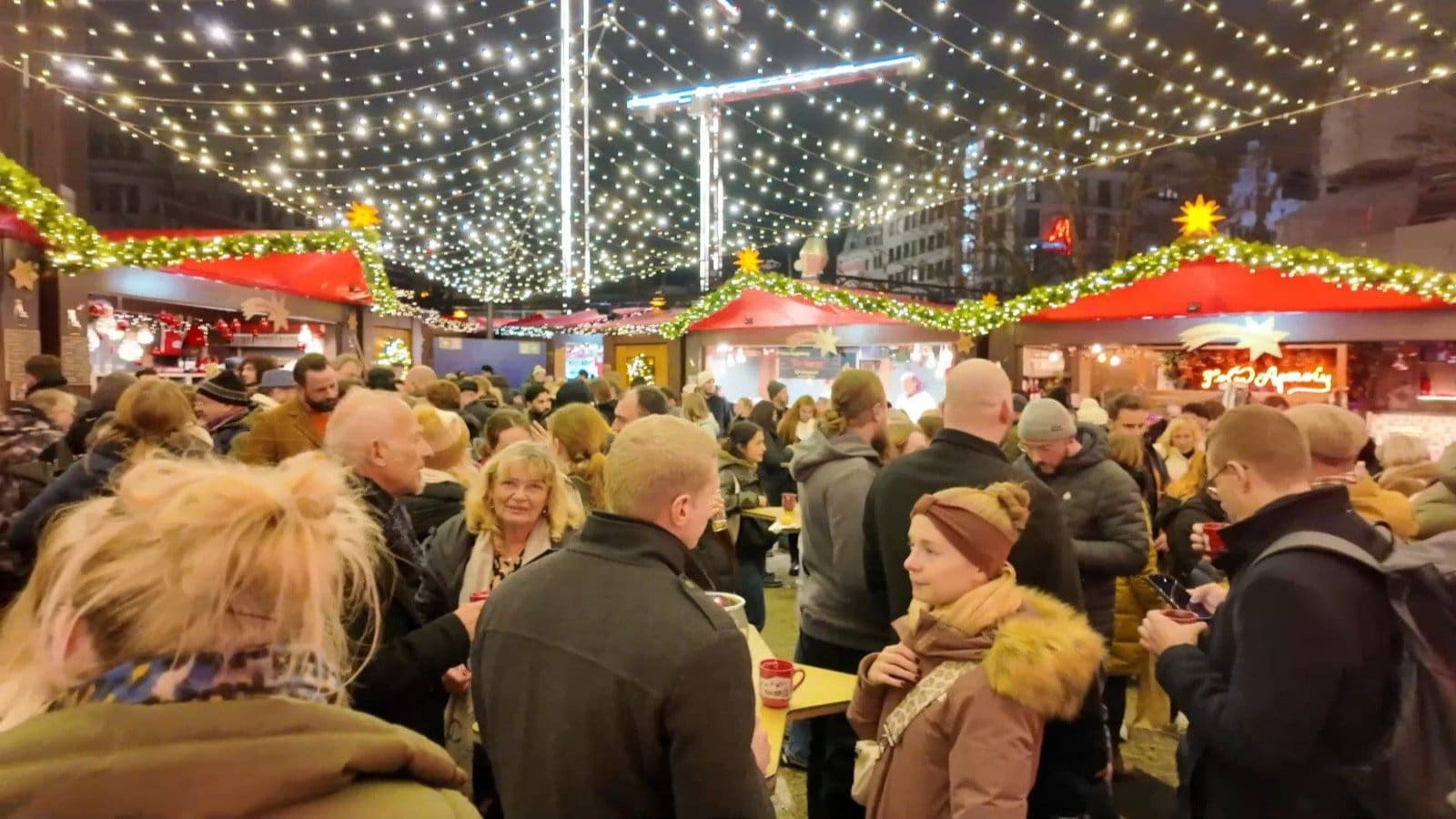
    • Famous for multiple markets, including the cathedral market beneath Kölner Dom and atmospheric markets along the Rhine.
    • Staying central (like at Hotel Königshof The Arthouse) means you can easily walk between stalls, lights and outdoor Glühwein stands.
  • Nuremberg:

    • Home to the Christkindlesmarkt, one of Germany’s most iconic and traditional Christmas markets.
    • The old town fills with wooden stalls, gingerbread, grilled sausages and the famous Nuremberg Christkind opening ceremony.
  • Munich:

    • The main Christkindlmarkt on Marienplatz is surrounded by historic buildings, with more markets scattered across the city, including at the Residenz and Tollwood Festival.
    • From a central or near‑central hotel like Hotel Margit, you can enjoy evenings wandering the markets, then retreat to a warm, comfortable base.

Christmas markets can make accommodation more expensive and book up faster, so it’s worth reserving early.


Typical Costs for Comfortable Stays in Germany (in EUR)

These are rough per‑night prices for a double/twin room in cities like Cologne, Nuremberg and Munich. Prices vary by season, major events and Christmas market periods.

City-Break & Business Cities (Cologne, Nuremberg, Munich)

  • Comfortable mid‑range hotel (3★, good location):
    Around €90–€140 per night

  • Design / boutique or solid 4★ hotel:
    Roughly €140–€220+ per night

  • High‑end / luxury brands or prime historic locations:
    Often €220–€400+ per night, especially in Munich and during big events (Oktoberfest, trade fairs, Advent)

Summary Ranges 

  • Comfortable mid‑range: ~€90–€140
  • Nicer 4★ / design / boutique: ~€140–€220+
  • Luxury / prime locations: from €220+

Munich is usually at the higher end, Cologne and Nuremberg often a bit more affordable outside peak dates.

How to Choose the Right Location and Style of Stay

Before you book, ask yourself:

  • How busy do we want it to be?
    Do you want nightlife and lots of dining choices, or would you rather a quiet coastal town or wine‑region retreat?

  • Do we want to walk everywhere?
    In big cities, paying a little more to be walking distance to restaurants, train stations and waterfronts often feels worth it. If you are travelling by train like we did, then look for accommodation near the train station.

  • What facilities matter most?
    Pool, kitchen, laundry, secure parking, lift access, breakfast, late check‑out—make a short list and filter using those.

  • How will we be getting around?
    If you have a hire car, staying slightly out of the CBD can give you more space and easier parking. If not, we prefer to be near a train, tram or ferry stop.

  • How sensitive are we to noise?
    If you’re a light sleeper, we avoid hotels directly on main roads, next to busy pubs, or right under flight paths when possible. Recent reviews are invaluable here.


Booking and Safety Tips for a Smooth Stay
  • Book earlier for school holidays and major events.
    Accommodation can spike in price during Christmas/New Year, Easter, school holidays and big festivals or sporting events. In popular holiday spots we try to book months in advance.

  • Read the right kind of reviews.
    We focus on reviews from couples, families and business travellers, looking at:

    • Cleanliness and maintenance
    • Noise levels
    • Bed comfort
    • Wi‑Fi reliability
    • Parking and transport access
  • Check room photos carefully.
    In older properties, some rooms can be renovated while others aren’t. Filter for recent photos to see what the average room really looks like.

  • Confirm parking and access.
    In city centres, parking can be expensive or limited. If you’re on a road trip, we always check:

    • Whether there is on‑site parking
    • Height restrictions for car parks
    • Any extra nightly fees
  • Look at cancellation policies.
    For long trips or shoulder seasons, we often pay a little more for flexible cancellation, especially when we’re not 100% locked into our route.


Places we’ve stayed in

Hotel Königshof The Arthouse

Hotel Königshof The Arthouse

Cologne

  • Location: Close to Kölner Dom (Cologne Cathedral), the Rhine promenade and the main train station, this kind of base is ideal for exploring on foot.
  • Feel: Central hotels here are perfect for travellers who want to be able to stroll to the cathedral, museums, riverside paths and Christmas markets without relying too much on transport.
  •  A small, cosy hotel and good for 1 or 2 nights. The rooms are clean but small.

Motel One Nürnberg-City

Nuremberg

  • Location: Close to the main station and within walking distance or a short ride to the Altstadt (old town), with its medieval walls, churches and market square.
  • Feel: Budget‑design hotels like Motel One offer modern rooms and consistent standards—ideal if you’re combining sightseeing with easy rail travel.
  • Excellent mid-range hotel. Very good bar and restaurant and the rooms were clean but a little on the small side. 


Hotel Pension Margit

Hotel Pension Margit

Munich

  • Location: Typically, hotels like this sit within reach of the Hauptbahnhof (main station) and the Altstadt, making it easy to walk or hop on the U‑Bahn (metro).
  • Feel: A more personal, family‑run style compared with big chains.
  • Not bad for a mid-range hotel. Good-sized room and breakfast was very good.  Very close to the train station. Plenty of hotels in this area to choose from so we probably would try somewhere different.

See Our Videos On Germany including Cologne, Nuremberg and Munich

Travel Budget Planner

Download our easy-to-use Travel Budget Planner

One simple form to budget and control all your Travel expenses. Free to use for multiple trips.

Our Best Booking Resources

Below are our go-to sites for planning trips.

Cruises – Vacations To Go is a discount cruise marketplace offering expert agents, comprehensive itineraries, last-minute deals, and easy booking worldwide online.

Skyscanner — Our favourite flight search engine, especially for finding budget carriers and smaller sites others miss.
Booking.com — The most reliable all-around hotel and budget stay finder, often with the lowest rates and huge inventory.
GetYourGuide — A massive marketplace for tours and activities (walking tours, day trips, classes, and more).
World Nomads — Flexible travel insurance designed for travellers and adventure activities.
Wise Travel Card — Low-fee international spending and transfers with great exchange rates; perfect for multi-currency trips.
Sixt — Reliable car rentals with a broad fleet; handy for Great Ocean Road or Yarra Valley trips from Melbourne.

Some links in this guide are affiliate links. If you book or buy through them, we may earn a commission at no extra cost to you. Thanks for your support.

FAQs

Look for well‑reviewed 3★–4★ city hotels, design or budget‑design hotels, family‑run guesthouses (Pensionen) and aparthotels. These usually offer clean, compact rooms, good heating, reliable Wi‑Fi and walkable access to public transport and major sights.
For a double or twin room in cities like Cologne, Nuremberg and Munich, expect around €90–€140 per night for comfortable mid‑range hotels, roughly €140–€220+ for 4★ or design/boutique properties, and from about €220 upwards for luxury or prime historic locations, especially in Munich or during big events and Christmas markets.

Decide how much you want to walk and how you’ll travel. If you’re using trains, staying near the Hauptbahnhof or a major tram/metro stop simplifies sightseeing and day trips. For quieter nights, look a few streets back from main roads or bar areas, and always read recent reviews for noise, cleanliness and bed comfort before booking.

Bangkok hotels

Get Free Access To Our Exclusive Videos!

Sign up to get access to all our exclusive private videos on YouTube with no ads!

Booking

Get Our Free Travel Budget Planner

We’ll send you a direct link to our Google Sheets Travel Budget Planner. Easy to use for multiple trips.

How We Calculate Our Rating

Our score is out of 10 and based on:

Location & convenience – 30%

Room Quality & cleanliness – 30%

Facilities & services – 25%

Dining – 15% 

We do not take price (value for money) into our calculations, as rates can differ substantially depending on when you go. If you travel in peak season, then expect to pay the highest rates, but it does not (or should not) change the quality of the hotel. If we give it a rating of 8.0 or higher, we would consider staying again.
TBA – means we have not stayed at this hotel but have booked for a future visit or included in our research as a suggested place to stay

Booking

Get Our Free Cruise Budget Planner

We’ll send you a direct link to our Google Sheets Cruise Budget Planner. Easy to use for multiple cruises.

Travel Tips Straight To Your Inbox

Subscribe Today

Subscribe today and receive all of our latest news and access to our exclusive travel videos for the ultimate travel experience