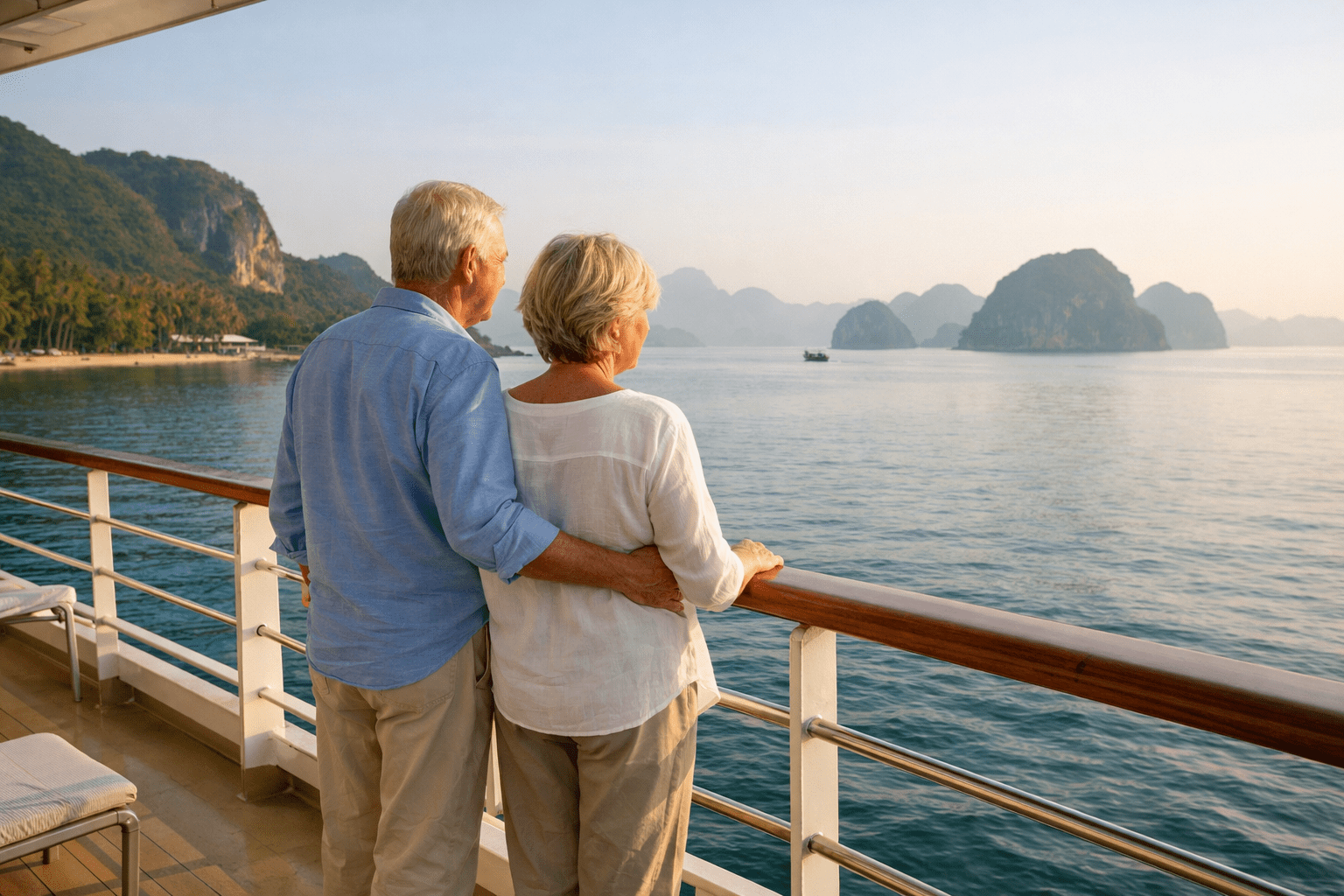
For many mature travellers, cruising has become one of the easiest and most comfortable ways to explore Asia. The best ocean cruises in Asia for seniors combine cultural discovery with the simplicity of unpacking once while your hotel moves with you.
Asia can feel exciting but also intimidating when planning independent travel. Long distances, unfamiliar languages and complex transport systems sometimes discourage travellers who might otherwise love the destination.
Cruising changes that completely.
Instead of managing multiple flights and hotels, you unpack once, settle into a comfortable cabin and allow the ship to carry you from country to country. Guided excursions handle the logistics ashore, while onboard life remains familiar and comfortable.
For seniors, this combination of discovery without travel stress makes Asia particularly appealing by sea. You might wake up in Japan one morning, Vietnam the next, then enjoy a relaxing sea day before reaching Thailand or Singapore.
This guide looks at the best cruise lines, routes and onboard experiences for seniors cruising Asia, helping you choose ships and itineraries that match your comfort level and travel style.
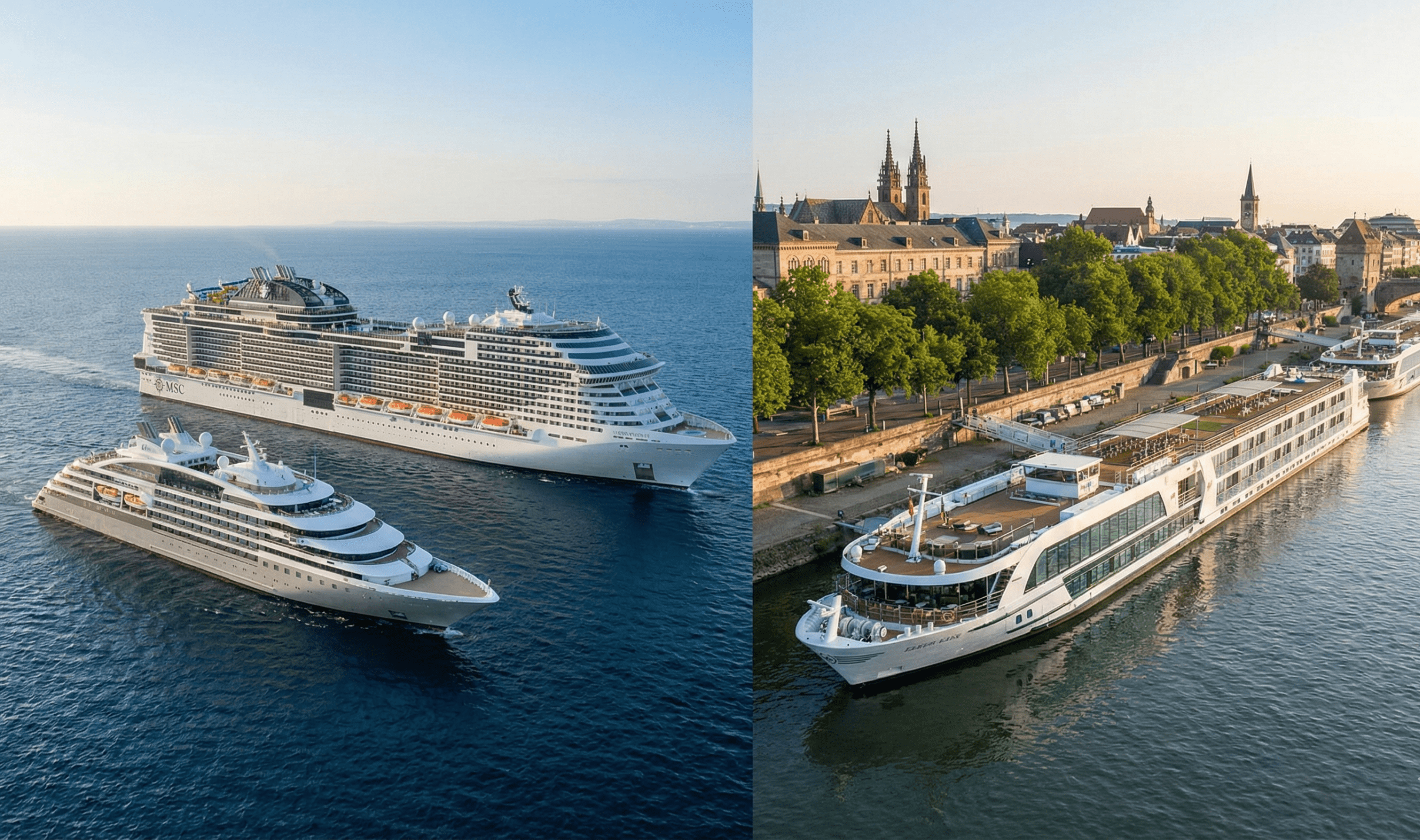
For travellers still comparing options, our guide to Asian river and ocean cruises for seniors explains how cruise styles differ across the region.
Dining options also play a part in the cruise line you choose, particularly if you are travelling to areas like Asia where the menu selections may not include any western type menus. Read our guide on cruise dining options so you know what to expect.
Why Asia Works So Well for Senior Cruise Travellers
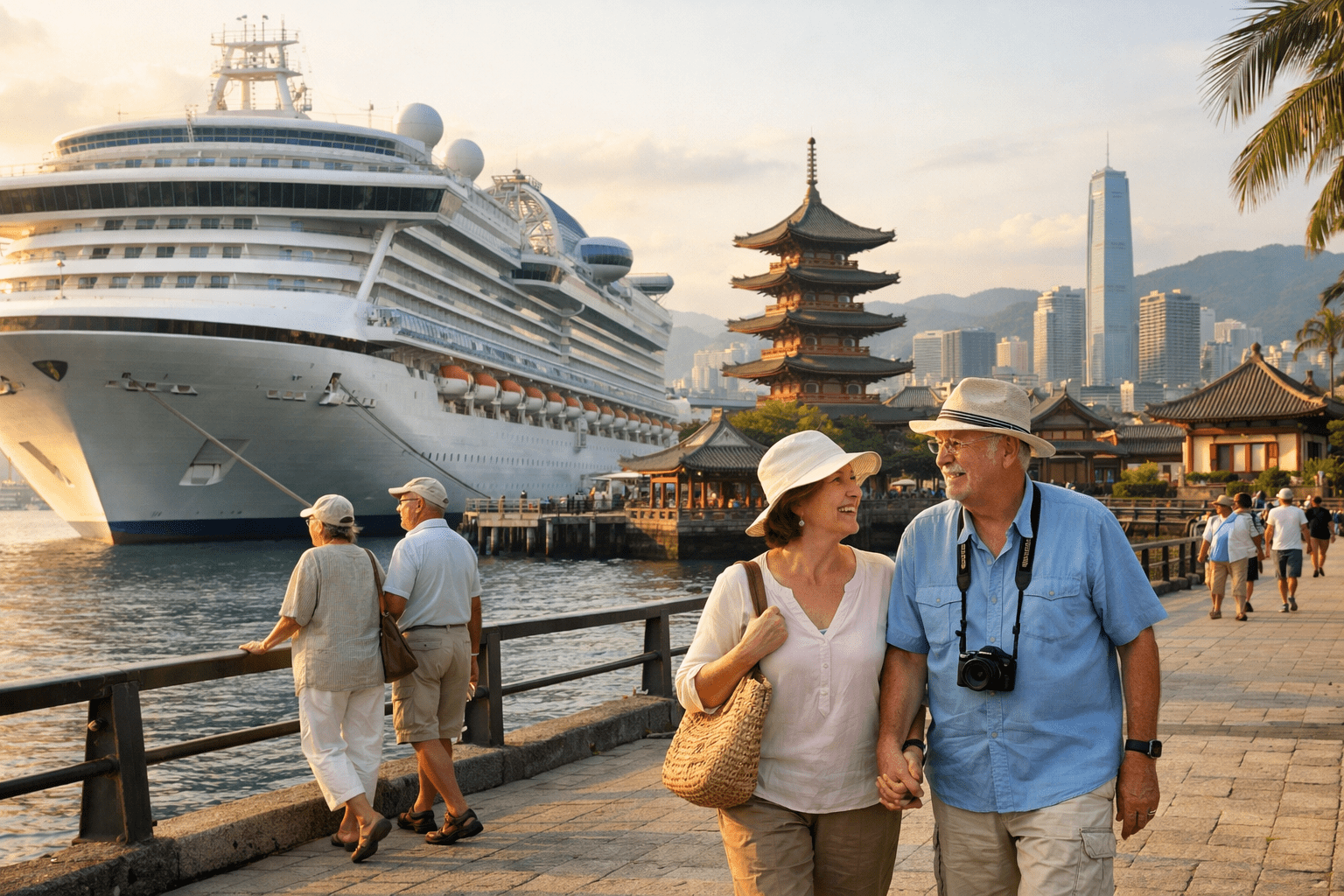
Cruising removes many of the challenges associated with travelling in Asia independently.
Instead of navigating unfamiliar airports and hotels, everything moves with you. Each morning brings a new destination, yet your cabin, dining room and familiar surroundings remain constant.
Sea days also become valuable rest periods. After exploring temples, markets or historic cities, travellers can relax onboard before the next destination.
Another benefit is variety. A single cruise can combine ultra-modern cities, colonial heritage ports, tropical islands and cultural landmarks. This diversity appeals to seniors wanting depth without constant relocation.
Asia also tends to feel less crowded than Mediterranean cruising, making excursions feel more relaxed rather than rushed.
Popular Asia Cruise Routes for Seniors
Where Most Asian Ocean Cruises Begin
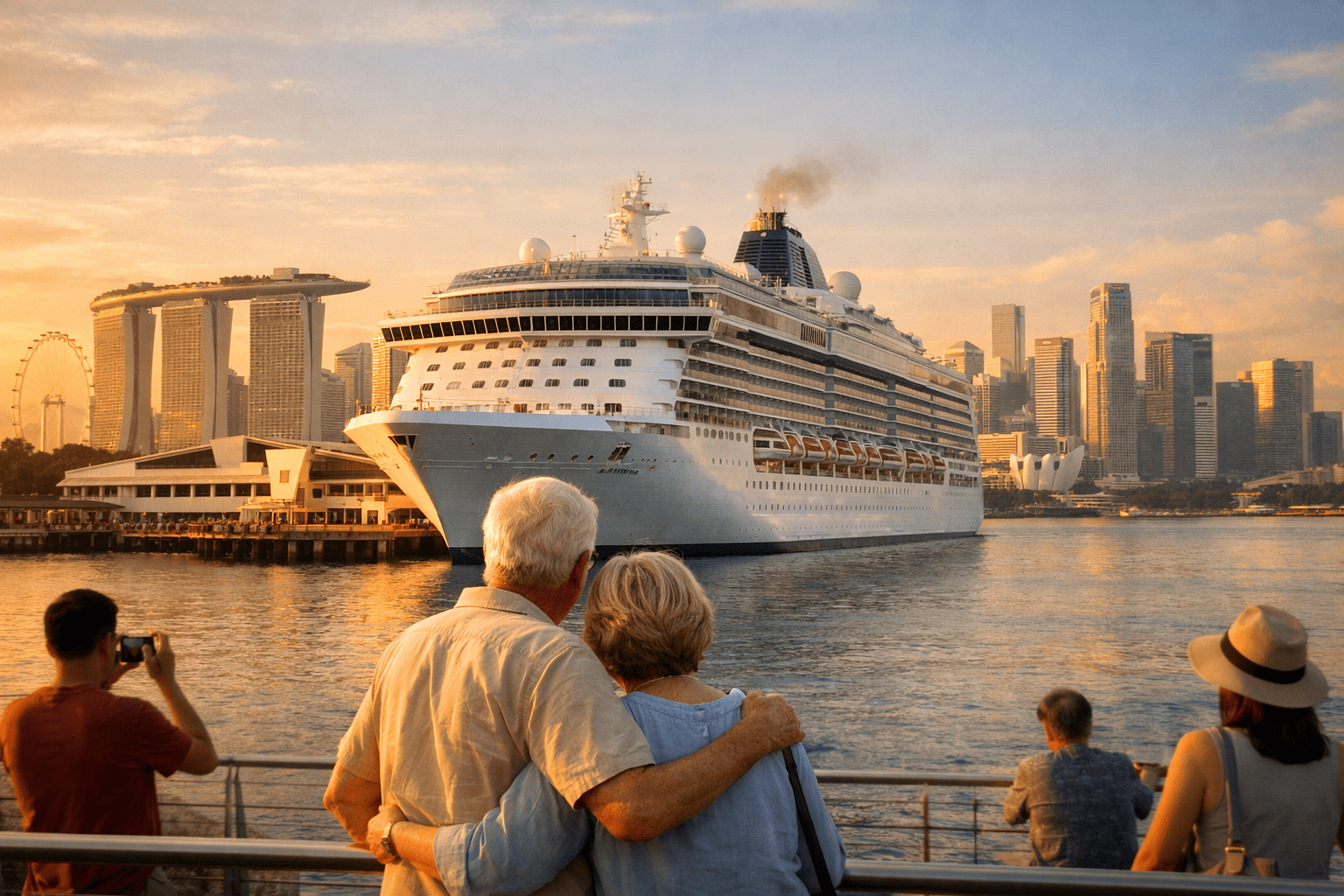
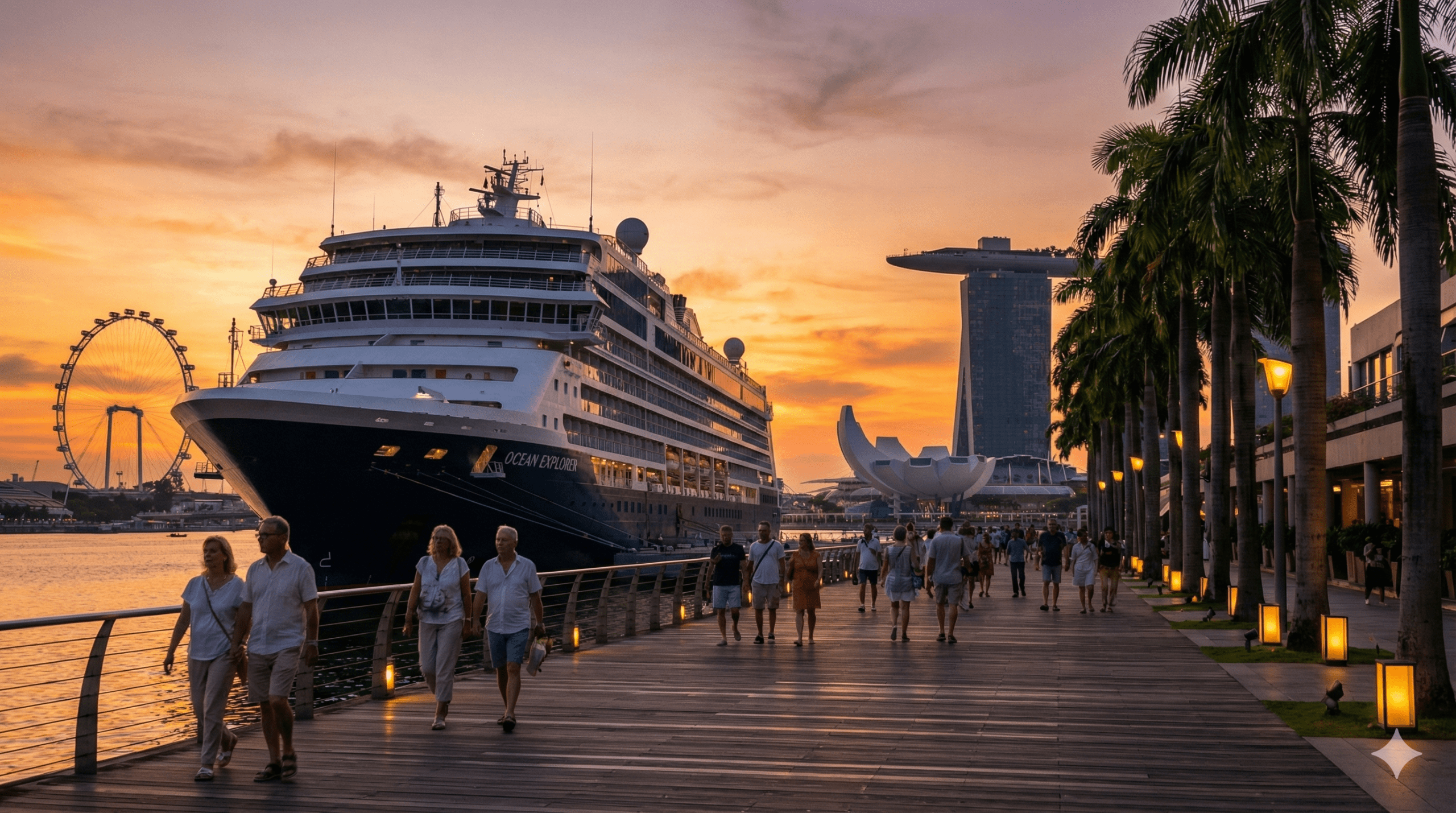
For travellers coming from North America or other countries outside of Asia, one of the first practical questions is where Asian cruises actually start. The two most common cruise hubs in the region are Singapore and Hong Kong, both of which are major international gateways with excellent flight connections from the United States. Singapore is particularly popular for Southeast Asia itineraries covering Thailand, Vietnam and Malaysia, while Hong Kong often serves as a starting point for cruises to Vietnam, Taiwan and Japan. Knowing your departure port early helps when planning flights and pre-cruise hotel stays, and we’ll cover both cities in more detail in dedicated guides for travellers planning cruises from these hubs.
Singapore is particularly popular for Southeast Asia itineraries covering Thailand, Vietnam and Malaysia, and travellers can also explore stopover ideas via the official Singapore Tourism Board website when planning pre-cruise stays.
Japan Cruises
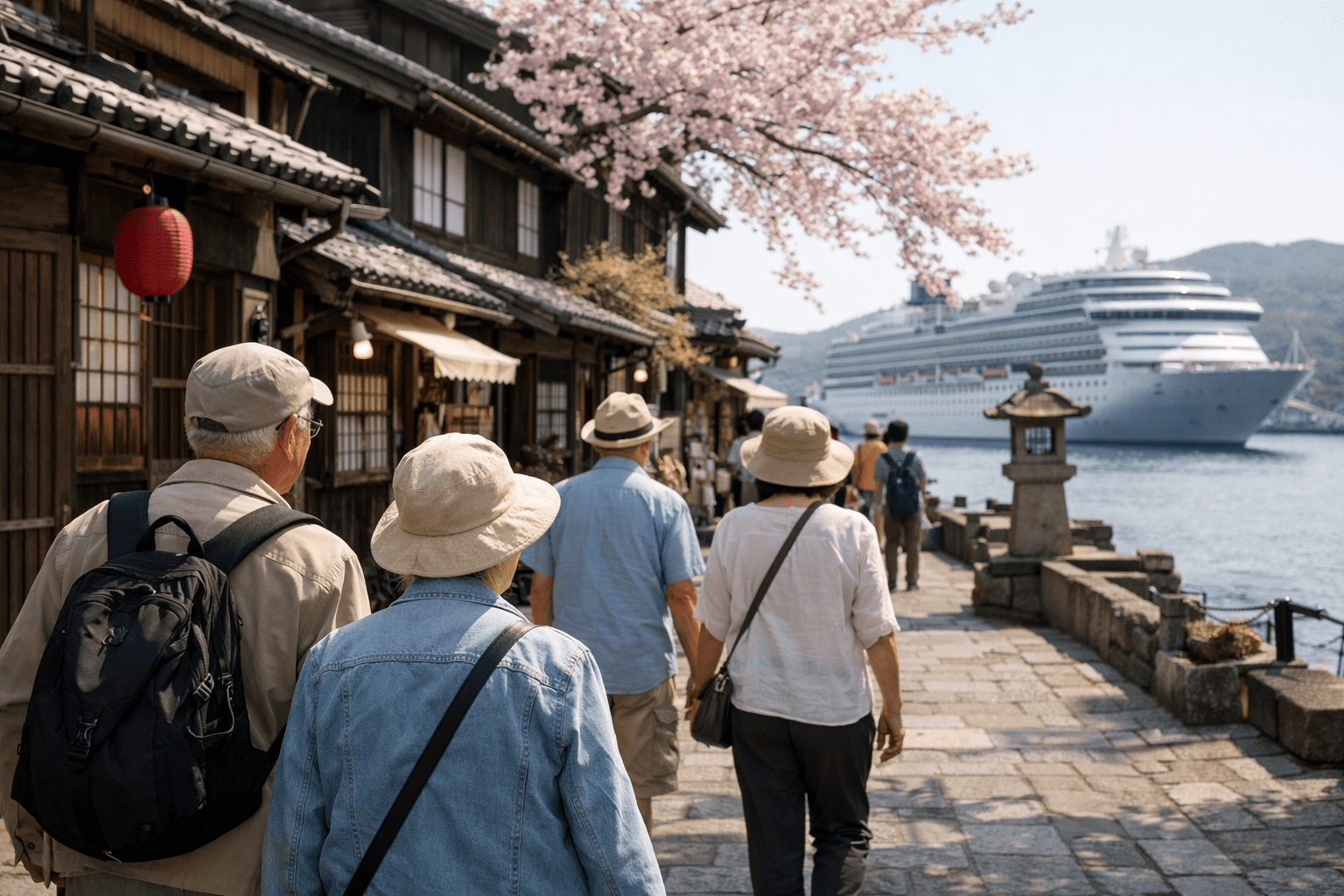
Japan has become one of Asia’s fastest-growing cruise destinations, particularly popular with mature travellers.
Ports are efficient and clean, transport works smoothly, and excursions tend to be well organised. Cruises often visit Tokyo, Osaka (gateway to Kyoto), Hiroshima and scenic coastal towns.
Spring cherry blossom season and autumn foliage cruises are especially attractive.
Southeast Asia Cruises
Southeast Asia itineraries combine culture, tropical scenery and vibrant cities.
Common stops include:
• Singapore
• Bangkok (Laem Chabang)
• Ho Chi Minh City
• Da Nang or Hue
• Phuket
• Penang
These cruises blend history, cuisine and beaches, making them ideal winter escapes for seniors seeking warmth.
If you are interested in slower cultural exploration you may also want to consider Mekong River cruises, which offer a very different but equally rewarding experience.
Longer Asia Grand Voyages
Some lines offer extended voyages linking multiple Asian regions or connecting Asia with Australia or Europe. Retired travellers with flexible schedules often enjoy these longer, slower-paced journeys.
What Seniors Often Want to Know First: Ship Size & Crowd Type
One question senior travellers frequently ask is:
“How big is the ship, and will it be full of children?”
Ship size influences everything — crowds, atmosphere, noise levels and ease of movement onboard. Larger ships offer more amenities but can feel busier. Smaller ships feel calmer and easier to navigate.
Another important factor is whether a cruise line attracts families or mostly adult travellers. Outside school holidays, many Asia cruises naturally skew older, but some lines remain more family-oriented.
Below is a practical guide to cruise lines sailing Asia, focusing on passenger numbers, onboard atmosphere and suitability for senior travellers.
Best Ocean Cruises in Asia for Seniors: Cruise Line Comparison
Princess Cruises
Typical ship size: 2,000–3,100 passengers
Atmosphere: Relaxed and traditional
Family presence: Family-friendly but usually adult-leaning outside school holidays
Princess has long appealed to mature travellers. Ships feel comfortable rather than flashy, dining is reliable, and entertainment suits broad tastes.
Excursions are well organised, and onboard life tends to feel relaxed. For seniors new to Asia cruising, Princess often feels reassuringly familiar.
Holland America Line
Typical ship size: 1,900–2,400 passengers
Atmosphere: Calm and enrichment-focused
Family presence: Few children outside peak holiday periods
Holland America strongly attracts older travellers. Music performances, lectures and cultural programming appeal to passengers who enjoy learning while travelling.
Ships feel quieter and less hectic than many competitors, which many seniors appreciate.
Celebrity Cruises
Typical ship size: 2,800–3,200 passengers
Atmosphere: Modern and premium
Family presence: Moderate, depending on season
Celebrity offers stylish ships with excellent dining and modern design. The crowd skews slightly younger than Holland America but remains comfortable for seniors.
Ships feel contemporary and spacious, and service standards remain high.
Royal Caribbean
Typical ship size: 3,500–5,400 passengers
Atmosphere: Energetic and activity-focused
Family presence: High on many sailings
Royal Caribbean operates some of the world’s largest ships, offering enormous onboard variety. However, these ships often attract families, especially during holiday periods.
Longer Asia itineraries outside school vacations tend to attract older travellers, but travellers seeking quieter experiences may prefer smaller ships.
Norwegian Cruise Line
Typical ship size: 2,000–4,000 passengers
Atmosphere: Casual and flexible
Family presence: Moderate to high
Norwegian’s freestyle cruising removes formal dining schedules and dress codes, appealing to travellers who prefer flexibility.
Ships feel lively, and crowd demographics vary widely by sailing date.
Cunard
Typical ship size: 2,000–3,000 passengers
Atmosphere: Traditional and elegant
Family presence: Low
Cunard maintains classic ocean liner traditions, including formal evenings and afternoon tea. The crowd tends to skew older, and onboard life feels refined rather than energetic.
For seniors who enjoy classic cruising style, Cunard remains attractive.
Viking Ocean Cruises
Typical ship size: 930–1,350 passengers
Atmosphere: Calm and destination-focused
Family presence: Adults only — no passengers under 18 allowed
Viking stands out as one of the most senior-friendly cruise experiences available. Ships deliberately avoid casinos and large-scale entertainment zones, focusing instead on destinations and cultural enrichment.
Because Viking does not allow children under 18, onboard atmosphere remains consistently adult-oriented and peaceful. Many senior travellers consider Viking among the most comfortable ways to cruise Asia.
Silversea & Regent Seven Seas (Luxury Options)
Typical ship size: 350–750 passengers
Atmosphere: Ultra-luxury and personalised
Family presence: Very low
These smaller luxury ships offer highly personalised service, inclusive pricing and calm onboard environments. Passengers are almost entirely adult travellers seeking comfort and destination immersion.
For seniors wanting maximum comfort and smaller crowds, these lines remain attractive options.
Cruise Line Comparison at a Glance
| Cruise Line | Passenger Count | Atmosphere | Senior-Friendly Rating |
|---|---|---|---|
| Viking | 930–1,350 | Quiet, adult-only | ⭐⭐⭐⭐ |
| Silversea | 350–750 | Luxury, adult-focused | ⭐⭐⭐⭐ |
| Regent Seven Seas | 500–750 | All-inclusive luxury | ⭐⭐⭐⭐ |
| Holland America | 1,900–2,400 | Calm, mature | ⭐⭐⭐⭐ |
| Cunard | 2,000–3,000 | Traditional, elegant | ⭐⭐⭐ |
| Princess | 2,000–3,100 | Relaxed mainstream | ⭐⭐⭐ |
| Celebrity | 2,800–3,200 | Premium contemporary | ⭐⭐⭐ |
| Norwegian (NCL) | 2,000–4,000 | Casual, social, solo-friendly | ⭐⭐⭐ |
| Royal Caribbean | 3,500–5,400 | Family-oriented | ⭐⭐ |
Once you have an idea which cruise style and ship size suits you, the next step is simply comparing available itineraries and pricing for your preferred departure region and dates.
If you’re still comparing cruise lines beyond Asia and want a broader breakdown of comfort, mobility, inclusions and overall value, our complete guide to the best cruise lines for seniors compares the major cruise brands across river and ocean cruising worldwide:
https://trustytraveltips.com/best-cruise-lines-for-seniors/
If you want to compare current Asia cruise options and pricing across multiple cruise lines, then click here.
Comfort Considerations for Seniors
Climate
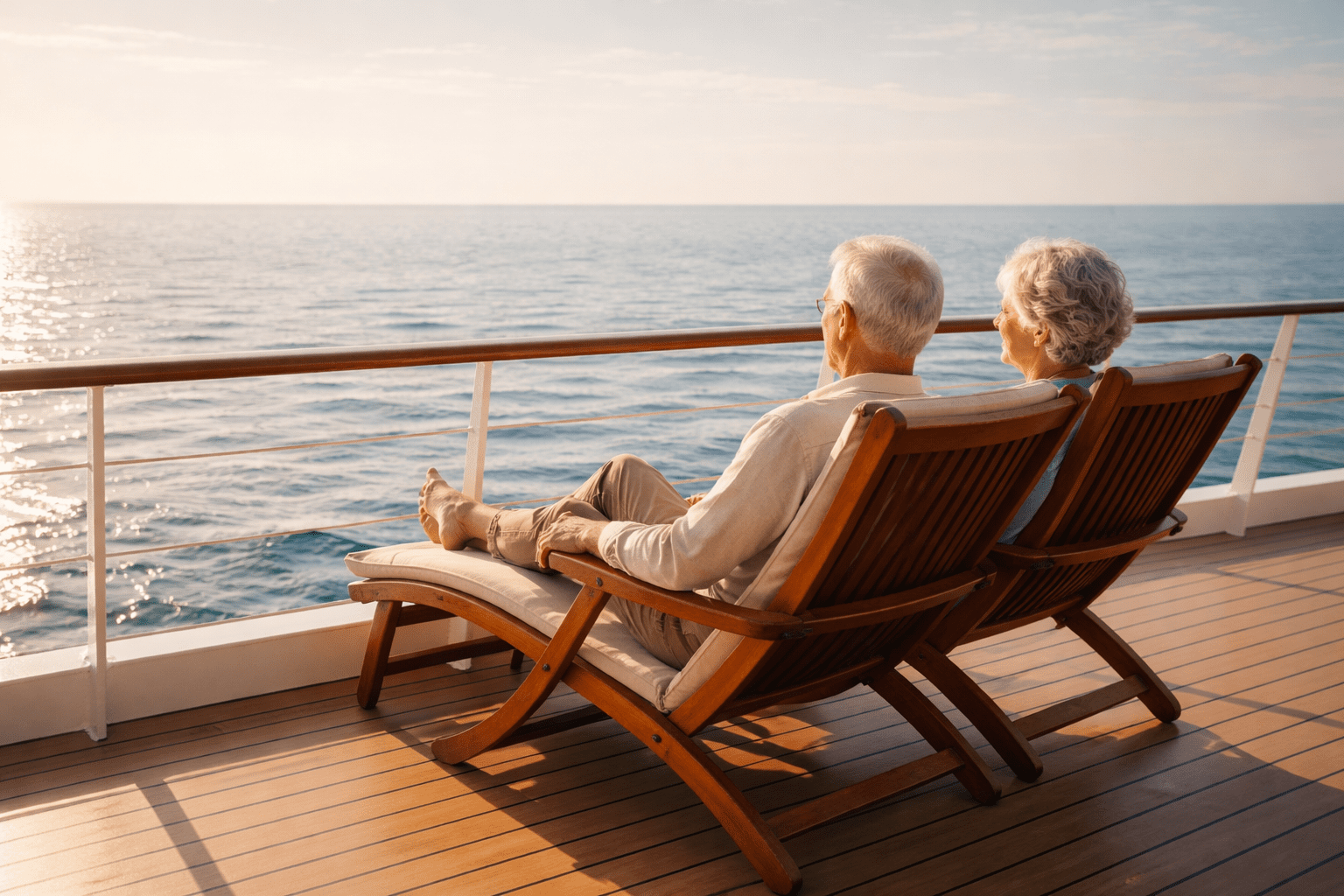
Asia remains warm throughout most of the year, which many seniors find far more comfortable than colder cruise regions. Excursions can involve humidity and heat, so pacing yourself and staying hydrated matters.
A pleasant advantage of cruising in Asia is packing simplicity. Unlike European river or Alaska cruises, which often require layers, jackets and warmer clothing, Asian cruises typically allow travellers to pack lighter with comfortable warm-weather outfits for most of the journey.
Cruise lines also usually schedule tours early in the day to avoid peak heat, making excursions more comfortable and allowing afternoons for relaxing back onboard.
A lightweight packing strategy makes travel much easier, something we cover in more detail in our cruise packing guides.
Excursion Walking Levels
Walking requirements vary by port. Modern cities such as Singapore and Tokyo are generally easy to navigate, with good infrastructure and accessible transport. In contrast, some Southeast Asian ports may involve uneven pavements, steps, markets or longer transfer times before reaching key sights.
Most cruise fares include guided shore excursions in each port, which removes much of the planning stress for travellers. These included tours usually cover the main highlights and are paced for the majority of passengers, often using air-conditioned coaches with guided walking segments.
In many ports, cruise lines now offer multiple excursion options, allowing guests to choose tours that match their mobility and interests. Options may include gentle panoramic tours with minimal walking, cultural visits with moderate walking, or more active experiences such as food tours, cycling or longer exploration on foot.
Cruise lines normally rate excursion difficulty levels in advance, helping travellers select tours suited to their comfort and fitness levels. Guests who prefer slower pacing can usually choose relaxed options, while more active seniors still have opportunities for longer or more immersive outings.
For travellers wanting even more flexibility, optional paid tours are also available in many destinations, either through the cruise line or independent tour operators, allowing passengers to tailor port days to their personal interests and activity level.
Travellers who prefer booking independent shore experiences in advance can also browse excursions through platforms such as GetYourGuide, which offers city tours, cultural visits and small-group experiences across most Asian cruise ports.
Medical Facilities
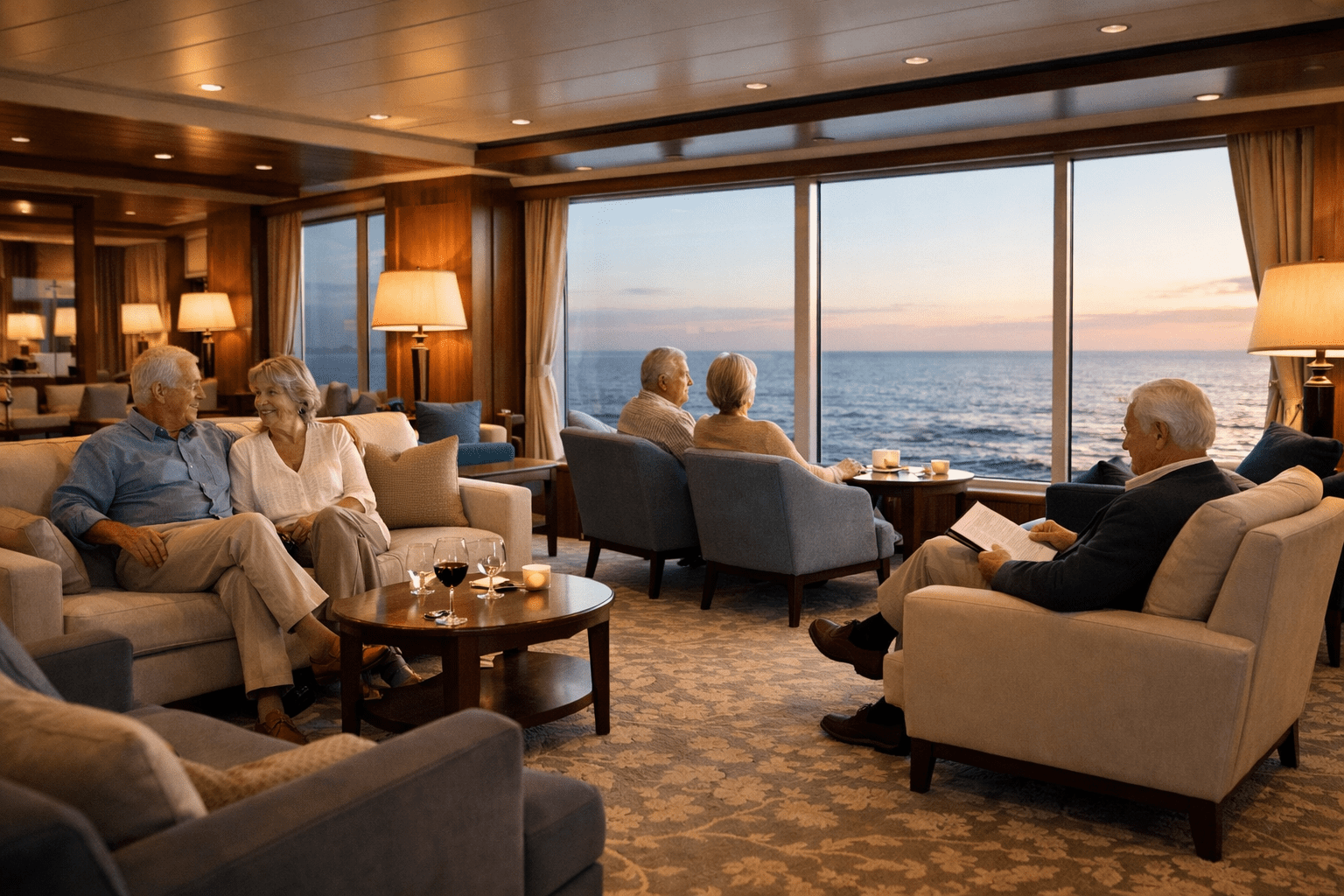
One advantage of large ocean cruise ships is the availability of onboard medical facilities. Most ships carry a medical centre staffed by qualified doctors and nurses who can handle routine illnesses, minor injuries and many common travel-related health concerns. For seniors or travellers managing ongoing medical conditions, knowing professional help is available onboard provides valuable peace of mind.
However, shipboard medical facilities function more like urgent care clinics rather than full hospitals. While they can manage many situations, serious medical emergencies may still require evacuation to a shore-based hospital. This is one reason travel insurance remains strongly recommended, particularly policies that include medical evacuation and coverage for treatment outside your home country.
It is also wise to review vaccination recommendations before travelling. Depending on cruise itineraries and ports visited, some destinations may recommend vaccines for illnesses such as hepatitis, typhoid or other region-specific conditions. A travel doctor or general practitioner can advise which vaccinations or boosters may be appropriate before departure.
Travellers should also ensure they carry sufficient personal medications for the entire journey, including extra supplies in case of delays. Medications should always be packed in carry-on luggage rather than checked bags, along with copies of prescriptions and a simple list of medical conditions in case assistance is needed.
Finally, cruise lines typically ask passengers to complete health declarations prior to sailing. Being honest about mobility or medical needs helps crew provide assistance if required, ensuring the journey remains safe and comfortable.
With sensible preparation, cruising Asia remains a comfortable and reassuring way for seniors to explore the region while knowing medical assistance is readily available if needed.
Solo Seniors on Asia Ocean Cruises
Ocean cruising also suits solo travellers, though single supplements often apply, many cruise lines now offer ways to reduce or avoid them on selected sailings.
Larger ships can be helpful for solo travellers because they allow anonymity when desired, while onboard activities and shore excursions still make it easy to meet fellow passengers without pressure. Dining options, organised tours and onboard events naturally create opportunities for social interaction.
Some cruise lines occasionally offer reduced supplements or limited solo cabins, but availability varies widely. One notable exception is Norwegian Cruise Line, which operates the largest number of dedicated solo cabins at sea. These cabins are designed specifically for single travellers and often provide access to shared lounge spaces where solo passengers can meet others, making them particularly appealing for independent travellers.
For travellers seeking even easier social interaction, river cruising can sometimes feel more intimate due to smaller ship sizes. However, ocean cruising still works very well for solo seniors who appreciate flexibility, choice of activities and the option to socialise or relax privately as they prefer.
Best Time of Year to Cruise Asia
For many seniors, choosing slightly cooler months can make excursions far more enjoyable, particularly in tropical ports.
November to March
Dry season in Southeast Asia and most comfortable temperatures.
March to May
Warmer shoulder season with fewer crowds.
June to September
Rain increases in Southeast Asia, though Japan remains popular.
October
Transition month with fewer crowds and mixed weather.
Value Compared with European Cruises
Asia cruises often deliver better value compared with Europe. Excursion costs and daily spending ashore tend to be lower, and crowds are less intense outside major cities.
Flights may cost more depending on where you are flying from, but onboard and shore spending often balances the difference.
Final Thoughts: Is an Asia Ocean Cruise Right for You?
For seniors looking beyond traditional cruise destinations, Asia offers remarkable rewards.
Modern ships provide comfort and familiarity while destinations deliver cultural depth and unforgettable scenery. Whether exploring Japan’s temples, Vietnam’s heritage cities or Southeast Asia’s tropical ports, cruising allows travellers to experience Asia without logistical stress.
For many travellers, their first Asia cruise becomes the beginning of many journeys east. With the right cruise line and itinerary, Asia can quickly become one of the most rewarding cruise regions to explore later in life.