Visiting the Corfu Cruise Port: What to Expect
Corfu sits in the Ionian Sea off Greece’s west coast, blending Venetian history, relaxed island charm and manageable walking distances that make it particularly well suited to a cruise stop.
We visited Corfu as part of our 14-day Viking Mediterranean Odyssey cruise from Barcelona to Venice in May 2025. It was a one-day port call, and it turned out to be one of the more relaxed and enjoyable stops of the itinerary.
Unlike larger ports such as Rome or Naples, Corfu felt compact and easy to navigate. On the day we visited, it appeared that ours was the only ship in port, and the town never felt overwhelmed. That can change in peak summer months, but as cruise ports go, Corfu is one of the more manageable Mediterranean stops.
If you’re visiting Corfu as part of a cruise itinerary, this is how we would structure a day in port.
Cruise Excursions in Corfu: Included vs Independent
On our Viking cruise, we chose the included shore excursion covering Corfu Old Town and both the Old and New Fortresses. It provided a structured historical overview while still leaving generous free time to explore independently afterwards. That balance worked well for us — orientation first, wandering later.
Cruise-line excursions are often more expensive than third-party alternatives, but they come with one significant advantage: if delays occur, the ship will wait. That peace of mind can matter when transport distances are longer or traffic is unpredictable.
If you notice via Cruisemapper that multiple ships are scheduled to be in port on the same day, you might consider looking at smaller group excursions or inland alternatives to avoid peak Old Town congestion. Independent platforms such as GetYourGuide can sometimes offer similar tours at lower prices and with more flexibility.
However, if booking independently, always check pick-up and return times carefully. Cruise ships will wait for official cruise excursions if delays occur, but they are not obligated to hold departure for third-party tours. Building in a comfortable buffer before all-aboard time is essential.
If you’re new to Viking or ocean cruising in general, our practical Viking ocean cruise tips explain how we decide between included and optional excursions.
Getting from Corfu Port to the Old Town
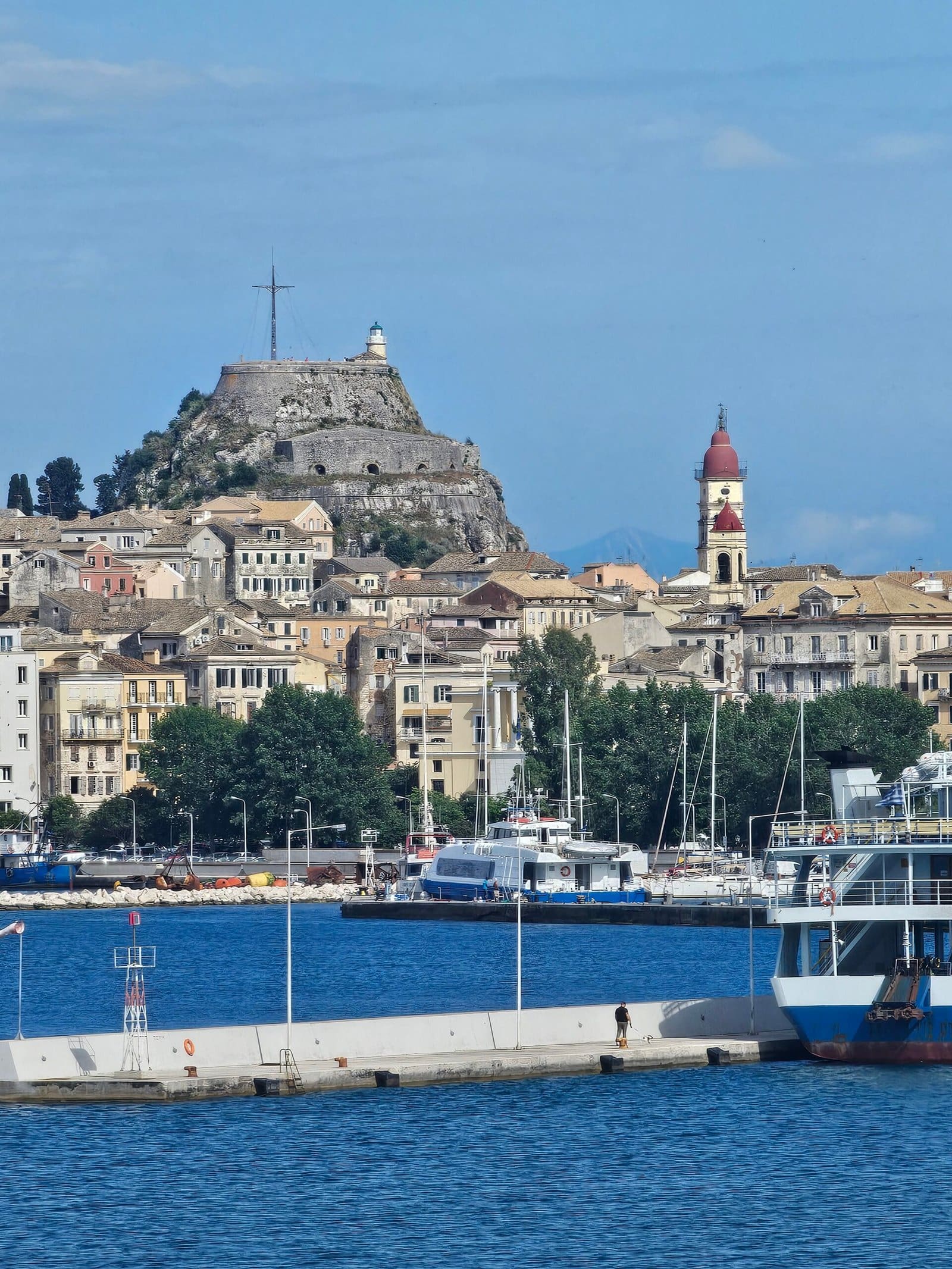
Cruise ships dock at the main Corfu port, approximately 10–15 minutes by bus or taxi from Corfu Old Town. Many cruise lines provide shuttle transfers, or taxis are readily available at the port entrance.
The short transfer is one of the reasons Corfu works well as a cruise port. You are not facing long motorway drives or complicated transport logistics.
Morning: Corfu Old Town (UNESCO)
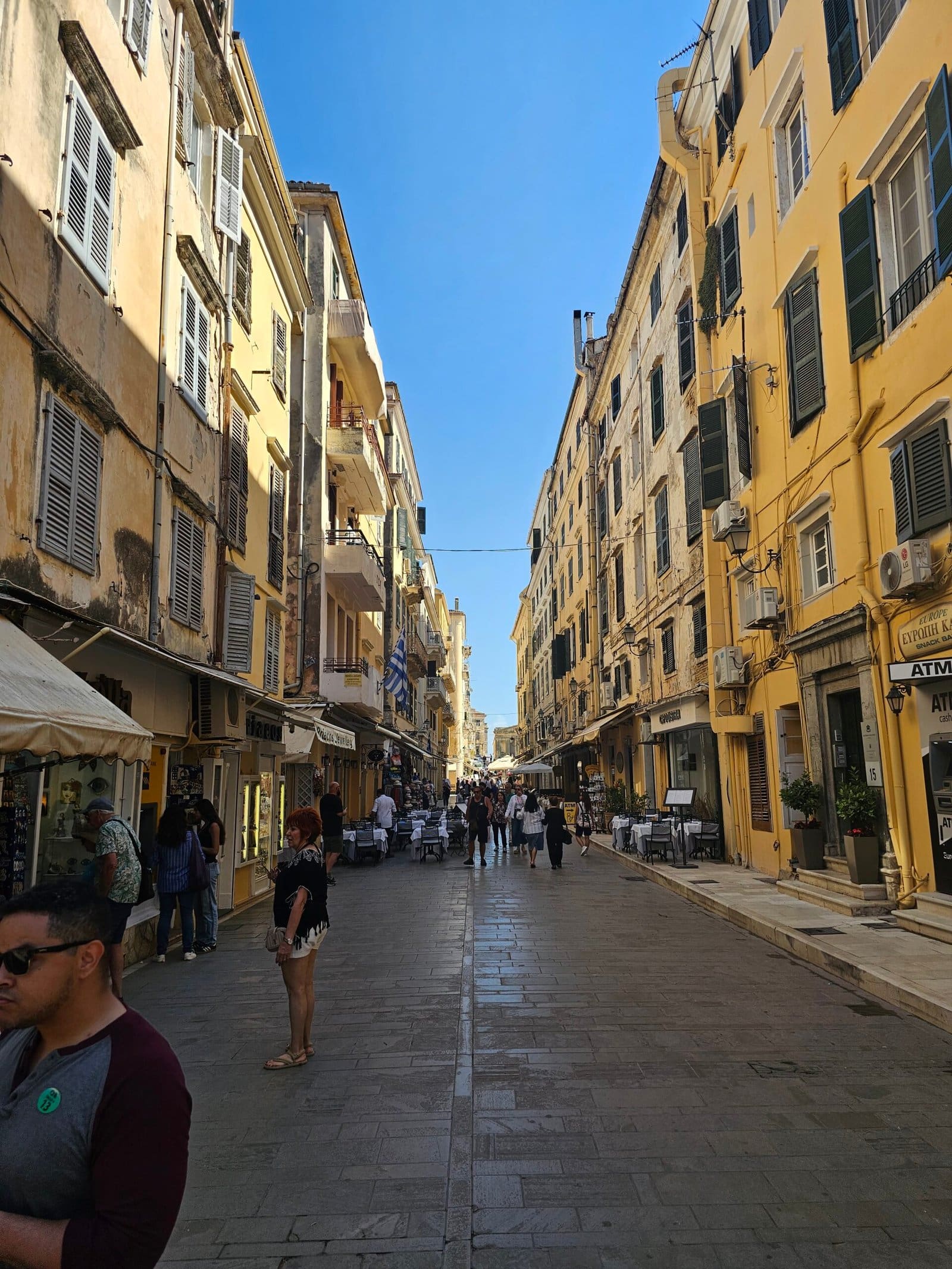
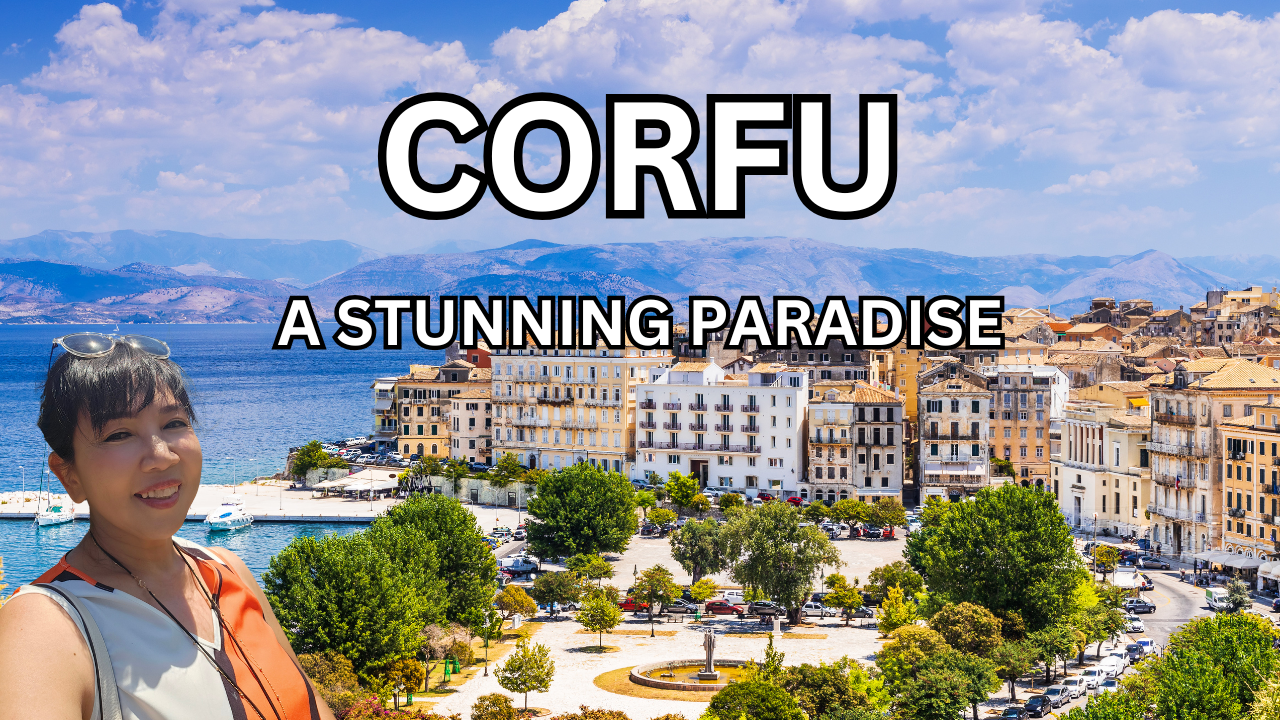
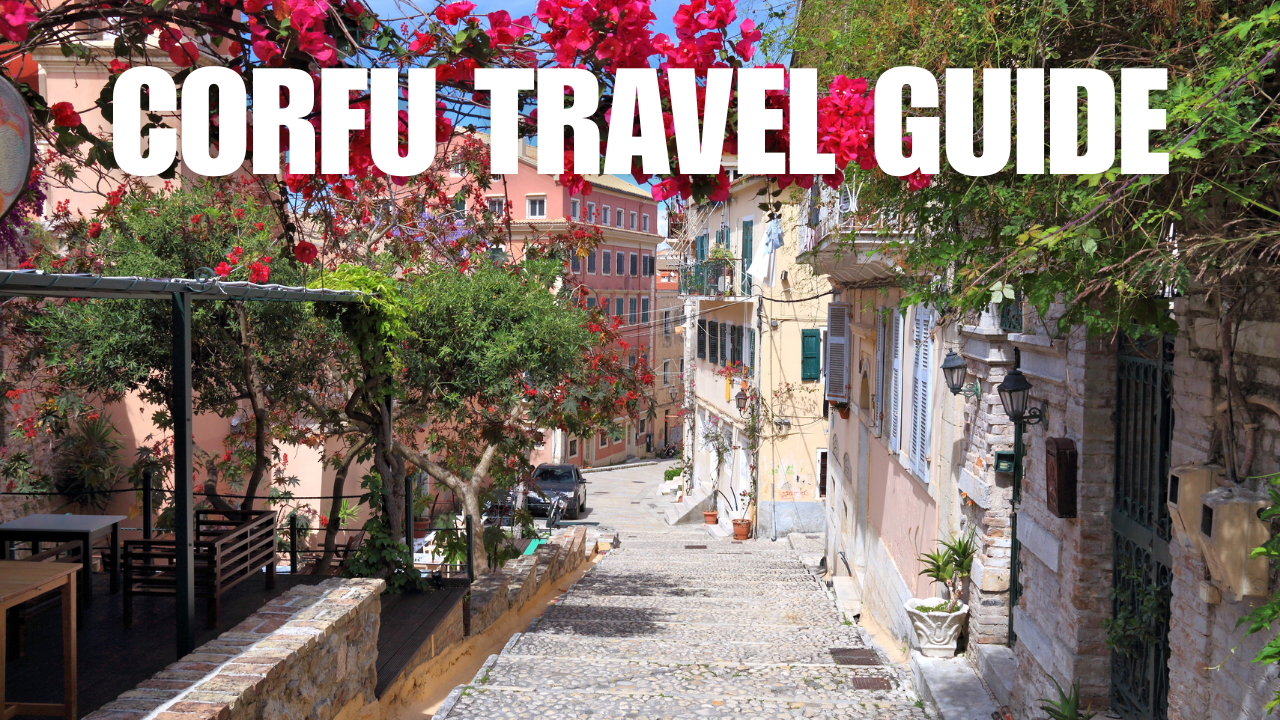
The heart of any cruise visit to Corfu is the UNESCO-listed Old Town. Its narrow Venetian lanes — known locally as kantounia — create a compact and walkable centre layered with history.
Venetian fortifications, French arcades and British influences blend seamlessly here. Unlike some Mediterranean cruise ports that feel overly commercialised, Corfu Town retains an authentic, lived-in atmosphere.
We began at the Esplanade and gradually drifted into the narrower streets. Small squares appeared unexpectedly, churches emerged between pastel buildings, and cafés spilled onto stone lanes.
Even with cruise passengers present, it never felt chaotic during our visit. That said, cruise traffic can vary significantly depending on how many ships are in port.
Allow at least two to three hours here without rushing. One of Corfu’s strengths as a cruise stop is that everything feels close together.
Late Morning: The Old Fortress (Palaio Frourio)
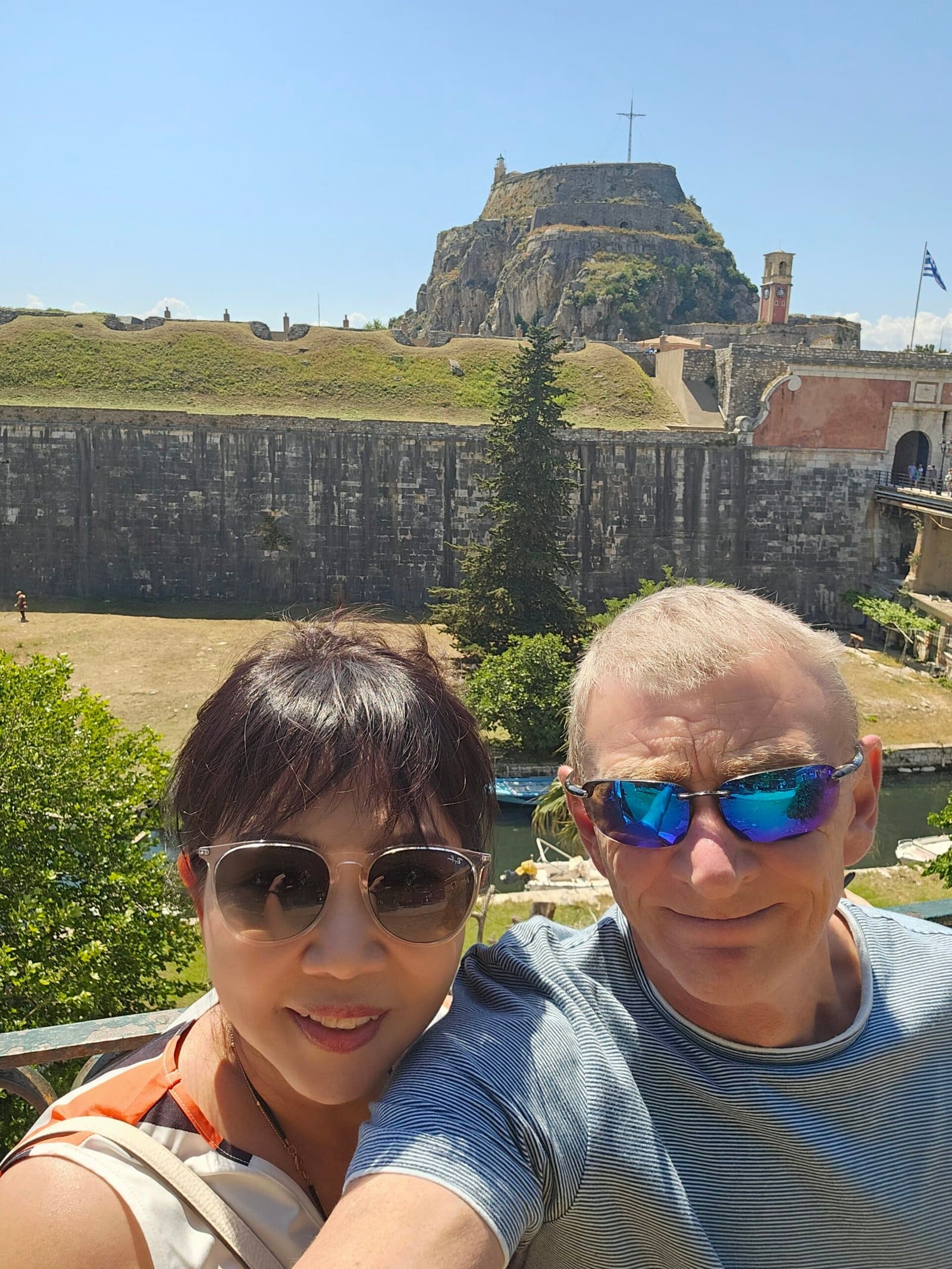
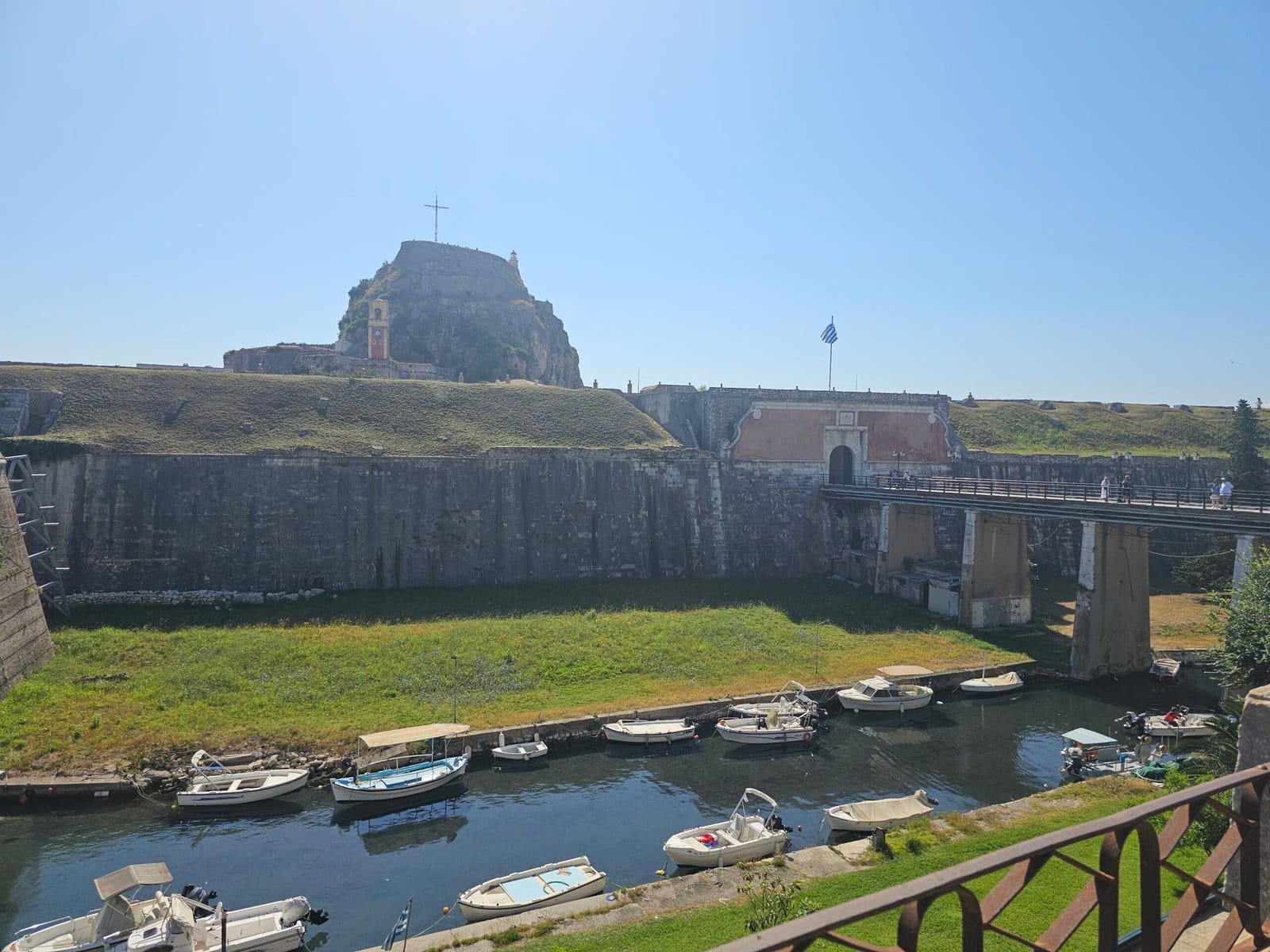
The Old Fortress (Palaio Frourio) stands dramatically on a rocky promontory at the eastern edge of Corfu Town, separated from the mainland by a narrow moat and connected by a stone causeway. Its strategic position made Corfu one of the most heavily fortified cities in the Mediterranean.
The Venetians began strengthening the site in the 15th century after taking control of the island, building massive defensive walls, bastions and lookout points to protect against repeated Ottoman attacks. The fortress played a crucial role in repelling several sieges and helped shape Corfu’s long Venetian legacy. Later additions under French and British rule added further layers to the structure.
Today, the main reward for visiting is the scale of the fortifications and the sweeping views. From the upper ramparts, you can look across the terracotta rooftops of the Old Town, out to the Ionian Sea and back toward the Esplanade. Climbing to the highest points gives a clear sense of why this position was so strategically important for centuries.
Entry to the Old Fortress was very reasonably priced when we visited in May 2025 — typically around €6–€10 per adult, depending on the season. Reduced tickets are often available for seniors and EU citizens, so it’s worth carrying identification if you qualify. For a cruise stop, the cost felt modest given the historical significance and panoramic setting.
On a cruise schedule, allow about 60–90 minutes to explore without rushing. Bring water and sun protection, as shade is limited and the stone surfaces reflect heat in warmer months.
Midday: Free Time in Town
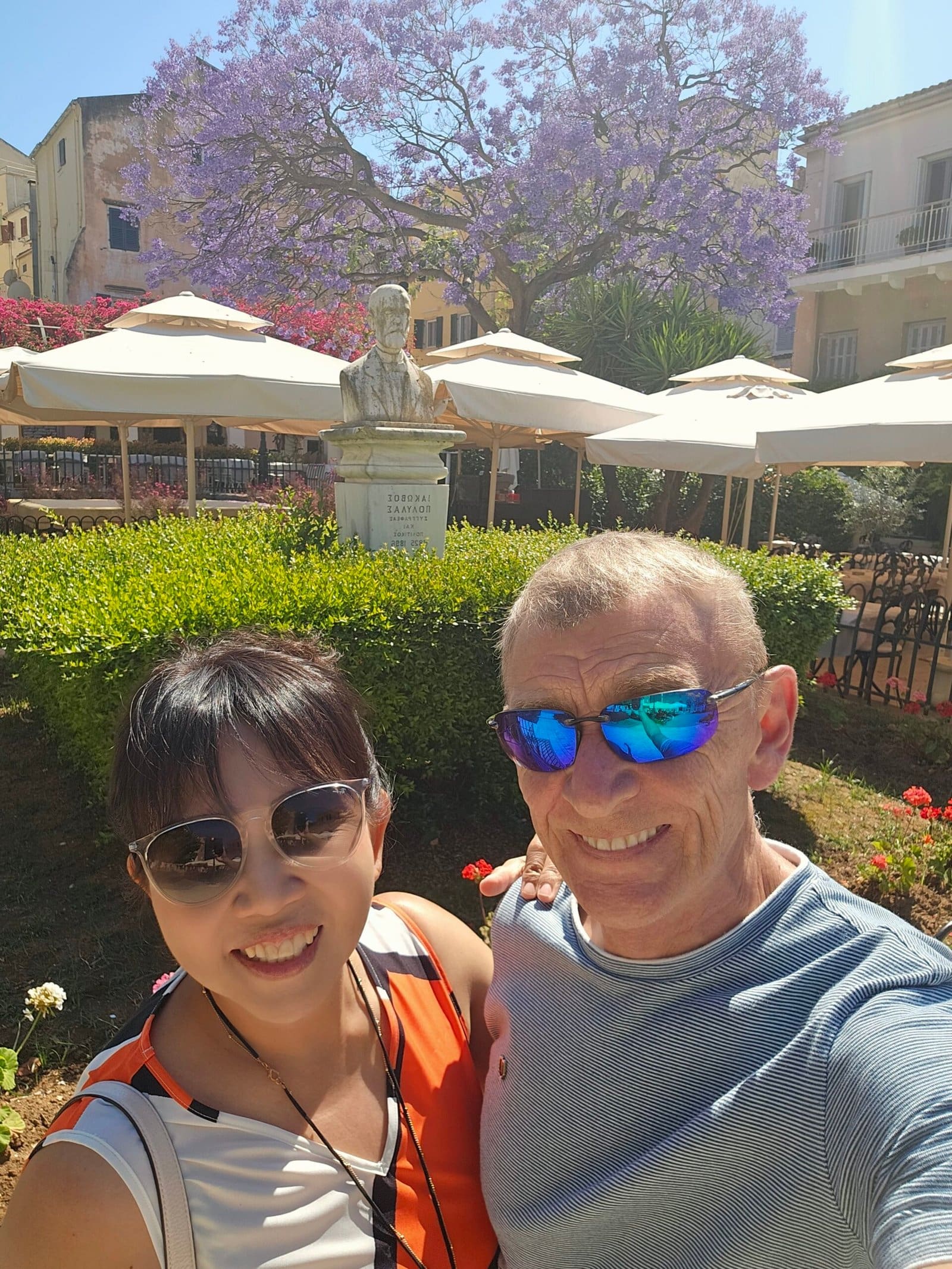
One of the advantages of the included Viking excursion was that it did not consume the entire day. We had ample time afterwards to explore independently.
We wandered through gardens near the Esplanade, browsed small shops selling olive oil and kumquat sweets, and paused for coffee under the arches of the Liston Promenade.
Compared to larger Mediterranean cruise ports, Corfu felt easy and relaxed. Distances are short, and you are rarely far from shade or seating. That makes it particularly well suited to cruise passengers who prefer manageable walking distances.
If cruise traffic is heavy, you could also use midday to escape toward a coastal area such as Paleokastritsa. Just keep your return time conservative.
Early Afternoon: The New Fortress (Neo Frourio)
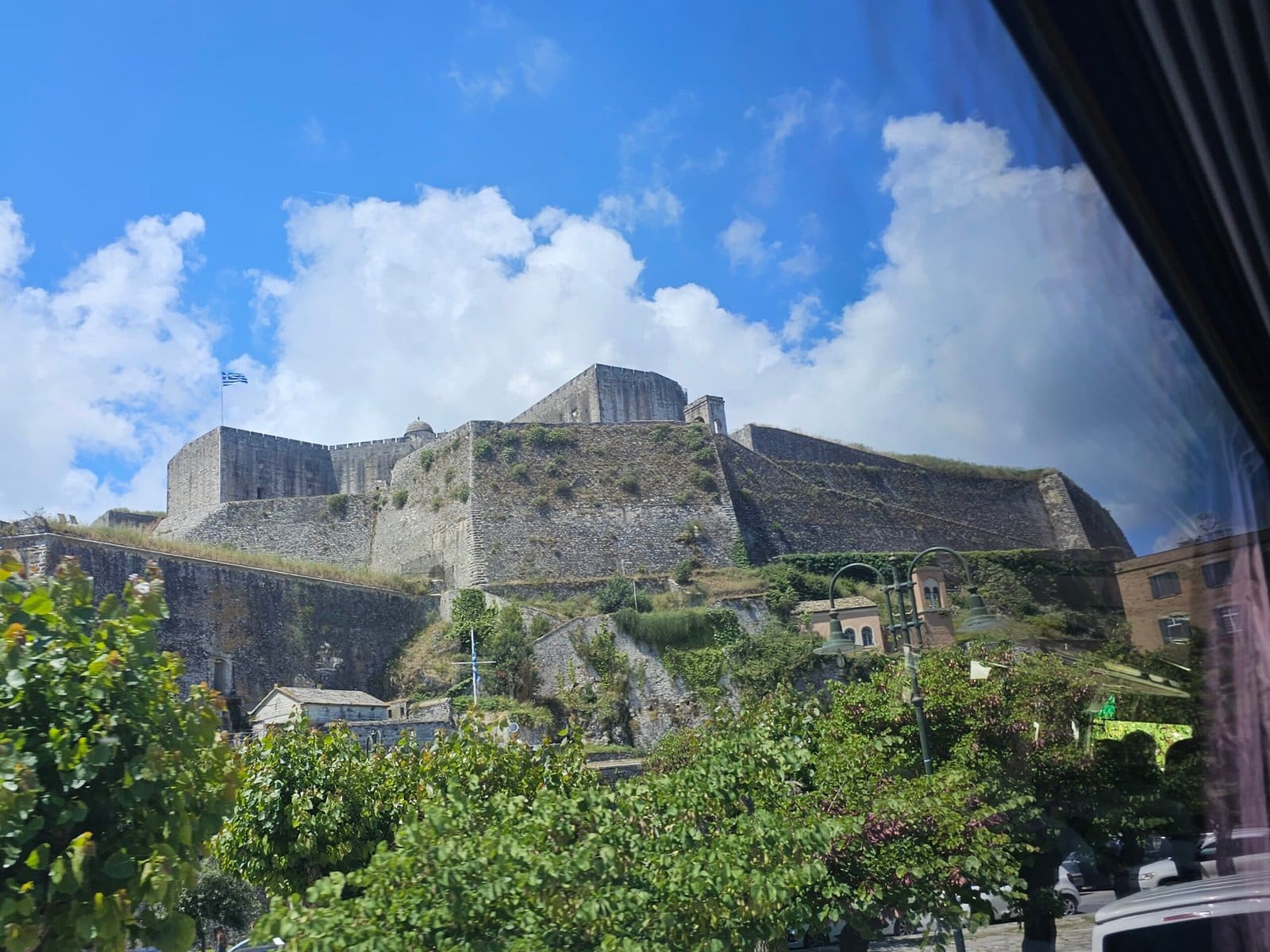
The New Fortress (Neo Frourio) rises above the port area, built by the Venetians in the late 16th century when it became clear that the Old Fortress alone was no longer sufficient to defend Corfu. As artillery warfare advanced, the original fortifications needed reinforcement from higher ground. The New Fortress was constructed to strengthen the city’s western defences and protect the harbour approach — effectively creating a layered defensive system that made Corfu one of the most fortified cities in Europe.
Its position offers a completely different perspective from the Old Fortress. From the upper bastions, you can look down over the port and often spot your cruise ship docked below — a surprisingly helpful visual reference when managing limited shore time. The views across the Old Town rooftops and out toward the Ionian Sea are broader and less crowded than those from the eastern fortress.
Entry when we visited was typically around €4–€5 per adult, again with reduced rates for seniors and EU citizens. Tickets are usually purchased at the entrance. Compared to many Mediterranean cruise ports, it felt very affordable for the scale of the structure and the elevated views.
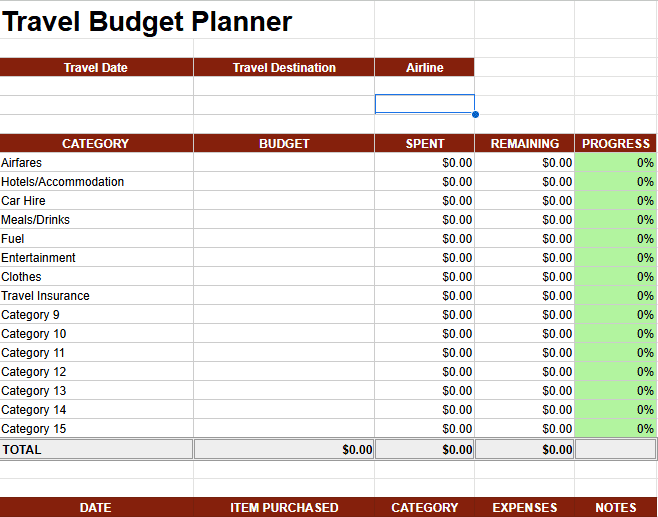
If you’re comparing port costs across multiple destinations, our free Travel Budget Planner can help you track daily expenses throughout your cruise.
This stop can comfortably be explored in about 45–60 minutes, making it an ideal final structured visit before gradually walking back toward the port or shuttle point.
Cruise Crowd Reality in Corfu
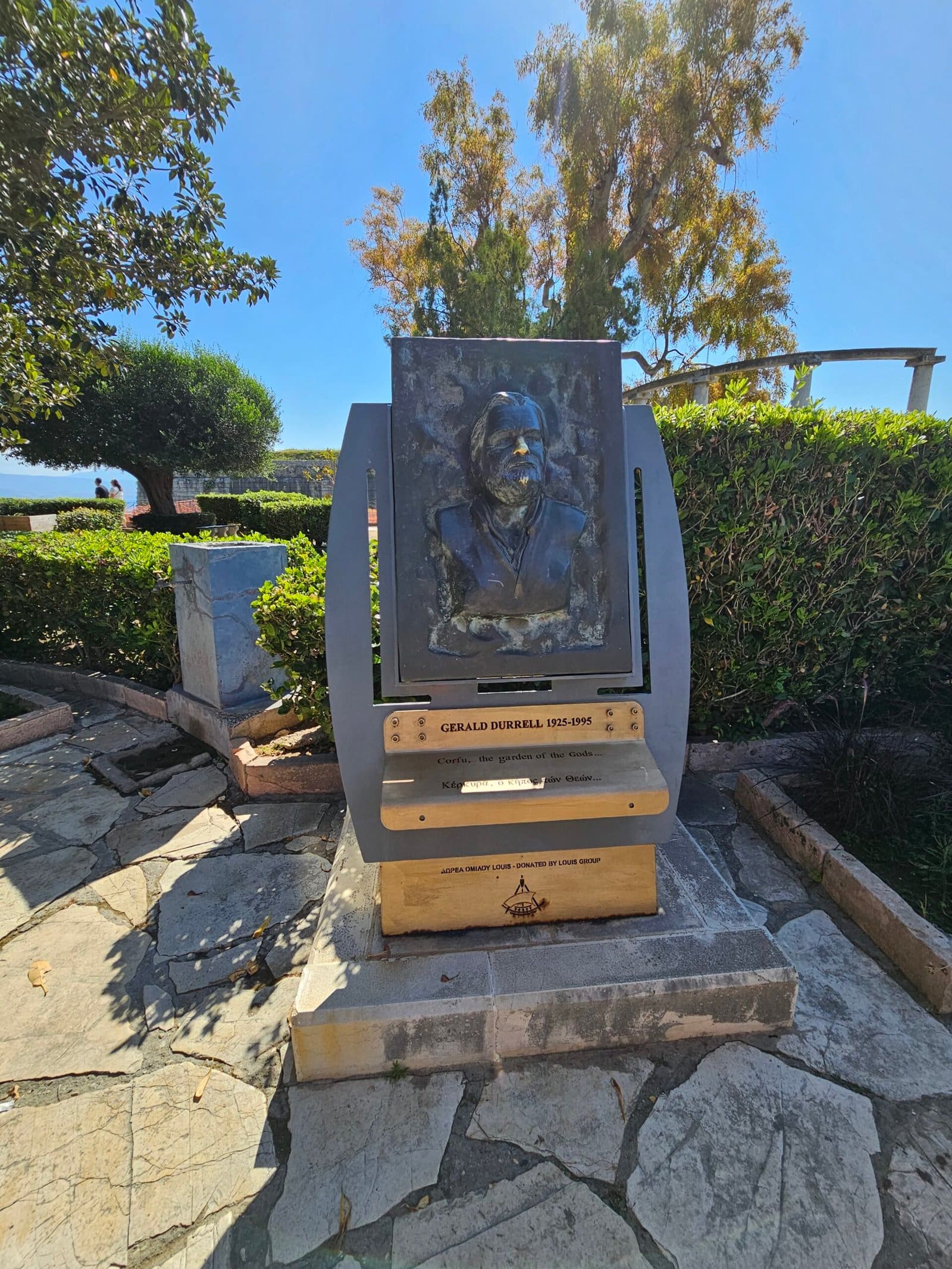
On the day we visited, Corfu felt relaxed and far less crowded than major Italian ports. It appeared that ours was the only ship docked.
However, this can change dramatically in peak season. In summer months, multiple ships may arrive on the same day, significantly increasing foot traffic in the Old Town and at the fortresses.
Before disembarking, we always liked checking cruise schedules through sites such as Cruisemapper to understand how busy the day might be.
If you notice on Cruisemapper that multiple ships are scheduled to be in port on the same day, it’s worth adjusting your expectations and possibly your plan. When several vessels dock together, the Old Town, Liston, and the fortresses can become noticeably busier, particularly between mid-morning and early afternoon.
Cruise passengers don’t always have full flexibility over arrival times if travelling on included coach excursions, but knowing in advance how many ships will be in port gives you a clearer picture of what the day might look like. If it appears crowded, you might consider prioritising one fortress visit early and leaving shopping or café stops for later in the afternoon when tour groups begin filtering back toward the port.
Another option, particularly on heavier cruise days, is to look beyond Corfu Town altogether. Inland villages, scenic viewpoints, or coastal areas like Paleokastritsa often feel far removed from port crowds. Cruise-line excursions can provide this structure, but they are typically priced higher than independent alternatives. If cost is a factor, organising your own small-group tour through platforms such as GetYourGuide can often work out considerably cheaper while also giving you more control over the pace of the day.
That said, if you choose to book through a third-party operator, always check pick-up and return times carefully. Cruise ships will wait for official cruise excursions if delays occur, but they are not obliged to hold departure for independent tours. Building in a comfortable buffer before all-aboard time is essential.
A little planning using tools like Cruisemapper can make a significant difference to how relaxed your day in Corfu feels.
Is Corfu a Good One-Day Cruise Stop?
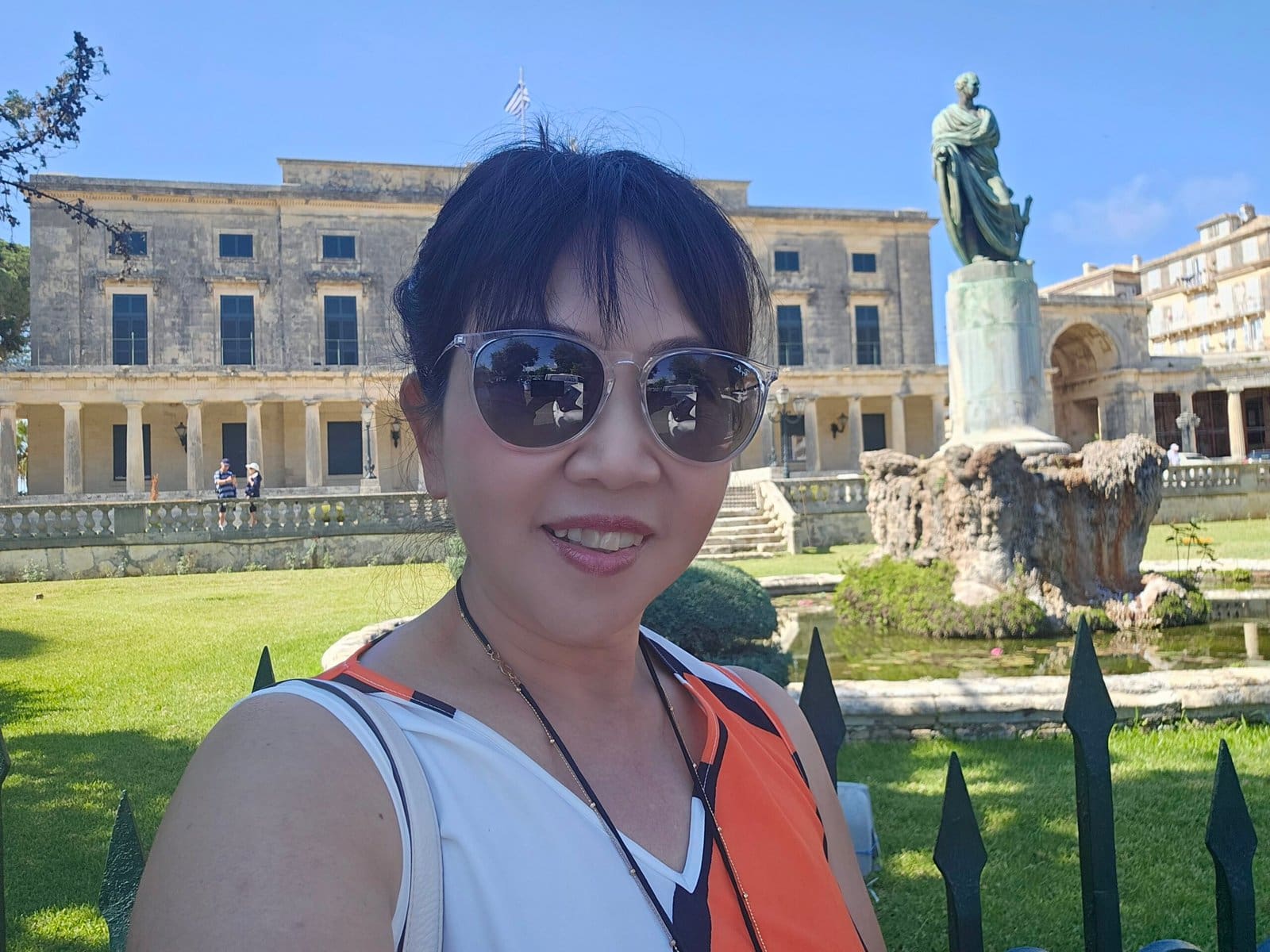
Most cruise passengers don’t select Corfu as a standalone destination — it’s part of a wider itinerary that strings together several Mediterranean ports. With only one day in each location, the goal isn’t to see everything. It’s to gain a meaningful sense of place.
Corfu works well within that structure.
The Old Town is compact, walkable and layered with history. The Old and New Fortresses provide elevated views and context for the island’s strategic importance. Distances are manageable, cafés are plentiful, and the pace feels more relaxed than some of the larger Italian ports.
Like any cruise stop, one day is never enough to see every beach, village or viewpoint. Corfu is no exception. There are inland areas, coastal coves and mountain routes that deserve more time than a port schedule allows.
What we experienced, however, was a balanced and unhurried overview of the city — enough to understand Corfu’s Venetian heritage, its defensive history and its distinctive charm. Before arriving, we knew very little about Corfu beyond its name on the itinerary. By the time we returned to the ship, we felt we had a genuine appreciation for its character.
For a single cruise day, that’s exactly what you want.
Practical Tips for a One-Day Cruise Visit
-
Wear flat shoes for uneven stone streets
-
Bring sun protection — fort walls offer little shade
-
Keep your port return time conservative
-
Use the fortress views to orient yourself
-
Check how many ships are in port
If Corfu Is Part of a Wider Cruise
If Corfu forms part of a broader Mediterranean itinerary, you may also find our review of the Mediterranean cruise port guides helpful for understanding how this stop fits within a 14-day route from Barcelona to Venice.
Watch our video on our visit to Corfu