Cruise booked during the Iran war? If you already have a sailing confirmed, the most important thing to know is this: do not panic and do not rush to cancel blindly. Some cruises have already been disrupted or canceled, while rising fuel prices are also putting pressure on the wider cruise industry. That means travelers need to think carefully about refunds, itinerary changes, travel insurance, and whether it makes more sense to wait, rebook, or choose a different region.
Currently, this story is affecting cruise passengers in two different ways. First, some sailings connected to the Arabian Gulf have already been disrupted or canceled. Celestyal has canceled affected departures and offered guests either a full refund or future cruise credit, while AROYA has suspended affected Gulf sailings as operational conditions continue to be reviewed.
Second, even cruises nowhere near the conflict zone can still be impacted indirectly because fuel prices have surged. Reuters reported that oil prices rose sharply after the conflict escalated, putting fresh pressure on cruise operators’ fuel bills. This raises questions about whether cruise lines will need to protect margins by lifting prices, cutting promotions, or leaning more heavily on fuel surcharges.
That means this is no longer just a “Middle East cruise” story. It is now a cruise pricing, consumer confidence, and booking-risk story as well.
If You Have a Cruise Booked During the Iran War, Do This First
If your cruise is already booked, your first step should be to check the cruise line’s own travel updates and then contact whoever handled your booking, whether that was the line directly, a travel agent, or a third-party booking site. If the cruise line has canceled the trip, changed the itinerary, or offered rebooking, future cruise credit, or refunds, that usually gives you the clearest path forward.
This matters because standard travel insurance often does not work the way people hope in a war-related situation. Policies frequently exclude losses caused directly or indirectly by war, and once a conflict becomes a known event, new claims tied to that event may be restricted even further. In plain English, that means if you cancel first out of fear, before the cruise line actually changes or cancels your trip, you may be relying more on your fare rules than on a successful insurance claim.
That is why the safest order is usually simple: check the line’s update, check your booking terms, read your insurance wording, and only then decide whether to proceed, rebook or cancel.
If you’re still shopping for cover for a future trip, or you want to compare policy wording carefully before making a new booking, this is a good time to review a few options. Rather than assuming every policy covers every disruption. Compare travel insurance options here.
What is actually happening to cruises right now?
Some of the disruption is already real, not hypothetical. Celestyal says it canceled affected late-March sailings while finalizing the repositioning of Celestyal Discovery to the Mediterranean, with booked guests offered either a full refund or future cruise credit. AROYA has also confirmed that affected Arabian Gulf departures would not proceed while it reviewed operational conditions.
At the same time, the wider cruise industry is also dealing with a different problem: higher fuel costs and the possibility that some customers become more hesitant about booking big international trips while headlines remain unsettled. Even if a line has no ships operating directly in the Gulf, it still has to manage the knock-on effects of higher energy prices, weaker confidence, and possible shifts in booking patterns.
That distinction matters. Your Caribbean, Alaska, or Asia sailing is not automatically in trouble just because the headlines are severe. But the wider cruise industry still has to deal with higher fuel bills, weaker confidence in some markets, and the possibility that more travelers delay or rethink expensive long-haul cruise plans.
Why fuel prices matter even if your cruise is nowhere near Iran
Cruise ships are not just transport. They are floating hotels, restaurants, entertainment venues, air-conditioned resorts and logistics operations all in one. That means they need huge amounts of energy every single day.
A 2026 energy analysis of large cruise ships found that conventional cruise ships typically consume around 140 to 150 tonnes of fuel per day at sea, with the largest vessels reaching roughly 250 tonnes per day. That is an enormous amount of fuel, and it helps explain why oil-price shocks matter so much to the industry.
Reuters reported that a 10% change in fuel cost per metric ton could reduce Carnival’s 2026 net income by about $145 million, compared with around $57 million for Royal Caribbean and roughly $90 million for Norwegian. Reuters also noted that Carnival is more exposed than its major peers because it does not hedge fuel in the same way.
For travelers, the takeaway is simple: fuel is not a side issue. It is one of the biggest cost pressures cruise lines face, and if oil stays high for a prolonged period, that pressure is likely to show up somewhere.
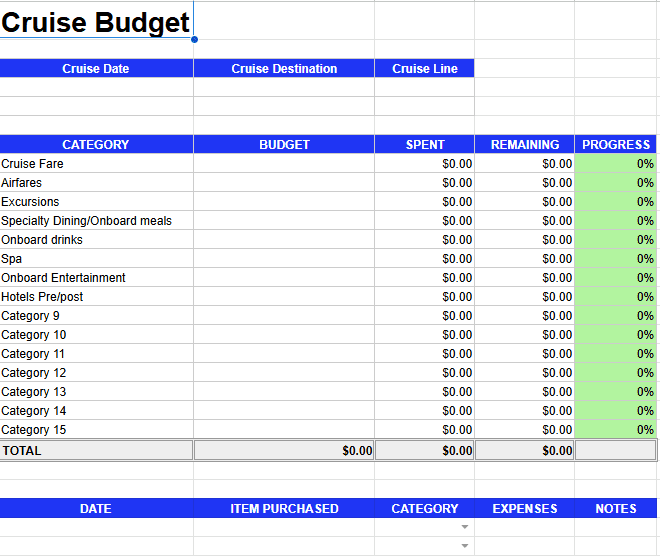
If you’re trying to work out whether a cruise still fits your budget once fuel-driven price pressure starts creeping in, our Cruise Budget Planner is a practical place to start. It helps you map out the total cost of a cruise, not just the headline fare.
What cruise lines are likely to do if fuel stays high
Cruise lines have several ways to respond to a sustained fuel shock.
Some hedge fuel financially. Others focus more heavily on efficiency. Carnival told Reuters that its preferred hedge is simply to use less fuel, saying it had cut fuel use by 18% since 2011 despite increasing capacity significantly. Operationally, that can mean route optimization, slower speeds where practical, tighter deployment decisions, and more effort to keep ships full at profitable pricing rather than chasing volume with weak fares.
Passengers should also remember that some cruise contracts explicitly reserve the right to impose fuel supplements. Royal Caribbean’s guest terms say cruise fares exclude any fuel supplement the carrier may impose, while Norwegian says it may charge a fuel supplement if West Texas Intermediate rises above its stated threshold, capped at $10 per passenger per day.
That does not mean every line will suddenly add a surcharge tomorrow. But it does mean higher fuel prices can show up in several ways:
- fewer promotional fares
- higher prices on new bookings
- weaker inclusions
- possible fuel-surcharge clauses
- more pressure on low-margin itineraries
This is also why it helps to look beyond the advertised fare. The base fare is only part of the picture. Gratuities, drinks, Wi-Fi, excursions, and onboard spending can still matter more to your final cost than a small movement in the ticket price. If you want a quick estimate before you commit, our Cruise Cost Estimator can help you compare likely cruise costs before you book.
You may also find it helpful to read our guide on how to budget for a cruise, especially if you are comparing regions, cruise lengths, and cabin types while prices remain volatile.
Should you book now, or wait?
This is where most people want a simple yes-or-no answer, but the honest answer is that it depends on what you want to book and how flexible you are.
If you are looking at itineraries in or near the affected region, waiting can make sense. Let the cruise lines clarify deployments, let the insurance position become clearer, and let the market settle before locking yourself into a trip that may still feel uncertain.
If, on the other hand, you are flexible about destination, ship and timing, there may still be value available now by shifting your focus away from the most sensitive regions.
I would also be careful about assuming that huge discounts are guaranteed once the conflict ends. That may happen in some markets, but it is not certain. Higher fuel prices can push fares up even while uncertainty pushes demand down. Sometimes the demand shock wins. Sometimes the cost shock wins.
What I do think is fair to say is that flexible travelers often do best in uncertain markets. If cruise lines need to stimulate bookings once conditions improve, there may well be opportunities later.
That matches our experience after the COVID-19 lockdown period. Once travel reopened, we were able to secure a Mediterranean cruise with Viking at roughly half of what similar sailings can cost today. That does not prove the same thing will happen again, but it is a reminder that disruption can create real value for travelers who are patient and ready to move when the right fare appears.
Better alternatives if you still want a cruise

If you have not booked yet and do not want to spend the next few months worrying about conflict headlines, one sensible option is to choose a region that feels operationally far removed from the current disruption.
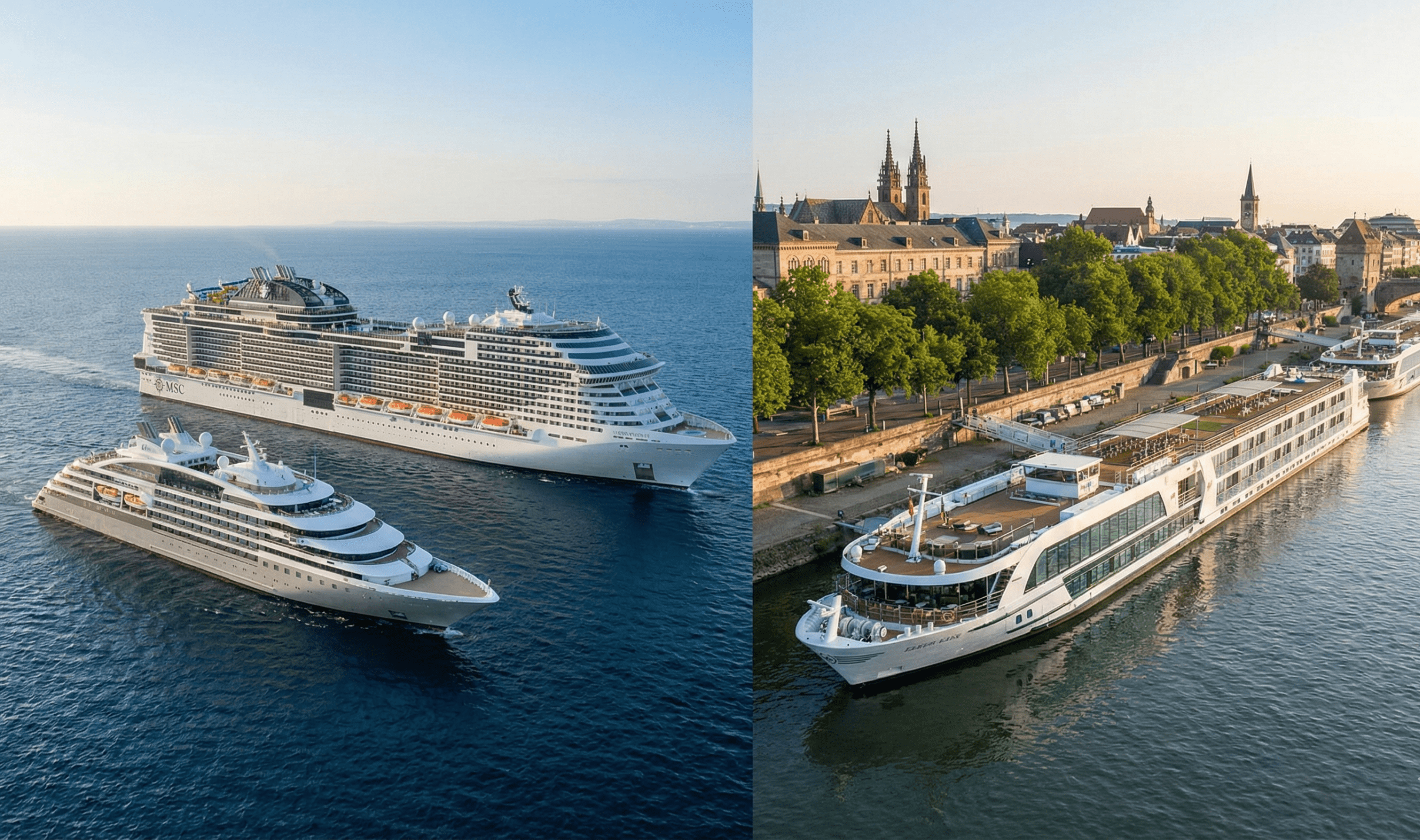
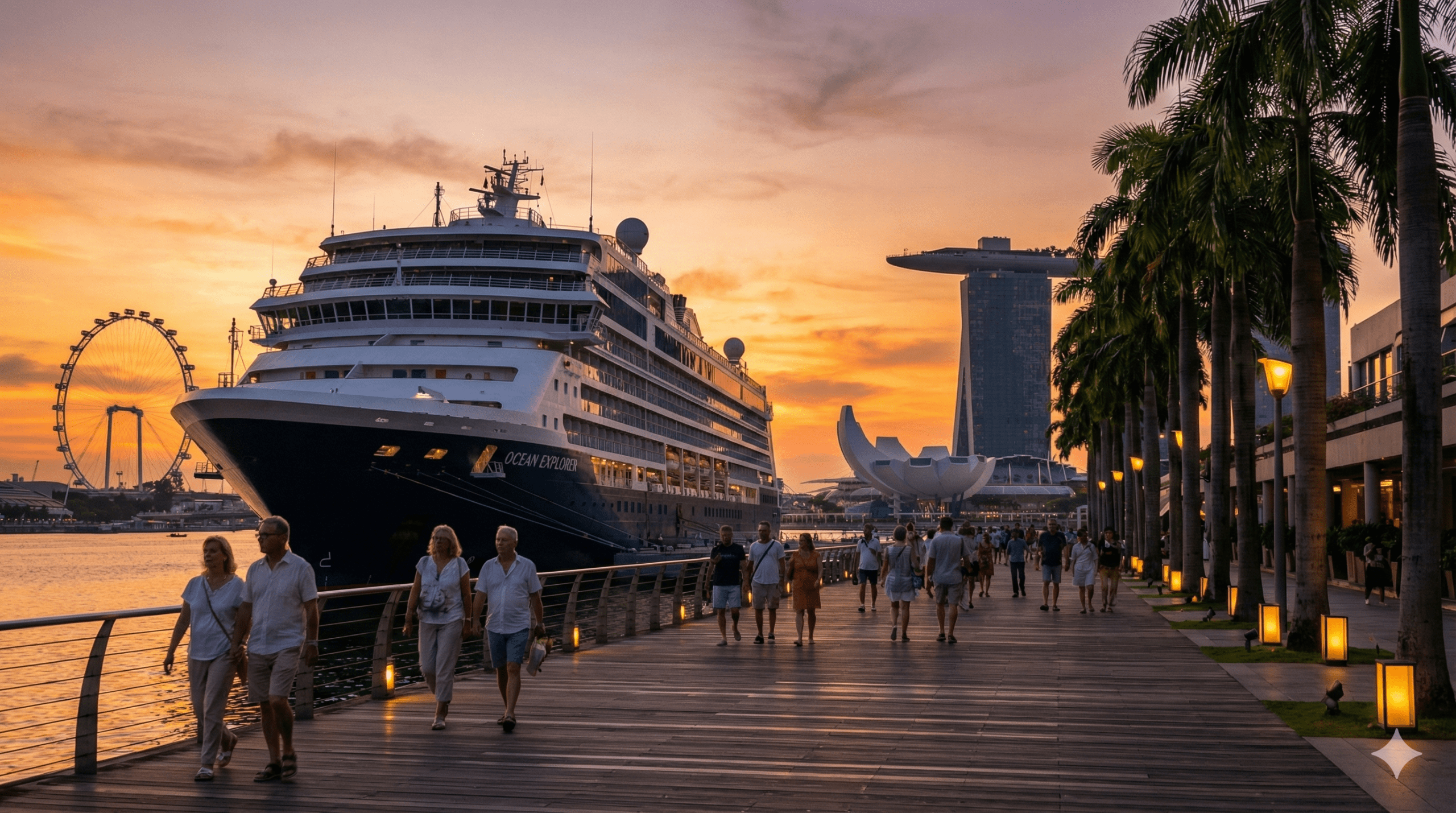
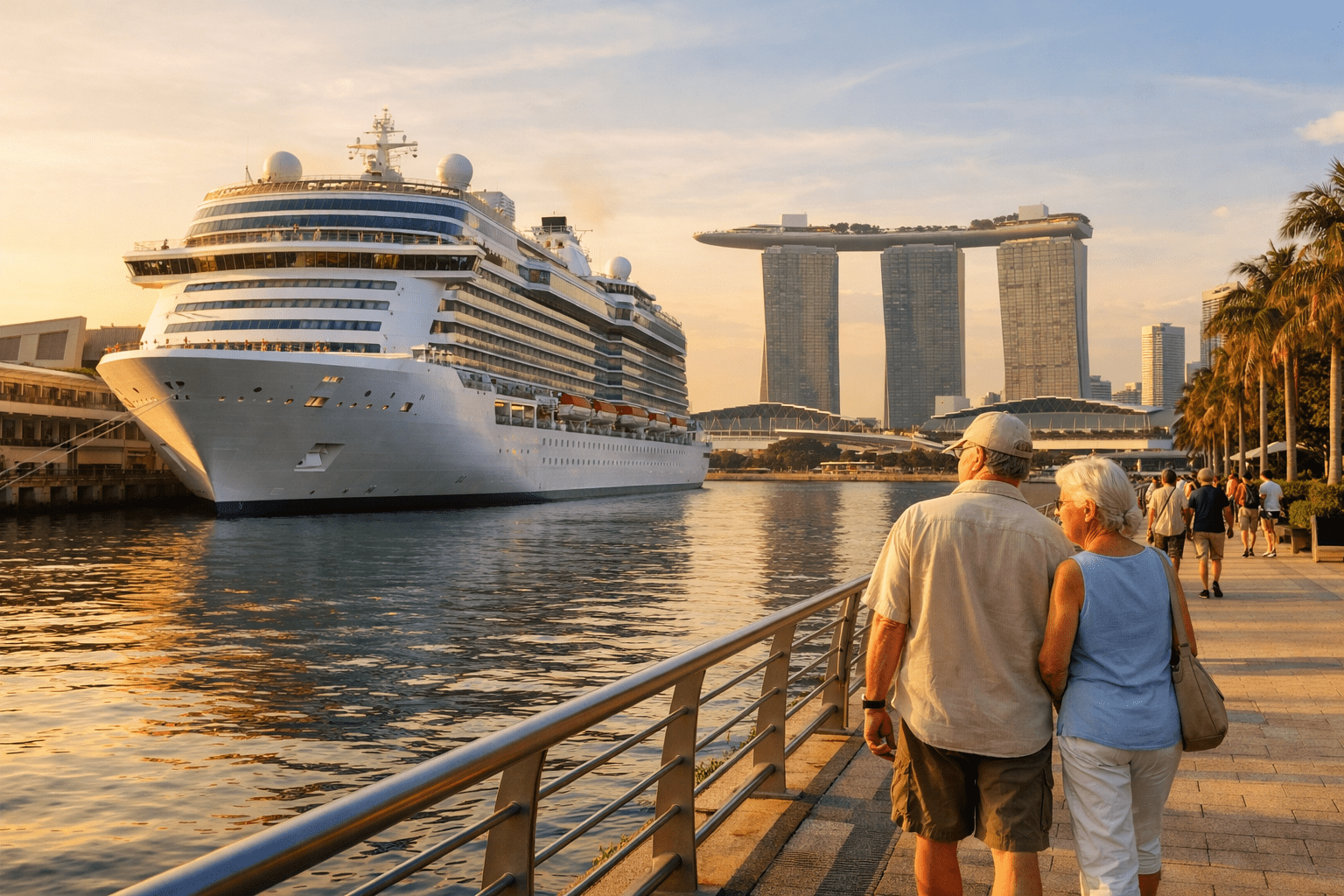
That could mean looking harder at Southeast Asia sailings from Singapore, Australia and New Zealand routes, Caribbean itineraries, Alaska, or even selected river cruises. In other words, this may be the right moment to be flexible on region rather than flexible on risk.
If Asia appeals, we already have some useful starting points:
- Best Cruises from Singapore for Seniors
- Best Cruises from Singapore to Malaysia and Thailand for Seniors
- Best Ocean Cruises in Asia for Seniors
- Best Cruise Lines for Seniors in 2026
Those articles can help you compare calmer alternatives if you still want the cruise experience without the extra uncertainty of booking too close to a conflict zone.
If you’re still comparing options and want to browse sailings outside the affected region, it may be worth checking what is currently available in Asia, Australia, Alaska or the Caribbean through CruiseDirect.
Or take a land trip and wait for the cruise market to settle
There is another option that many people may not have considered: skip the cruise for now, take a land-based trip instead, and keep watching the cruise market.
That can be a smart move if you have not booked yet, you are price-sensitive, or you simply do not want to commit to something that still feels uncertain. A land holiday may give you more control, more flexibility, and a chance to wait and see whether cruise pricing becomes more attractive once the situation stabilizes.
For some travelers, that may mean choosing a city break, a rail-based Europe trip, or a resort stay instead of a cruise this year. For others, it may mean redirecting the money you would have spent on a cruise into a more flexible hotel-and-flight trip while you wait for the cruise market to calm down.
If that sounds more appealing right now, our guide to planning a land vacation is a good place to start. And because accommodation often becomes the biggest expense on land trips, you may also want to read our article on how to find cheaper hotel deals on Booking.com before you lock anything in.
The bottom line
If your cruise is already booked, the smartest response is not panic. It is process.
Check the cruise line first. Read your booking terms. Read your insurance wording. Keep records of everything. And avoid canceling on impulse before you know what options the cruise line itself may already be offering.
If you have not booked yet, think carefully about whether you want certainty or opportunity. If you want certainty, choose a region far from the disruption or take a land holiday this year. If you want opportunity, stay flexible and watch the market in case cruise lines start using price to rebuild demand once conditions improve.
Either way, this is not the moment to book casually and hope for the best.
It is the moment to plan carefully, budget realistically, and stay flexible.
Sources