
Learning how to find cheaper hotel deals can dramatically reduce your travel costs, especially when travelling overseas where accommodation is often one of the biggest expenses after flights.
Flights, visas, transport connections, insurance and accommodation all need to line up correctly, and for many travellers, accommodation becomes one of the largest travel expenses after flights.
If your travel dates are locked in — perhaps due to school holidays or fixed annual leave — then your options are limited. You simply choose the best flights and accommodation available for those specific dates.
But many travellers, particularly retirees, long-term travellers, or people able to travel outside peak periods, have flexibility. And flexibility can dramatically reduce travel costs — especially accommodation costs.
In fact, on longer trips accommodation often becomes the largest expense, sometimes exceeding flight costs.
This guide explains a simple method we use regularly on Booking.com to find cheaper accommodation prices. It’s a technique many travellers overlook, yet it has saved us thousands over years of travel.
The screenshots in this guide follow the same sequence we personally use when researching accommodation.
Why Accommodation Prices Vary So Much
Accommodation pricing changes constantly.
Hotels and resorts adjust room rates based on:
• Demand
• Season
• Local events
• Occupancy levels
• Weather seasons
• Last-minute cancellations
Peak seasons naturally bring higher prices. However, prices also fluctuate week to week and sometimes day to day.
If you’re flexible, even shifting your stay by a few days — or sometimes just one day — can significantly reduce costs.
This becomes especially important on longer stays, where savings compound quickly.
Why We Start Every Accommodation Search on Booking.com
There are many accommodation booking platforms today, including Agoda, Expedia, Trip.com, Klook and others.
Occasionally, booking directly with a hotel produces a better deal, but in our experience this is rare. Most of the time the best prices are found through major booking platforms.
After travelling to more than 500 destinations, we now begin almost every accommodation search on Booking.com.
The platform offers:
• Massive accommodation selection worldwide
• Customer reviews and ratings
• Price comparisons
• Booking management in one place
• Loyalty discounts through the Genius program
We estimate we now book through Booking.com around nine times out of ten.
Step 1: Search by Map, Not by List
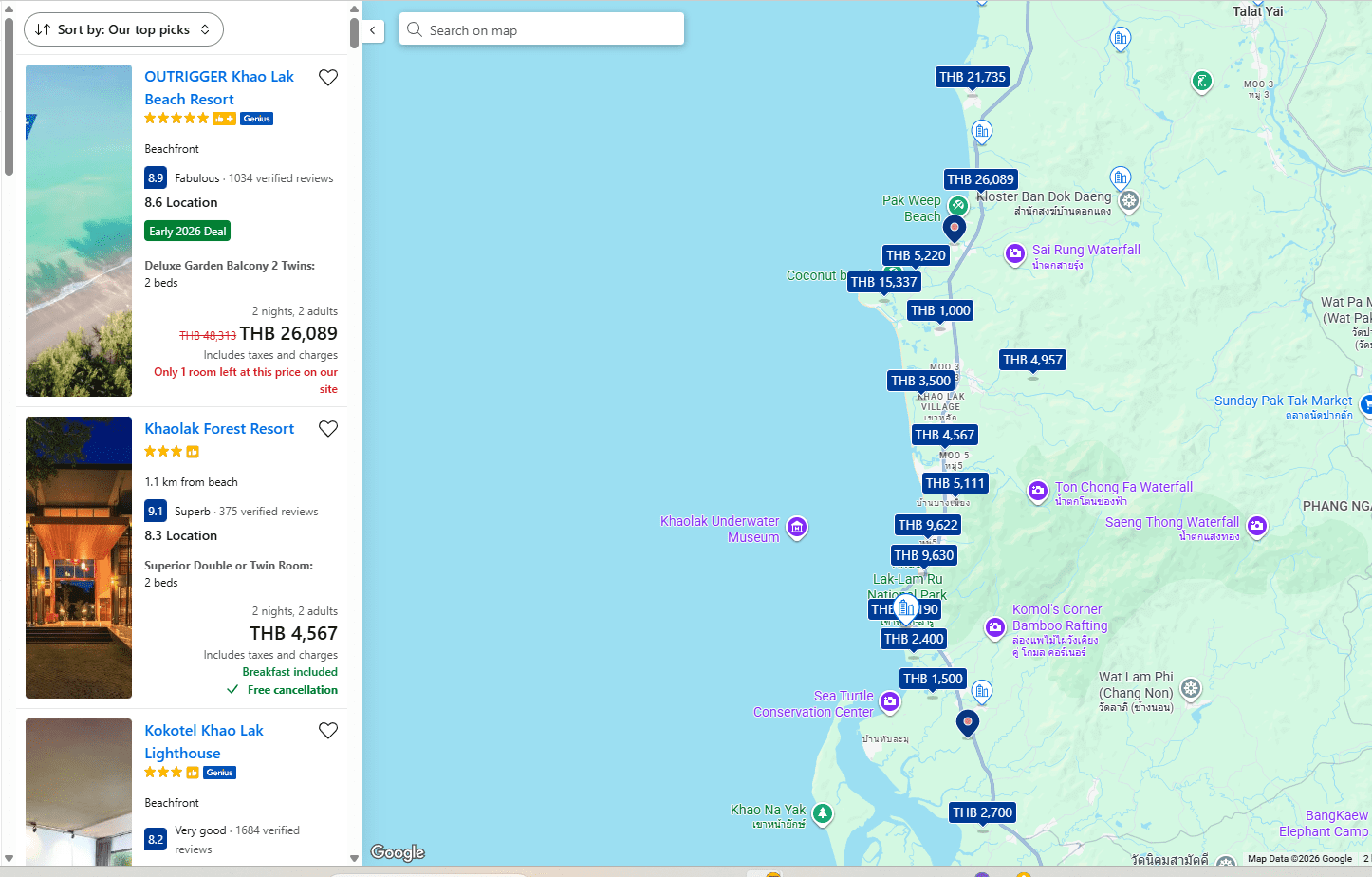
When you first search a destination, Booking.com displays accommodation options alongside a map. you can also follow along with our example by going directly to this booking.com link for the example we are showing. Bear in mind that prices change all the time so what you see on your device will likely differ from what we are showing here.
We always switch to map view first.
Why?
Because price alone doesn’t matter if the hotel is poorly located.
The map helps you:
• See where properties sit relative to beaches or attractions
• Avoid booking far from restaurants or transport
• Compare price differences between neighbourhoods
• Understand walking distances
In our example, we searched Khao Lak in Thailand and focused on beachfront areas. If you are interested in other locations in Thailand see our Thailand Travel Guide which shows you all the great places to stay based on our own experiences.
Step 2: Select a Property and Lock in Initial Dates
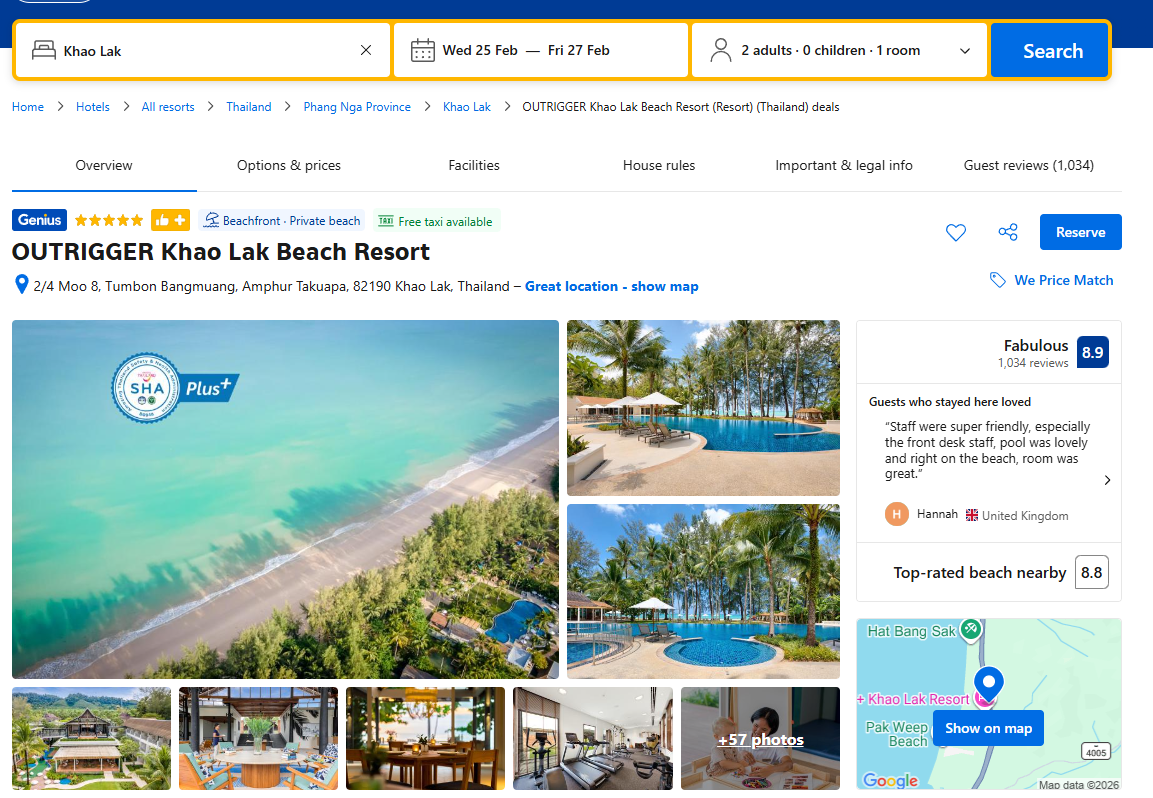
After choosing an area, select a property that suits your preferences.
In this example, we chose the Outrigger Khao Lak Beach Resort and searched for a two-night stay from 25–27 February.
Scrolling down shows available room types and pricing.
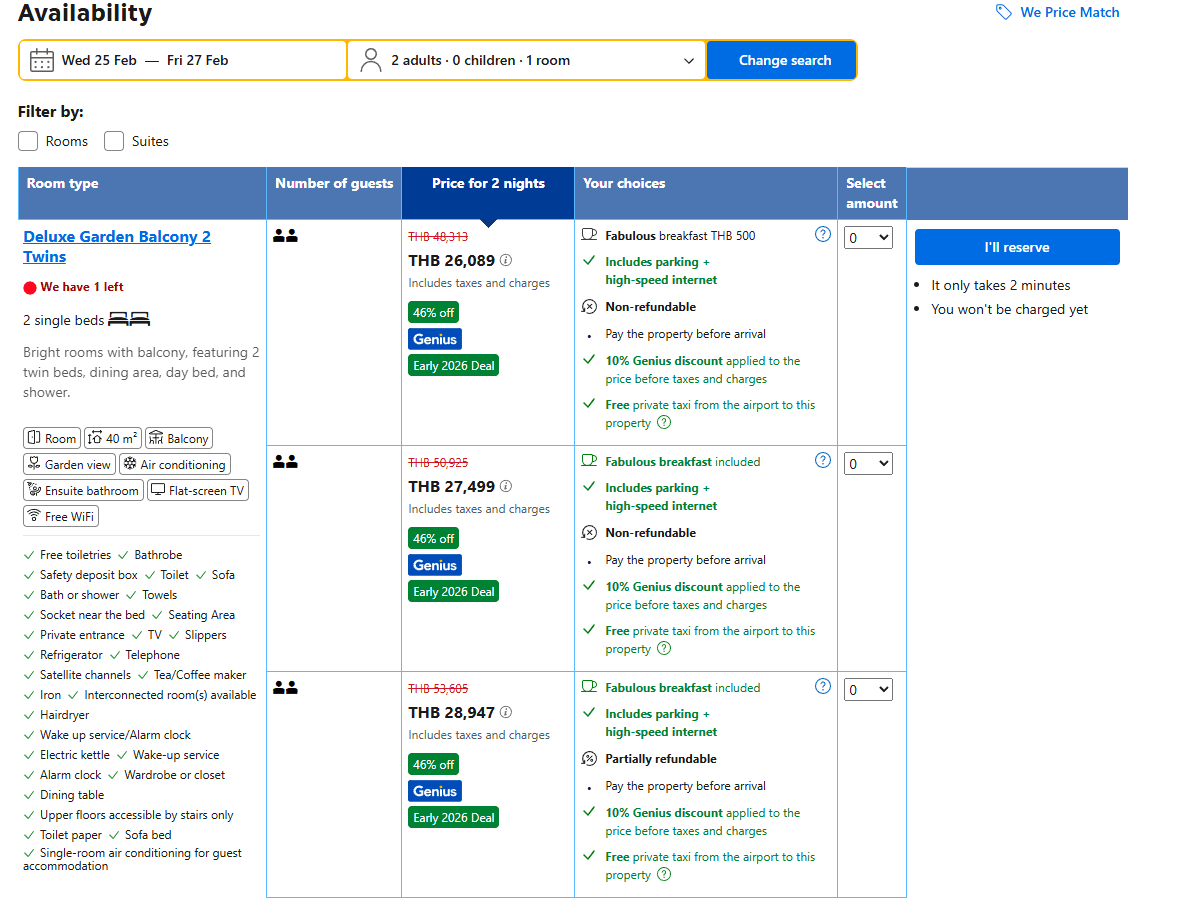
At first glance, the cheapest room costs around 26,000 baht for two nights without breakfast.
Many travellers stop here and book.
But this is where the money-saving trick begins.
Step 3: Use the Availability Calendar Instead of Changing Dates Manually
Instead of going back and manually changing dates, click the availability calendar just above room options.
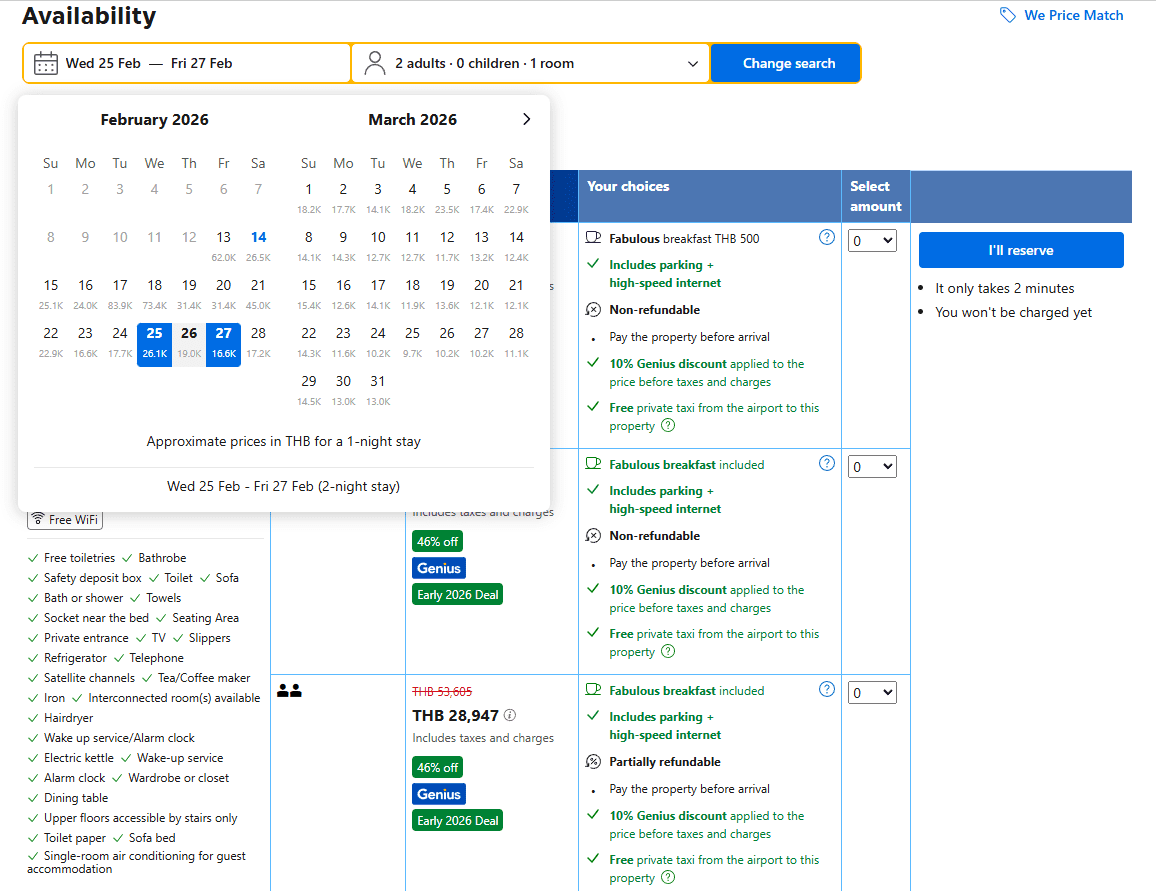
This calendar displays approximate prices across surrounding dates.
It isn’t perfectly accurate but gives a strong price guide.
Now flexibility becomes powerful.
Looking at the calendar, shifting the same stay by one month to late March reduces the price to around 11,500 baht for the same room.
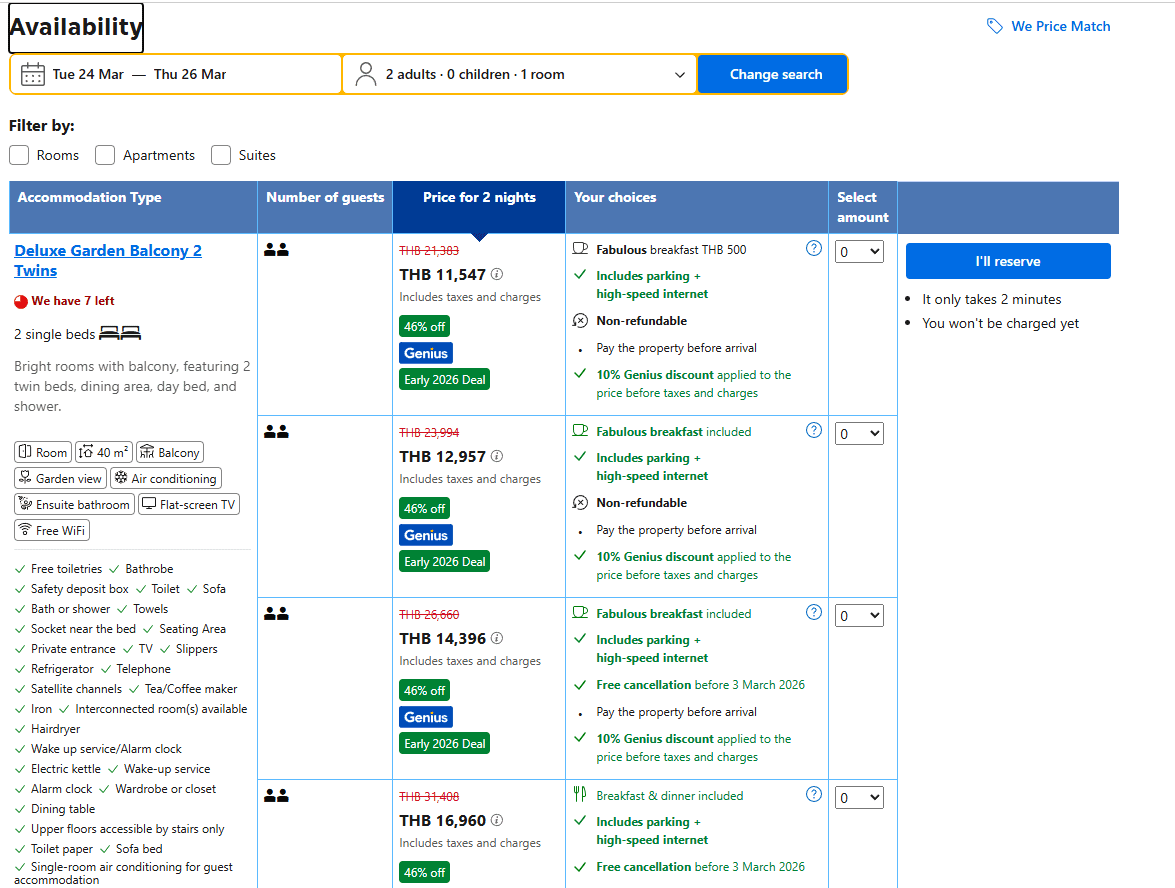
That’s roughly a 55% price reduction.
Step 4: Check Shoulder and Low Seasons
Let’s take it further.
Thailand’s wet season officially begins in May. Tourism slows, and hotels reduce prices.
Yet weather in early wet season is often still excellent, with only occasional short afternoon showers.
Moving the same booking into early May reduces the price to about 4,200 baht for two nights.
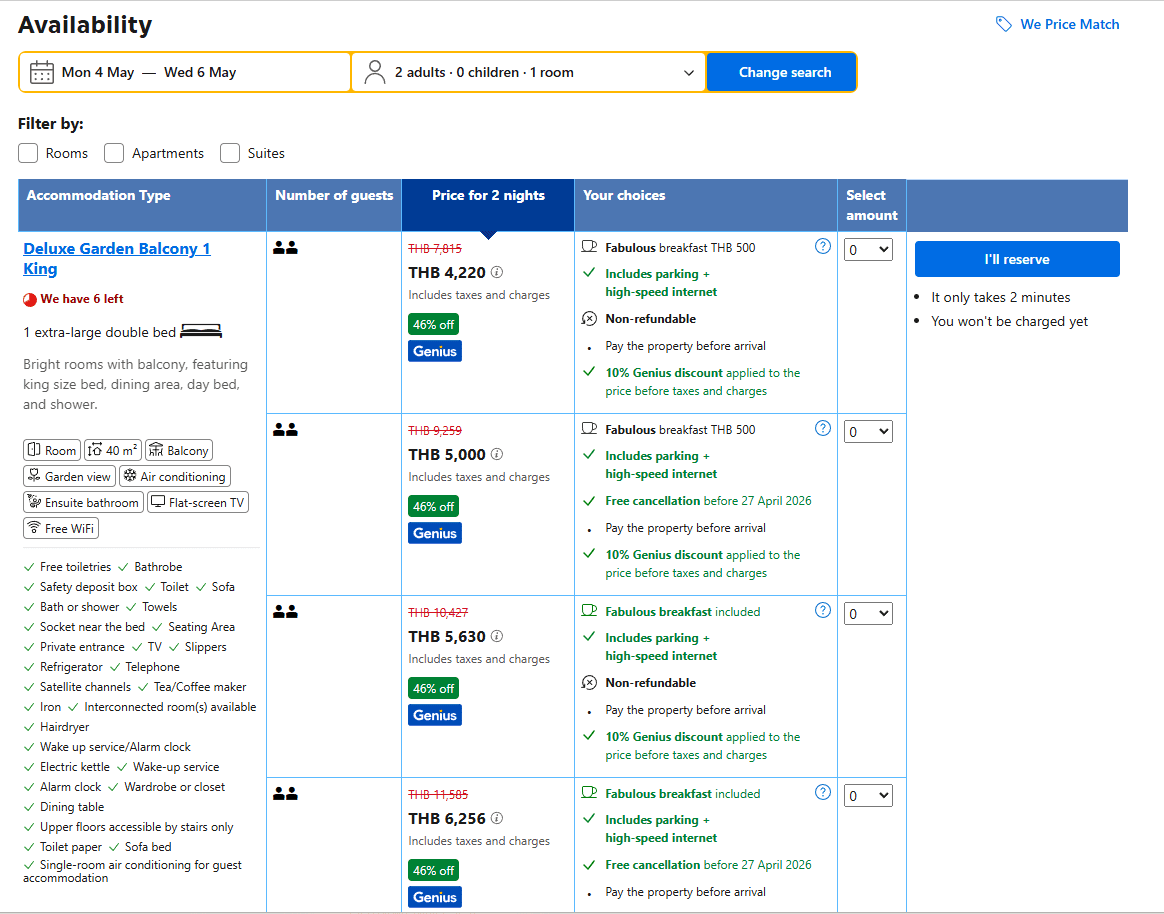
Compared with February’s price, this is a saving of over 21,000 baht for the exact same property and room type
And prices often drop further in June.
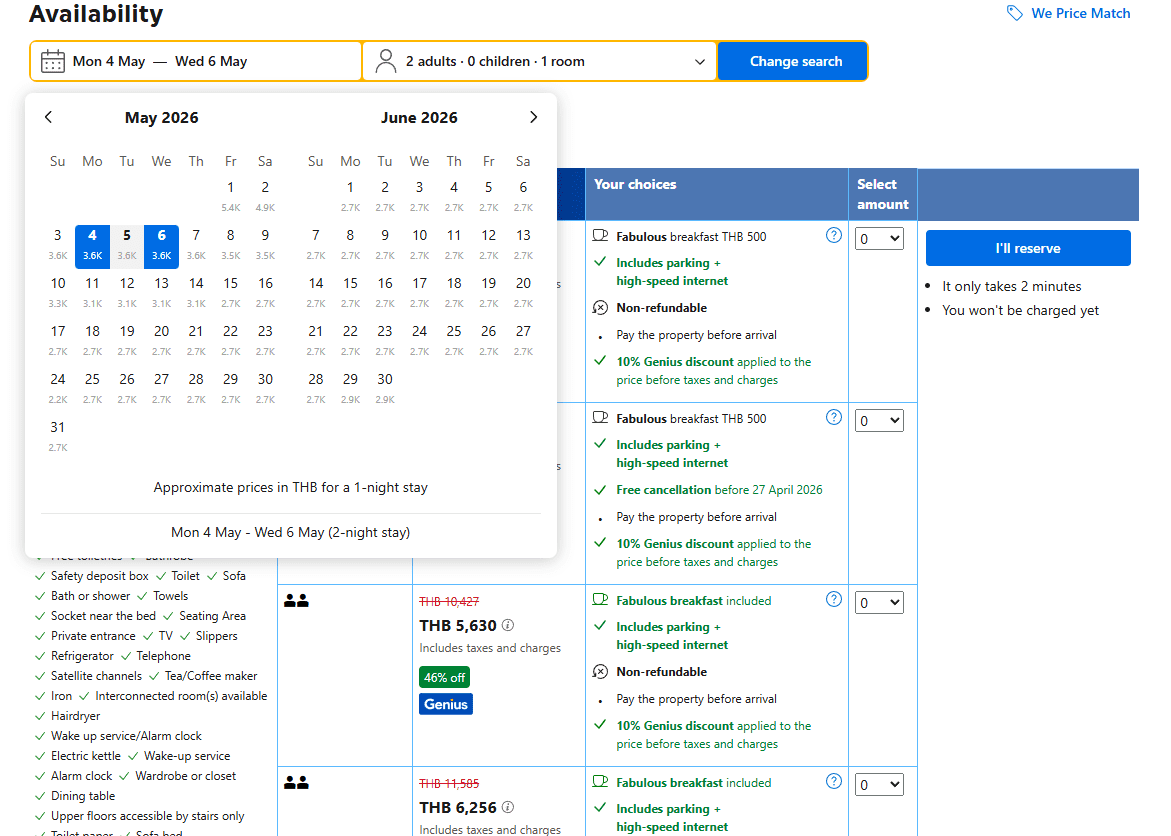
For longer stays, these differences become enormous. Over time, this simple method has become our most reliable way to find cheaper hotel deals almost anywhere we travel.
Why This Calendar Trick Works
Hotels constantly adjust prices based on expected demand.
Many travellers simply search specific dates, unaware cheaper periods exist just days or weeks away.
The availability calendar reveals price trends instantly.
Even if your travel dates aren’t fully flexible, shifting by one or two days can still reduce costs.
We recommend checking this calendar for every accommodation booking.
Step 5: Understand Room Differences
Next, carefully review room options.
Rooms often appear similar but differ in:
• Bed configuration
• Breakfast inclusion
• Cancellation flexibility
• Balcony or room size
• Refund terms
Cheaper rooms are often non-refundable, which risks losing money if plans change.
We usually prefer slightly higher prices with free cancellation when booking ahead.
Genius Discounts and Promotions
Booking.com’s Genius rewards program provides discounts and benefits after repeated bookings.
Higher Genius levels may provide:
• Additional discounts
• Free breakfast
• Room upgrades
• Late checkout
Always ensure you’re logged into your account when searching.
Booking Direct vs Booking Platforms
Once you find a good price, it’s worth checking the hotel’s direct website.
Occasionally they offer better deals, but this is uncommon.
Hotels often allocate discounted inventory to booking platforms, so direct bookings may not always be cheaper.
We still prefer Booking.com for convenience and booking management.
Why We Stick to One Booking Platform
Using multiple booking platforms weakens loyalty benefits.
Sticking with one provider builds reward levels faster.
Booking.com also offers price matching if you find a lower rate elsewhere.
Maintaining booking history and management in one account simplifies travel planning.
Always Recheck Prices After Booking
If you book refundable accommodation, monitor prices.
If prices fall, cancel and rebook.
We frequently do this on long trips and save additional money.
Why Booking Flights First Isn’t Always the Smartest Move
Many travellers automatically book flights first and then organise accommodation around those fixed dates. While this approach works when your travel schedule is locked in — such as during school holidays or fixed leave periods — it isn’t always the most cost-effective strategy when you have flexibility.
Accommodation prices often fluctuate far more than airfares, especially in popular destinations where rates change according to demand, seasons and local events. By checking accommodation prices first, you may discover that shifting your trip by a few days or even a few weeks dramatically reduces hotel or resort costs. In some cases, savings on accommodation easily outweigh small differences in airfare prices.
If your travel dates are flexible, it can be smarter to research accommodation prices first, identify the most affordable period to travel, and then book flights to match those lower-cost dates.
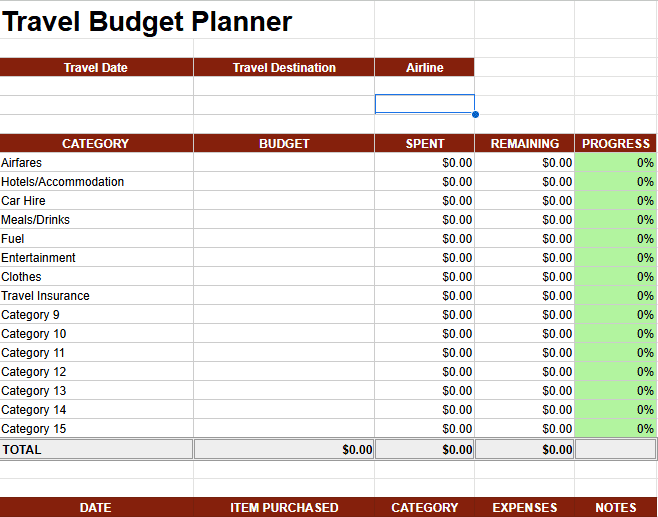
To help plan your trip more effectively, use our travel budget planner below — or download a copy from our Resources page — to compare costs and see how much you could potentially save by adjusting your travel timing before locking in flights.
Final Thoughts: Flexibility Saves Money
This method only works if you have some flexibility in travel timing.
But even minor flexibility can create savings.
Accommodation prices fluctuate constantly, and the availability calendar provides a quick visual guide to better deals.
Before confirming any booking, check nearby dates. You might be surprised how much prices vary.
Using this method consistently has saved us thousands over years of travel.
Accommodation is too large an expense to book without checking alternatives. Travellers who learn how to find cheaper hotel deals consistently save thousands over years of travel.