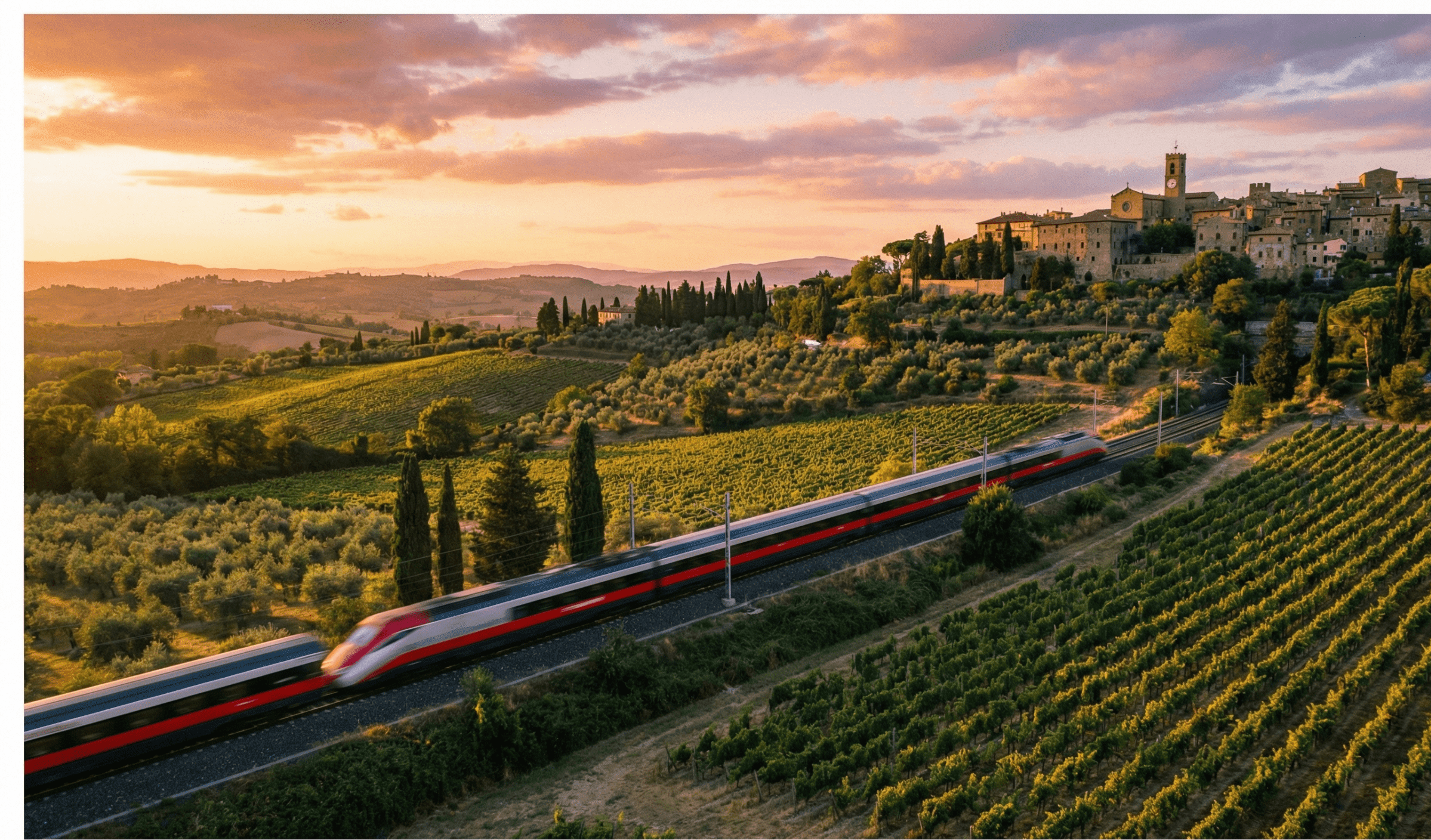
Getting around Italy is part of the enjoyment of visiting the country. High-speed trains link major cities, regional services reach smaller towns and coastal villages, ferries connect islands and scenic coastlines, and domestic flights help cover longer distances when time is limited.
Transport across Italy is generally affordable and extensive, but comfort and quality vary depending on region and service. With a little planning, moving between cities, countryside and islands is straightforward, and journeys often become part of the experience — whether you are watching vineyards pass by train or arriving by ferry beneath colourful coastal towns.
Most visitors combine high-speed trains with regional trains, buses, ferries and occasional flights depending on distance and itinerary. Within cities, public transport, taxis and walking usually cover everything needed. Understanding how each option works helps avoid stress and makes travel days far smoother.
If you’re still deciding where to base yourself, our guide to finding accommodation in Italy explains the best neighbourhoods and stay options across the country.
You can also compare hotel and apartment prices across Italy here via Booking.com to secure convenient locations near stations and city centres before travelling.
High-Speed Trains: The Best Way of Getting Around Italy

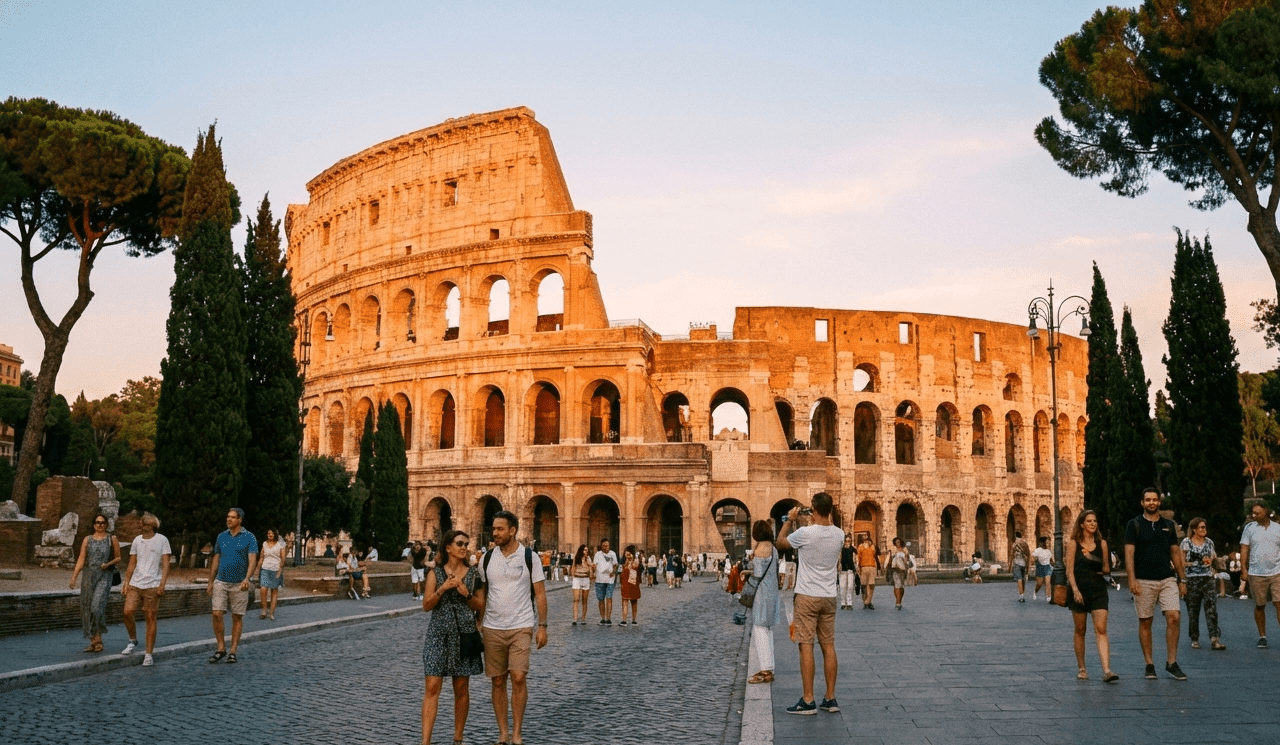
For most travellers, trains are the simplest and most comfortable way to travel around Italy. High-speed rail connects cities such as Rome, Florence, Milan, Venice, Turin and Naples in just a few hours, allowing easy multi-city trips without needing flights or car hire. Rome is often the first stop for travellers arriving in Italy, and our detailed Rome travel guide helps you plan what to see, where to stay and how to handle crowds efficiently.
Italy’s two main high-speed operators, Trenitalia and Italo, run modern trains with reserved seating, luggage storage and onboard facilities. Timetables and service updates can also be checked directly on the official Trenitalia website when planning longer journeys.
Stations are centrally located, meaning you usually arrive close to accommodation and major attractions. We when travelled by train we always found it convenient to look for accommodation near the train stations. Venice is another city easily reached by train, and our practical Venice travel guide explains how to plan your visit and avoid the heaviest crowds.
Booking tickets in advance often secures cheaper fares, particularly on busy routes. During peak travel periods trains can sell out, so reserving seats ahead avoids last-minute problems. We booked our train tickets through Trainline because it lets you compare both Trenitalia and Italo services in one place and reserve seats easily before arrival. In fact we used Trainline for all our European travel and they also have a handy app that you can use to keep track of all your bookings
High-speed services are generally reliable and comfortable, making rail the preferred choice for most long-distance travel within mainland Italy.
Regional Trains: Reaching Smaller Towns and Coastal Regions

Regional trains serve towns and destinations not covered by high-speed routes, including places such as Cinque Terre, Tuscany hill towns, Lake Garda and many coastal areas. Pisa is an easy regional train stop from Florence, and our Pisa travel guide shows how to see the highlights efficiently if you’re short on time.
Journeys are slower and trains stop frequently, but they allow access to destinations unreachable by faster services.
From our own experience, Italy’s trains felt less polished than services we’ve used in countries like Switzerland, Germany or the Netherlands. Some regional trains were covered in graffiti and cleanliness standards varied, especially on older carriages. However, despite appearances, we rarely encountered timetable problems and trains consistently got us where we needed to go. While not always pristine, the network still works well for travellers exploring beyond major cities.
Allow extra time when relying on regional trains, especially when making connections, but they remain affordable and practical for exploring Italy in depth. For most visitors, getting around Italy becomes simple once you understand how trains, ferries and regional connections work together.
Domestic Flights: Best for Long Distances and Islands

Italy stretches from the Alps in the north to Sicily in the south, and flying can save significant time on longer routes.
Flights are most useful when connecting northern cities with southern Italy or travelling to islands such as Sicily and Sardinia. Budget airlines and national carriers operate frequent services, often at reasonable prices when booked early.
For shorter routes, however, flights rarely make sense once airport transfers and security time are considered. High-speed trains are usually quicker and more convenient for journeys under three to four hours.
Ferries and Island Connections: A Major Part of Italian Travel

Ferry travel plays a much larger role in Italy than many visitors realise. The country has one of Europe’s busiest ferry networks, with hundreds of routes linking mainland ports to islands and coastal destinations.
More than 70 ports and dozens of ferry operators connect destinations across the country, with thousands of sailings each week. Ferries link mainland Italy to major islands such as Sicily and Sardinia, as well as popular destinations including Capri, Ischia and Elba. Coastal ferry routes also operate in areas like the Amalfi Coast, where travelling by boat is often easier and far more scenic than navigating narrow coastal roads.
Naples is one of the busiest ferry hubs, offering frequent connections to Capri, Ischia and Procida. Naples itself is well worth exploring before or after island trips, and our Naples travel guide covers what to see, where to stay and how to visit nearby Pompeii and the Amalfi Coast.
Other major ports include Genoa, Livorno, Civitavecchia near Rome, Bari and Messina, all serving domestic and international routes.
Italy also maintains international ferry links to destinations in Greece, Croatia, Spain and North Africa. Long-distance ferries connecting cities such as Civitavecchia and Barcelona operate almost like small cruise ships, often running overnight routes with cabins available.
Vessel types vary widely. Large ferries operate longer routes to Sardinia and Sicily, often carrying cars and offering onboard facilities similar to cruise ships. Shorter routes frequently use fast hydrofoils or catamarans that dramatically reduce travel time, particularly on routes such as Naples to Capri.
Schedules increase significantly during warmer months, while winter services can be reduced. During peak season it is wise to book tickets in advance, especially for popular island routes.
Sea conditions occasionally affect schedules, particularly outside summer, so allowing flexibility in travel plans is helpful when island hopping.
Getting Around Italian Cities

Italian cities are generally easy to explore thanks to compact historic centres and good public transport. Walking remains the best way to discover many destinations, as major sights often lie close together.
Larger cities such as Rome, Milan and Naples operate metro, tram and bus systems covering longer distances. Tickets are inexpensive and easily purchased at stations, kiosks or machines.
Taxis are common but cost more than public transport. Ride-hailing apps operate in larger cities but are less widespread than in some countries.
Historic city centres often restrict vehicle access, making walking both practical and enjoyable for visitors.
In cities like Rome, Milan and Naples, hop-on hop-off sightseeing buses can also be a convenient way to get oriented on arrival, especially if time is limited. Big Bus Tours operate routes covering major landmarks while allowing you to explore stops at your own pace.
Driving in Italy: Useful Outside Cities

Car hire is rarely necessary for city-to-city travel but becomes useful when exploring rural areas such as Tuscany, Umbria, Puglia or regions around lakes and mountains where public transport is limited.
Drivers should note that many Italian cities operate restricted traffic zones, where unauthorised entry results in fines. Parking in historic centres can also be difficult.
However, when exploring countryside regions, renting a car offers flexibility and access to towns and landscapes unreachable by train.
When we need a car, we usually compare prices through Discover Cars, which checks multiple rental companies and often finds better rates than booking directly at airports or stations.
Travel Often Takes Longer Than Expected
Travellers often underestimate journey times in Italy. Distances that appear short on maps can involve slower regional routes, transfers or traffic delays.
Planning relaxed travel days and avoiding tight schedules makes trips far more enjoyable. High-speed trains are efficient, but regional connections and ferry transfers require patience and flexibility.
Final Thoughts
Getting around Italy is rarely difficult, but realistic expectations help. Some trains may feel older, stations busy and services crowded, yet transport options reach almost everywhere visitors want to go.
Combining high-speed trains for long distances with regional trains, ferries and occasional flights works well for most travellers. Allowing extra time between connections and avoiding rushed itineraries makes travel smoother and far more enjoyable.
With sensible planning, travel days become part of the Italian adventure rather than an inconvenience, allowing visitors to experience cities, coastlines and countryside at a comfortable pace.
For more destination ideas and practical planning advice, explore our complete Italy travel guide to help plan the rest of your journey.