Mekong River cruise vs European river cruise for seniors
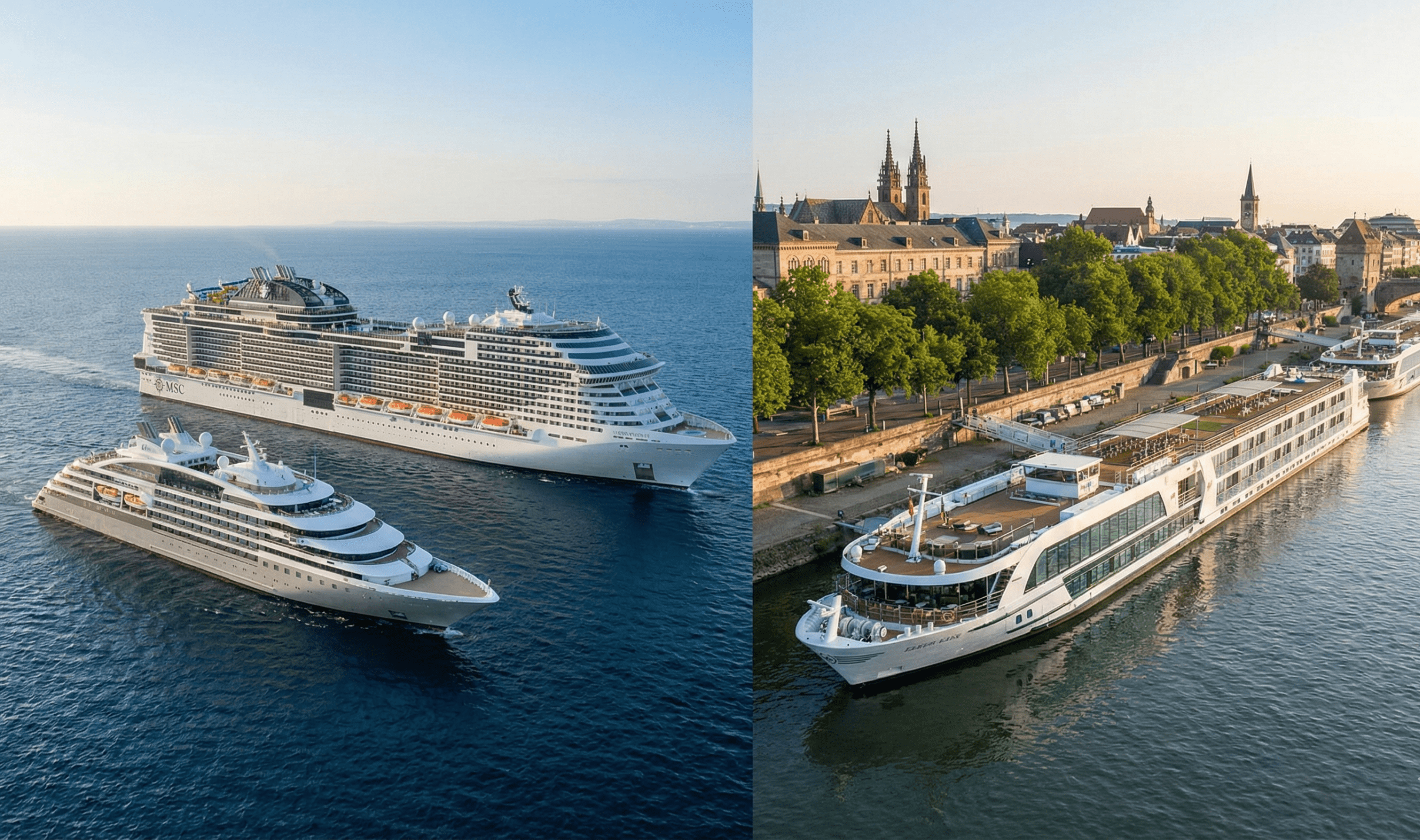
Mekong River cruise vs European river cruise for seniors is a comparison many travellers eventually find themselves making, often after completing one style of cruise and wondering whether the other would suit them just as well — or perhaps even better.
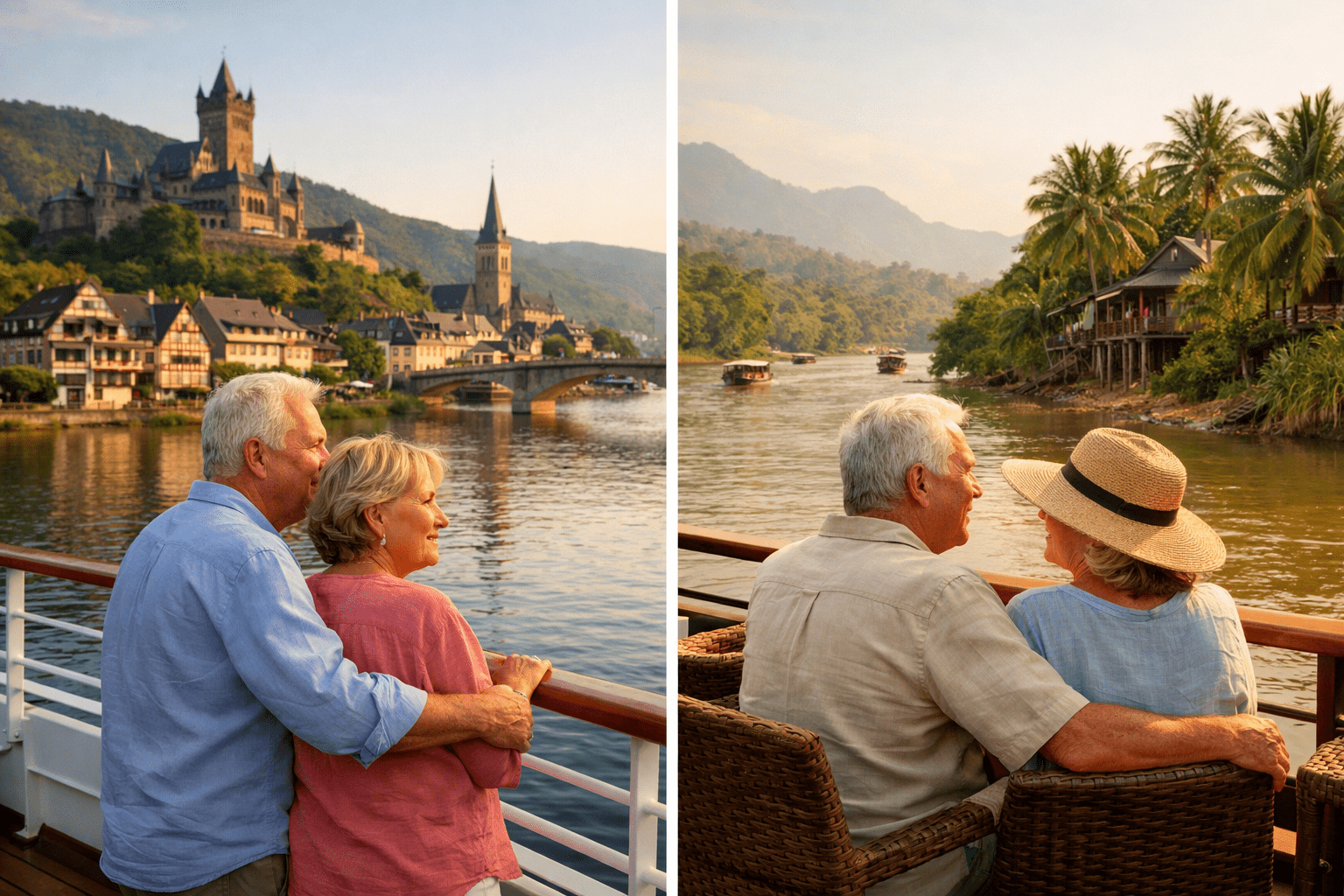
For many senior travellers, European river cruising is the familiar starting point. The Rhine, Danube, Seine and Douro have been popular for years, offering postcard scenery, historic towns and easy access from home. It feels safe, comfortable and reassuringly familiar.
But after a few European cruises, many travellers start looking further afield. Asia begins appearing in brochures and conversations onboard, and curiosity grows. The Mekong River, flowing through Vietnam and Cambodia, becomes one of the most talked-about alternatives.
If you’d like a deeper look at what the experience is actually like onboard and ashore, we’ve also put together a detailed guide to Mekong River cruises for seniors covering ships, excursions, and what to realistically expect day to day.
The real question then becomes: which option is actually easier?
The answer isn’t as straightforward as brochures might suggest. Ease depends on walking distances, climate, crowds, cultural differences, travel time and how much energy you want to spend each day exploring.
Having now experienced cruising in Asia after many years travelling through Europe, we’ve found both styles offer wonderful experiences — but they feel quite different on a daily basis.
This guide looks at both options through the lens that matters most for senior travellers: comfort, pace and overall ease.
If you’re still exploring whether Asia suits your travel plans more broadly, our guide to the best Asian cruises for seniors can help place the Mekong experience in context.
Travel distance: the biggest psychological hurdle
One of the main reasons seniors hesitate about Mekong cruises is the long flight to Southeast Asia. Compared to Europe, which may only be a few hours away for many travellers, Asia can feel very far. However, for travellers based in Asia or Australia, a Mekong River cruise often becomes a far more practical and financially attractive option due to shorter flight times and lower travel costs.
There’s no avoiding the fact that flights are longer. However, modern travel has made long-haul journeys much easier than they once were. Breaking the journey with a stopover, flying premium economy or business class, and arriving a day or two early to recover from jet lag can make a huge difference.
Once you arrive, though, something interesting happens. The pace slows. The warmth feels welcoming. The cruise becomes immersive in a way that European river cruising sometimes cannot match.
European river cruises are easier to reach, but once onboard, daily touring can actually feel more demanding.
So while Europe wins on travel time, it doesn’t automatically win on overall ease.
Walking demands and excursion pace
This is where differences become more noticeable.
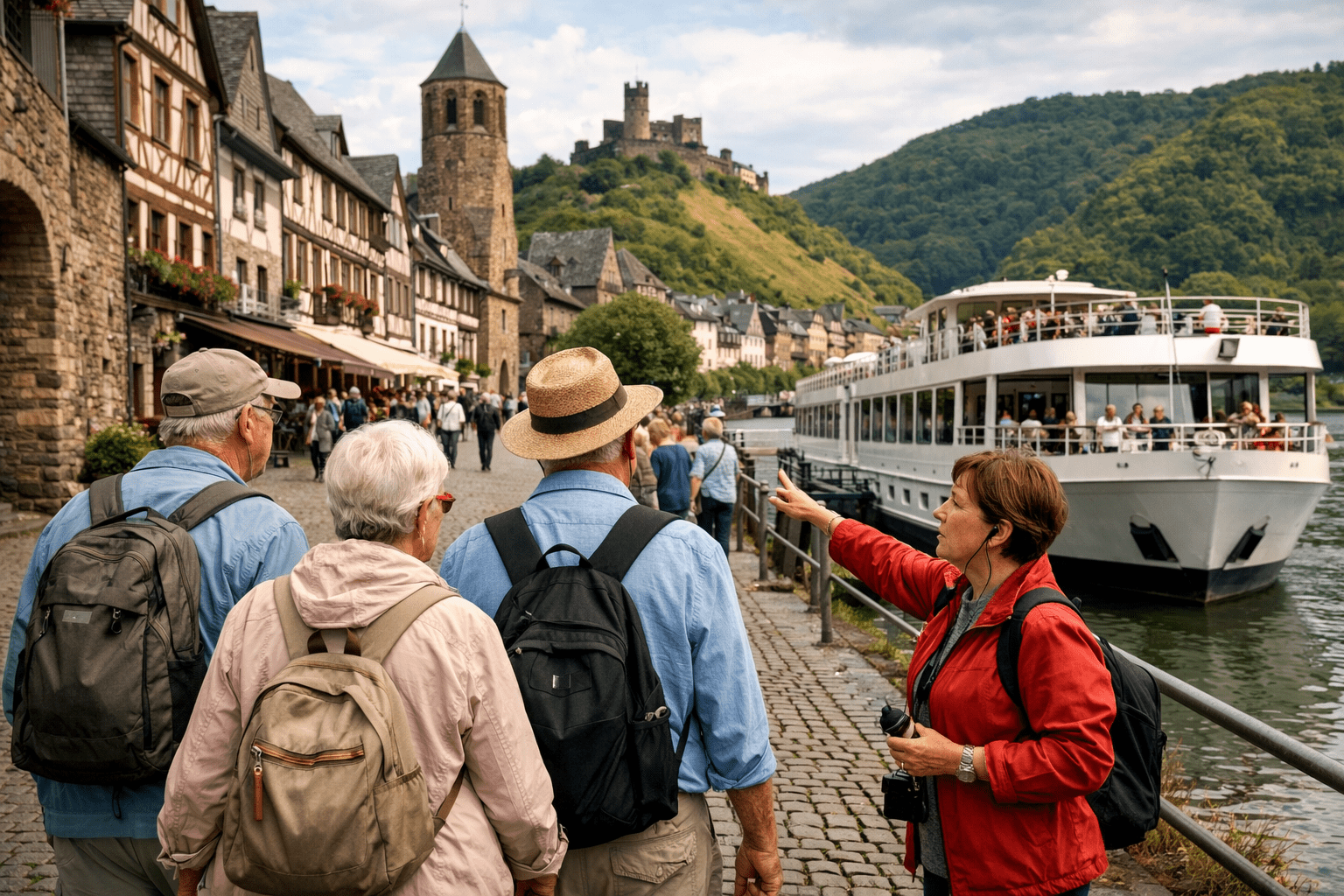
European river cruises often dock in towns or cities where cobblestones, hills, and longer walking tours are common. Old European towns weren’t built with mobility concerns in mind. Even gentle walking tours can involve uneven ground or longer distances than expected.
Excursions often include historic centres, castles, cathedrals, or hilltop viewpoints. Beautiful, but sometimes tiring.
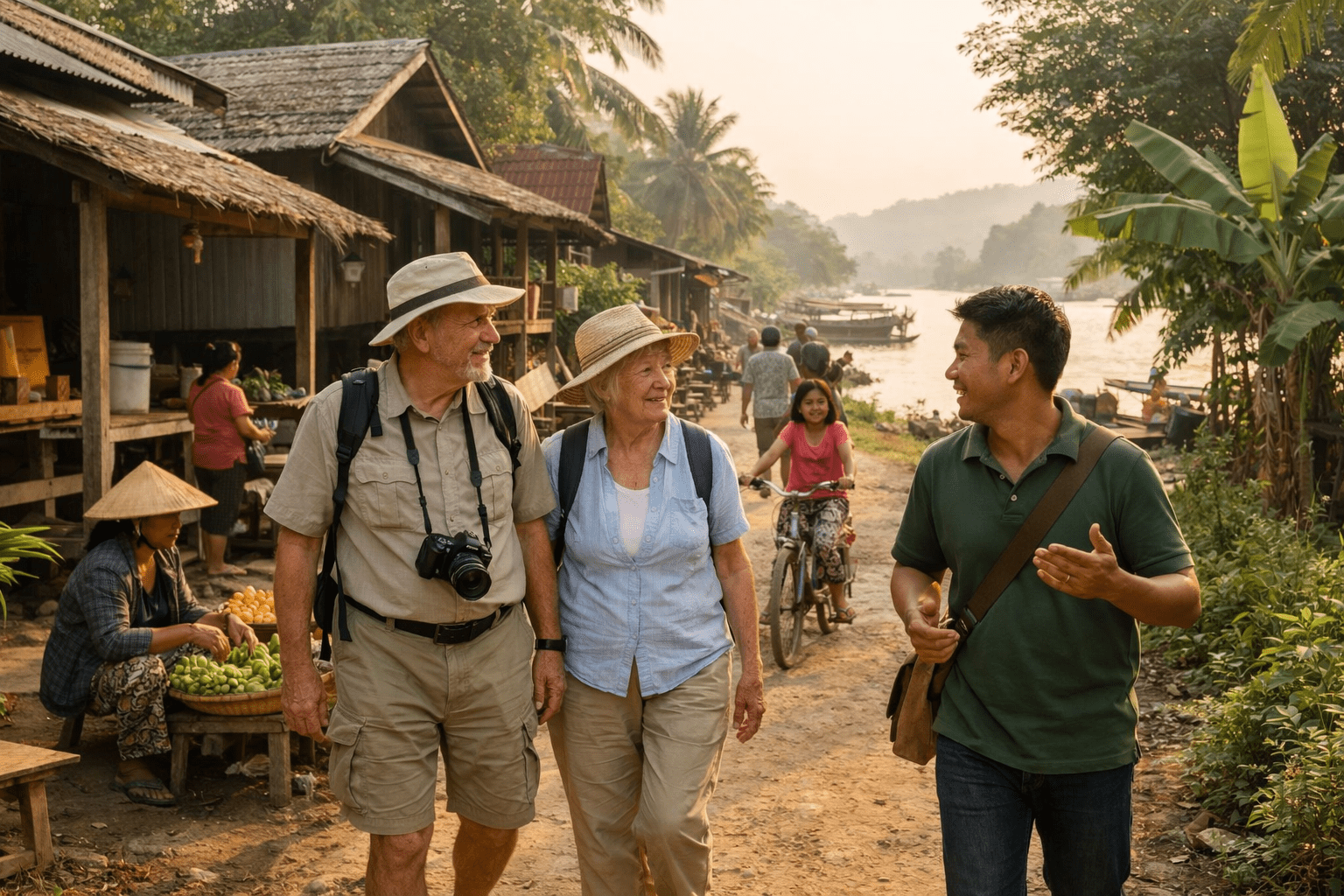
On the Mekong, excursions tend to be shorter and more varied. Visits might include village walks, monastery stops, market visits or short boat rides into smaller canals. Walking distances are usually manageable, and tours often feel less rushed. Many cruise lines also provide transport options such as small buses or tuk-tuks to reach sightseeing areas, which is particularly helpful for travellers with mobility concerns. At the same time, this doesn’t prevent more active passengers from getting out and exploring, as several cruise lines, including AmaWaterways, also offer optional bike rides and more active excursions.
Guides frequently adapt pacing, and there is usually flexibility for travellers who prefer to return to the ship earlier.
A few travellers we met onboard commented that Mekong excursions felt gentler overall than European ones.
Climate comfort: heat versus cold
Europe offers comfortable temperatures during spring and autumn, but weather can be unpredictable. Rain and cooler days are common, and packing often requires layers for changing conditions.
The Mekong region, by contrast, is consistently warm. There’s rarely a need for heavy clothing, but humidity can feel intense, especially for travellers unused to tropical climates.
For some seniors, warmth is easier to manage than cold. Others prefer milder European temperatures.
The key difference is predictability. Asia is reliably warm; Europe can vary widely. Knowing what to expect makes packing and planning simpler.
Pacing excursions sensibly and resting during the hottest part of the day usually resolves concerns about heat.
Crowds and congestion
Crowds can be one of the biggest differences between the two experiences.
Popular European ports often host multiple ships at once. Historic centres fill quickly, and popular attractions can feel crowded. Walking tours sometimes feel rushed simply because of the number of visitors.
On the Mekong, tourism numbers are smaller and more spread out. Villages and towns rarely feel overwhelmed by visitors, and interactions often feel more personal.
Europe feels culturally familiar for many travellers. Food, architecture and daily life are recognisable, even in different countries.
Asia feels different, and that difference can either feel exciting or intimidating depending on personal travel style.
Cruising softens this difference. Ships provide familiar comforts while excursions introduce new cultures gradually.
Many seniors find Mekong cruises surprisingly easy once they arrive, as guides handle logistics and language concerns.
The experience often feels adventurous without being stressful.
Food and onboard experience
On both European and Mekong River cruises, onboard food is mostly excellent.
European cruises focus on regional cuisine paired with familiar dishes. Mekong cruises blend Western favourites with local flavours, allowing travellers to sample Southeast Asian cuisine without feeling overwhelmed.
Dietary needs are well accommodated in both regions, and dining atmospheres tend to be relaxed rather than formal.
In practice, food quality rarely becomes a deciding factor between the two experiences.
Cost and overall value
European river cruises often carry higher price tags, particularly during peak seasons. Excursions, local costs and tipping expectations can also add to overall spending. While onboard gratuities are often included in the base fare with many cruise lines, in Europe there is often an additional expectation to tip local guides and drivers during shore excursions, and everyday expenses such as café stops can add up. We also found that public toilets in many European towns and cities charge small usage fees, which is something travellers don’t always expect.
In much of Asia, the situation tends to be different. Tipping is generally less expected during excursions or in local restaurants, and overall day-to-day costs ashore are often lower. We did occasionally see some North American fellow travellers offering tips to guides, but this is usually appreciated rather than expected by locals.
Mekong cruises can sometimes offer stronger value, especially once onboard, where excursions and daily expenses are often lower.
If you are flying from North America or Northern Europe then flights to Asia may cost more initially, but overall trip costs frequently balance out once daily expenses are considered.
Many travellers are pleasantly surprised by the value of cruising in Southeast Asia.
Health and medical considerations
Both cruise styles provide good onboard care, but larger European itineraries often stay closer to major cities and hospitals.
Mekong cruises travel through more rural regions, but cruise lines maintain strong relationships with local medical providers and evacuation options if needed.
For most travellers, medical concerns are well managed in both settings, but travel insurance remains essential regardless of destination. We have found Visitors Coverage travel insurance to be a good, flexible option to use. We have never had the need to make a claim but it’s a small price to pay for peace of mind.
Social atmosphere onboard
River cruises naturally create social environments, as ships are smaller and guests often interact more easily.
On both European and Mekong cruises, many passengers are retired or semi-retired travellers interested in culture and experiences rather than nightlife.
Some travellers comment that Mekong cruises feel slightly more communal, perhaps because guests share the sense of exploring somewhere new together.
Friendships often form quickly in both settings.
Ease of logistics
European cruises usually involve simpler logistics, shorter flights and fewer visa concerns.
Mekong cruises require slightly more preparation, including visas or arrival forms for some countries, but cruise lines handle most arrangements smoothly or give you guidance on what visa requirements are needed. In most cases, visas will be required for Mekong River cruises depending on your citizenship. This site provides a good explanation of visa requirements but always check directly with the official government websites or your travel agent.
Once onboard, daily logistics feel equally simple in both regions.
Transfers, excursions and port procedures are generally handled efficiently by cruise operators.
Which cruise feels easier day to day?
This is where opinions often shift.
European cruises feel easy to reach, but can involve busier excursions and crowds once there.
Mekong cruises may require longer travel, but often feel more relaxed day to day once underway.
From our personal experience, we definitely felt less rushed on our Mekong River cruise than we did on our European trips. For us, both offered a great experience, but having less crowds made our Mekong River cruise a lot more enjoyable and relaxing.
The easier choice often depends on whether you value shorter travel or gentler daily experiences more.
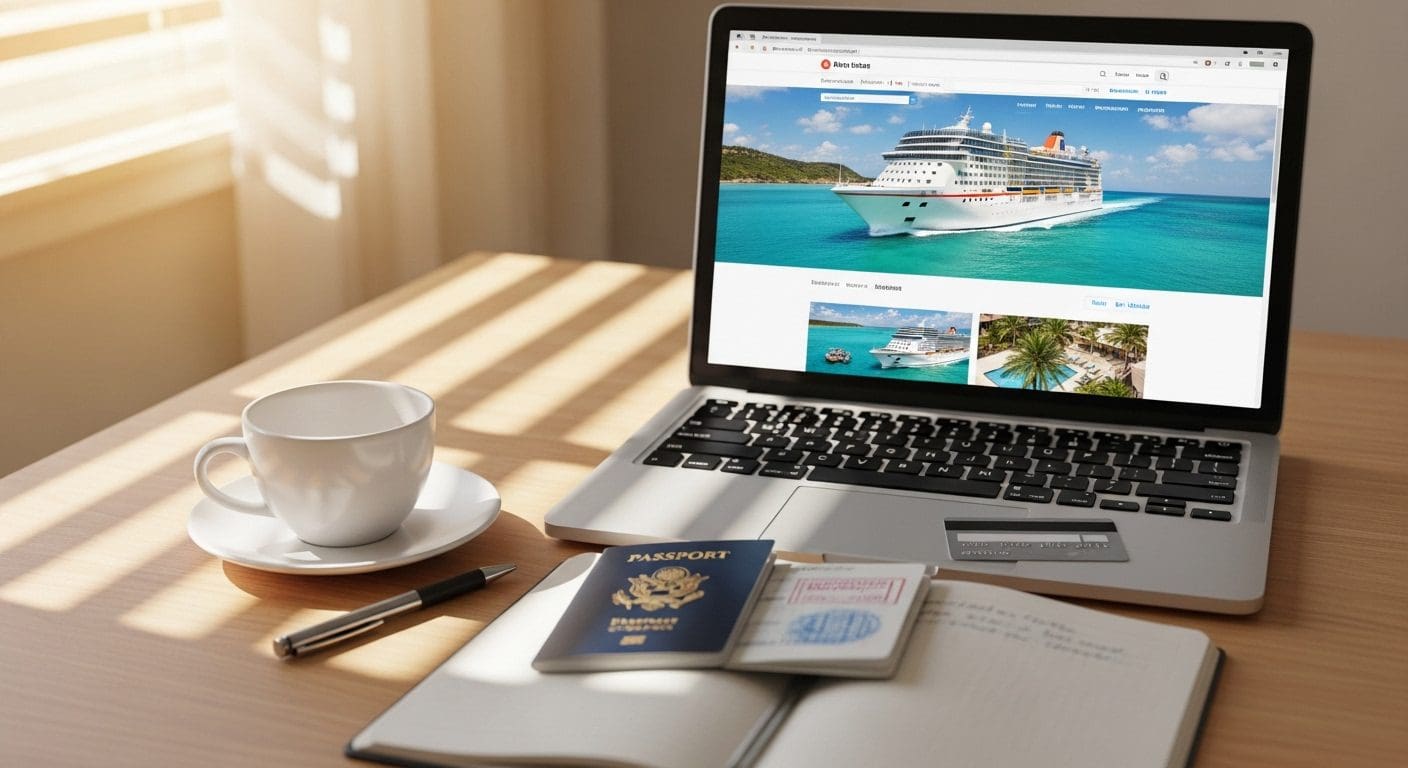
If you’re now weighing up options for either a European or Mekong River cruise, it’s worth browsing current itineraries and cabin availability to compare pricing and sailing dates. We usually start by checking available river cruise options here before narrowing down the best fit.
Who will find Europe easier?
Europe may feel easier for travellers who prefer familiar cultures, shorter flights, and cooler climates.
It also suits travellers who enjoy exploring historic towns independently after excursions, as infrastructure is highly developed.
For seniors wanting minimal culture shock or quick travel access, Europe remains an excellent option.
Who will find the Mekong easier?
The Mekong often suits travellers who prefer slower pacing, smaller crowds and immersive cultural experiences without heavy walking demands.
Seniors who enjoy warmth, relaxed excursions and discovering new cultures often find Mekong cruising surprisingly comfortable.
Many who try it once end up seeking more Asian travel experiences afterward.
If you’re still weighing river cruise options more broadly — including European, Asian and ocean cruise lines — our complete guide to the best cruise lines for seniors compares comfort, mobility and overall value across major cruise brands worldwide:
https://trustytraveltips.com/best-cruise-lines-for-seniors/
Final thoughts: ease depends on what matters most
Comparing Mekong River cruise vs European river cruise for seniors ultimately comes down to personal comfort preferences rather than clear winners.
Europe offers familiarity and easier access. The Mekong offers immersion and often gentler daily pacing.
Both provide memorable experiences when chosen with realistic expectations.
For seniors deciding between the two, the best choice is the one that matches how you prefer to travel now — not how you travelled twenty years ago.
The good news is that whichever you choose, river cruising remains one of the most comfortable and enriching ways to explore the world.