
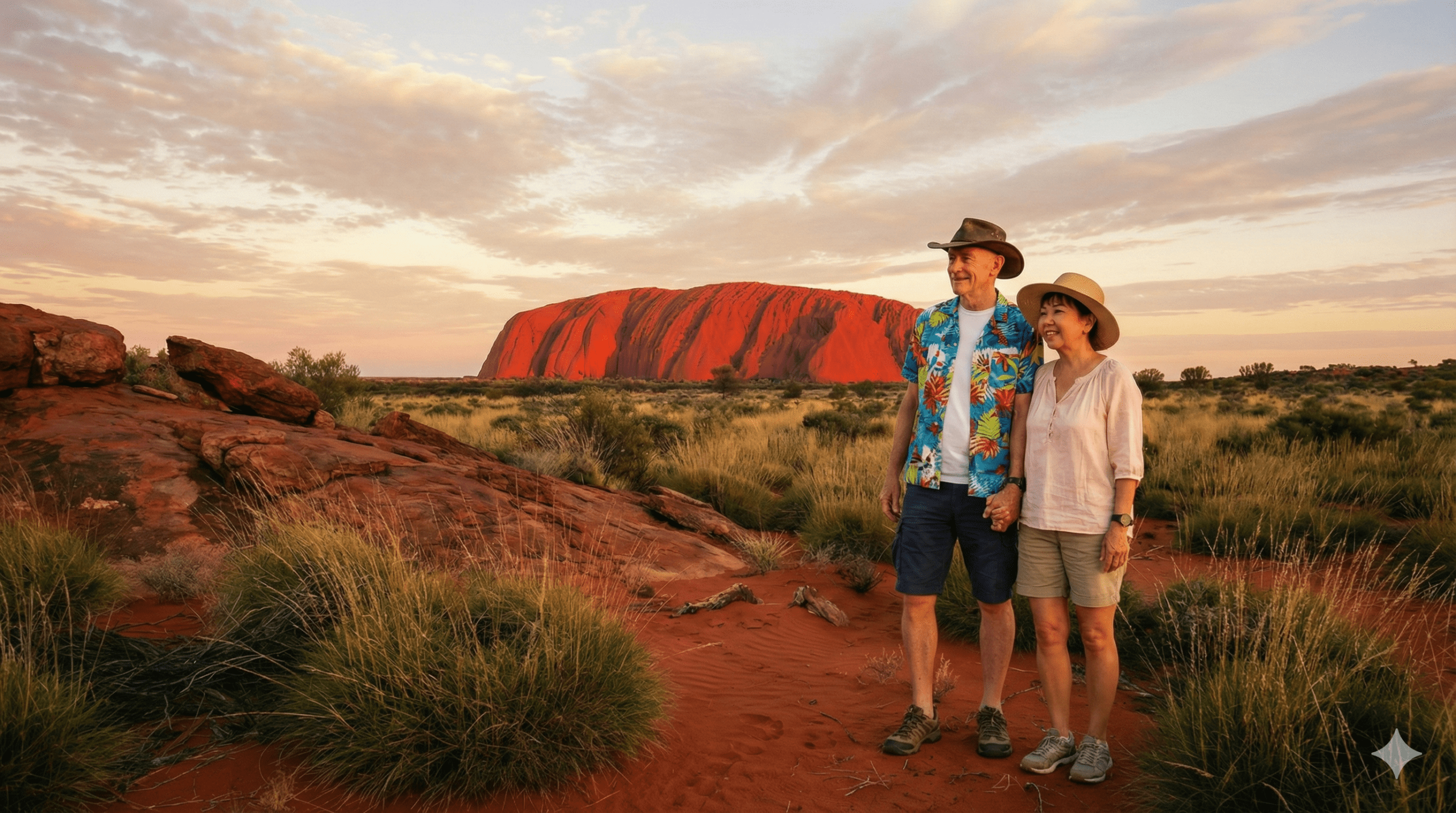
Uluru & The Red Centre is one of those places that changes the way you think about travel. Before visiting, we expected scenery. What we found instead was perspective.
You don’t just arrive at Uluru — you slow down into it.
The air feels different, the silence feels deliberate, and time starts behaving in a way modern life forgot. Phones stop mattering. Sunsets become events. And you begin to realise this isn’t a landmark — it’s a presence.
Australia has many beautiful places, but the Red Centre feels ancient in a way that beaches and cities never can. Our Uluru and Red Centre travel guide below explains everything you need to know about visiting the amazing place
Getting to Uluru
Reaching Uluru is surprisingly easy considering how remote it looks on a map. Most visitors either fly into Ayers Rock Airport (AYQ) or drive from Alice Springs.
Flying is by far the quickest option. From Sydney it takes roughly three and a half hours and from Melbourne just under three hours. As the plane descends the landscape becomes an endless red canvas broken by dry riverbeds and desert vegetation. Then suddenly the horizon changes — a massive sandstone dome appears in complete isolation. Every passenger instinctively leans toward the window.
The airport itself is small and relaxed. Within minutes you’re outside breathing warm desert air.
Driving from Alice Springs is the classic outback journey. The distance is about 450 kilometres and takes around five hours, although you’ll almost certainly stop many times along the way. The Lasseter Highway cuts through open desert and you quickly understand how vast central Australia really is. Fuel up before leaving and carry water — services are limited and distances are large.
This video provided by Flight Centre gives a good overview of ways to experience Uluru: click here
First Impressions of Uluru
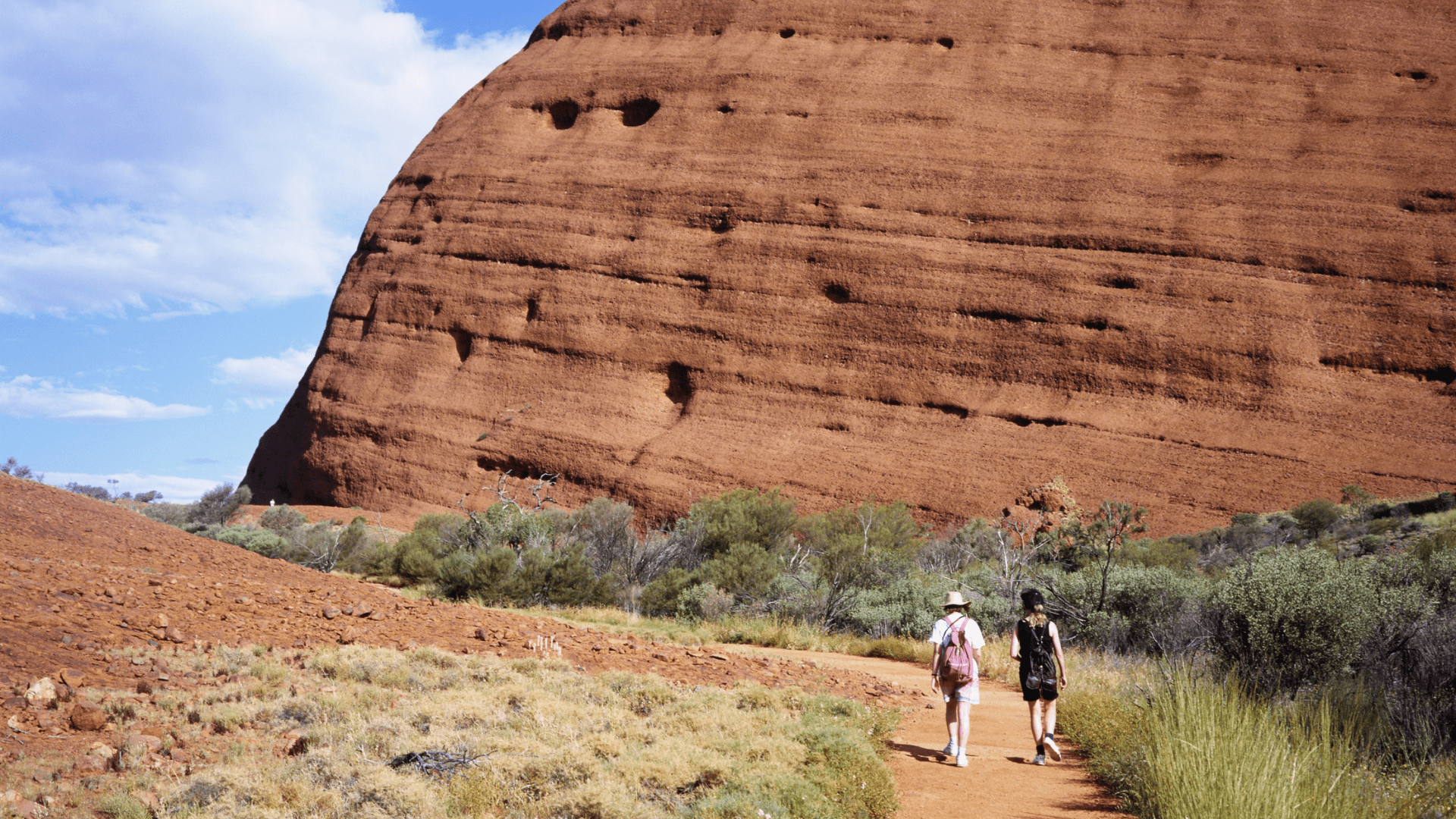
Photos don’t prepare you for scale. Uluru rises 348 metres high and stretches nearly 10 kilometres around its base. It isn’t sitting in mountains — it stands alone, which makes it feel enormous.
As you approach, details appear. Caves, grooves, and wave-like textures carved by erosion over hundreds of millions of years.
Many people call Uluru the largest rock in the world. Technically Mount Augustus is bigger, but Uluru is considered the world’s largest exposed monolith rising dramatically from flat land — and that’s what makes it visually powerful.
The colour constantly shifts. Morning brings muted purples, midday turns it burnt orange, and sunset ignites it deep red.
Within minutes you understand why it is sacred.
Climbing Uluru — Then and Now
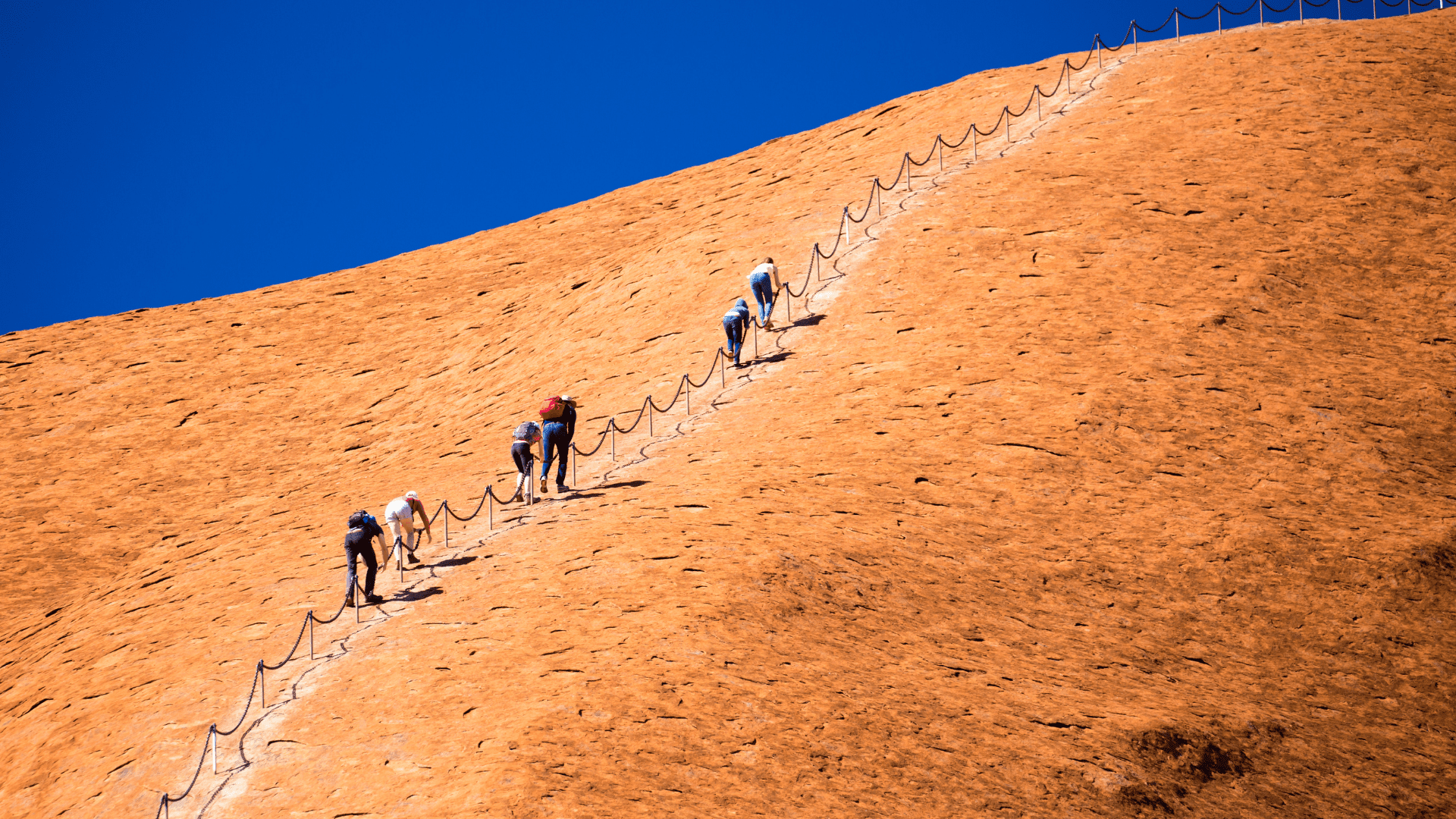
For decades visitors were allowed to climb Ayers Rock, which I did on a previous visit back in the late 1990’s. At the time it was seen as the main activity — almost a challenge tourists felt expected to complete.
The climb itself was steep, exposed, and surprisingly long. A chain helped on the steepest section, but the surface was smooth sandstone worn by millions of footsteps. Looking back, it felt less like conquering a landmark and more like walking across the roof of a cathedral.
Today the climb is permanently closed.
The closure in October 2019 wasn’t about tourism numbers or safety alone — it was about respect. For the Anangu people, Uluru is a sacred place connected to Tjukurpa, their law and creation stories. Certain paths on the rock are ceremonial routes, not walking tracks.
For many years they asked visitors not to climb, explaining it was culturally inappropriate. Gradually attitudes changed, and eventually Parks Australia and the traditional custodians agreed the climb should end.
There were also practical reasons. Extreme heat, high winds, and falls had caused multiple fatalities over the years. Combined with environmental erosion and cultural significance, the decision became clear.
Today visitors experience Uluru by walking around the base — and honestly, it’s a far richer experience.
Instead of standing on top of Uluru, you learn from it.
Walking Around the Base
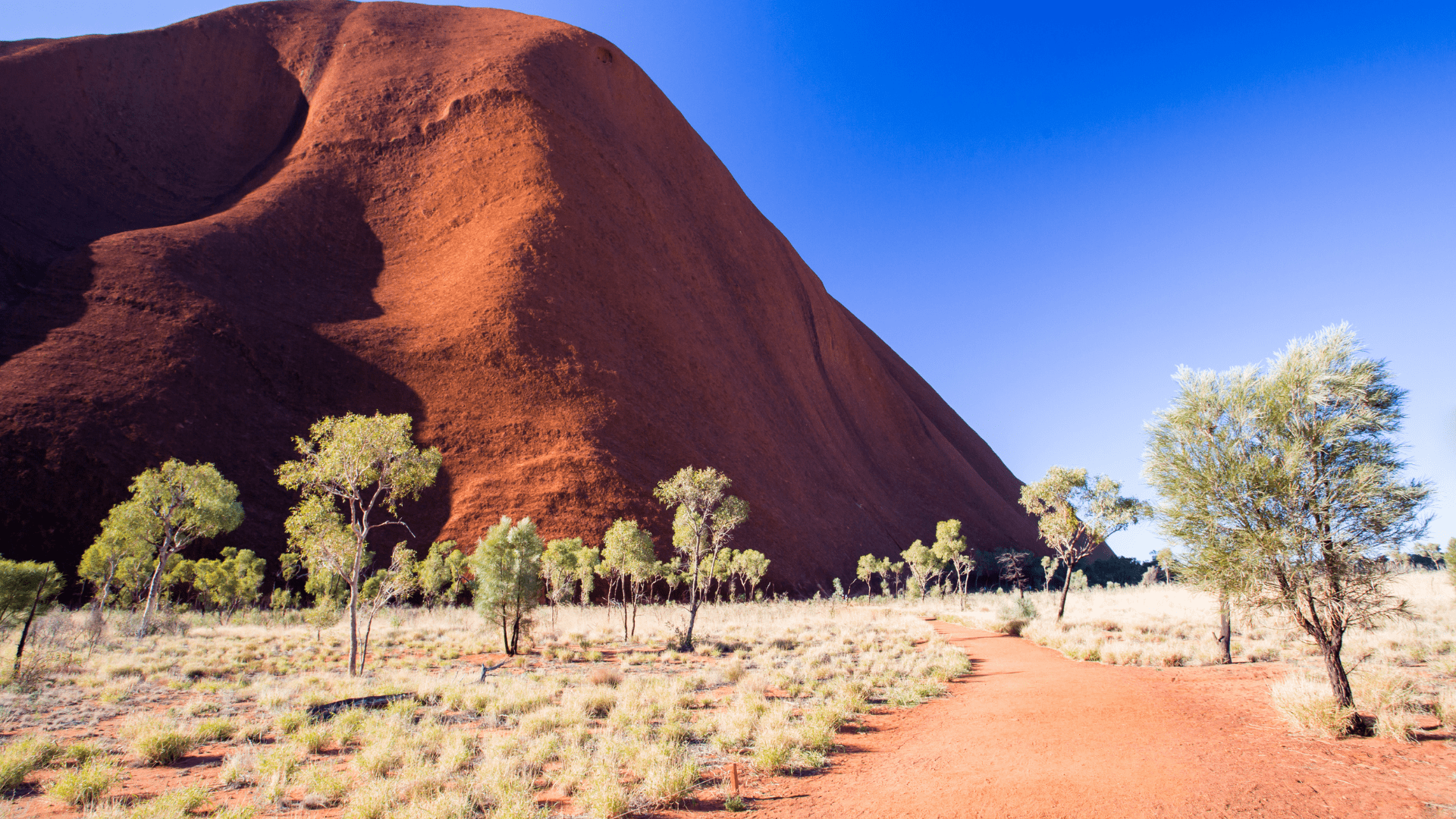
The Uluru Base Walk is 10.6 kilometres and takes around three to four hours at a relaxed pace. It’s mostly flat and reveals far more than the climb ever did.
You pass caves used for teaching, rock art sites, and waterholes that still collect rainwater after storms. Some areas prohibit photography because they hold sacred meaning — respecting these signs is part of visiting properly.
Walking the base shifts your perspective. Instead of looking down on Uluru, you walk beside it, and that feels appropriate.
The Cultural Meaning of Uluru
Uluru sits inside Uluru-Kata Tjuta National Park and belongs to the Anangu people, who jointly manage it with Parks Australia.
For them the rock is alive with story. Every formation represents ancestral beings who shaped the land during creation time. The grooves are not random geology — they are narrative.
Once you understand this, Uluru stops being scenery and becomes culture.
The Cultural Centre near the entrance is worth real time. It explains Tjukurpa, land management practices, and why protecting the site matters.
Best Time to Visit Uluru
The desert climate is intense, so timing matters.
May to September is the best season. Daytime temperatures sit between 18°C and 28°C and walking is comfortable. Nights can drop close to freezing.
April and October are warmer at 30°C to 35°C but still manageable.
November to March is extremely hot with temperatures often reaching 45°C. Activities close midday and even sunrise walks feel warm. Unless you specifically want heat, avoid peak summer.
Winter also delivers the clearest night skies you’ll ever see.
Sunrise and Sunset
Sunrise feels peaceful. The desert is quiet, the air cold, and Uluru gradually glows from grey to crimson.
Sunset feels social. People gather, cameras ready, and the rock cycles through colours rapidly — orange, red, purple.
Both feel completely different and both are worth doing.
Kata Tjuta – The Other Giants
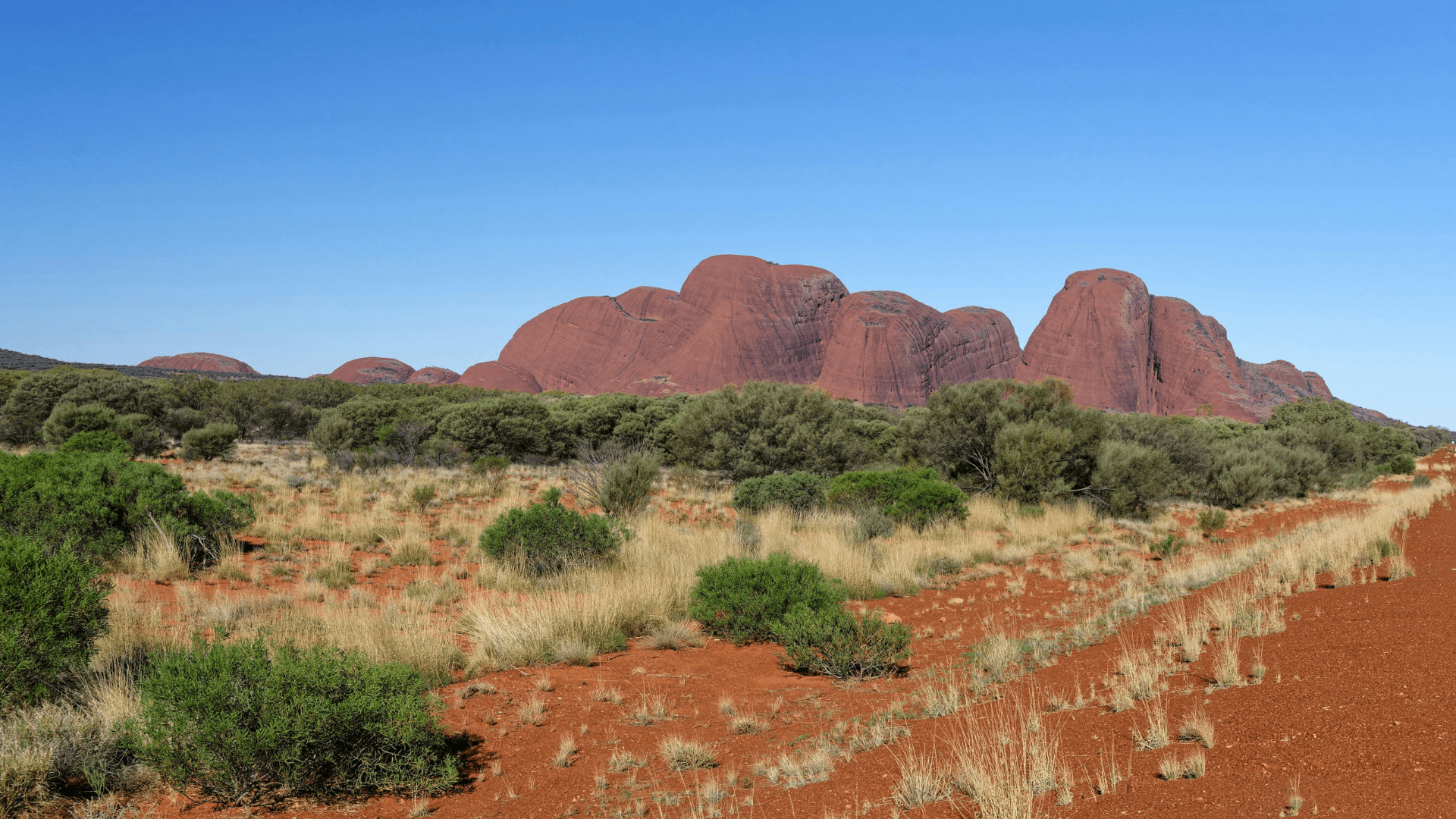
Forty minutes away are Kata Tjuta, 36 massive domes rising from the desert floor. Many travellers come only for Uluru but leave saying Kata Tjuta was their highlight.
The Valley of the Winds walk passes between towering formations and gives perspective on the scale of the landscape.
It feels less iconic but more immersive.
The Highlight of Our Uluru and Red Centre Travel Guide – Dinner Under the Stars
One of the most memorable experiences in the Red Centre is eating outdoors at night.
After sunset the sky fills with stars in a way impossible in cities. With no light pollution, the Milky Way stretches across the horizon.
You can book a dinner experience here
Moments like this redefine silence.
Where We Stayed – Sails in the Desert
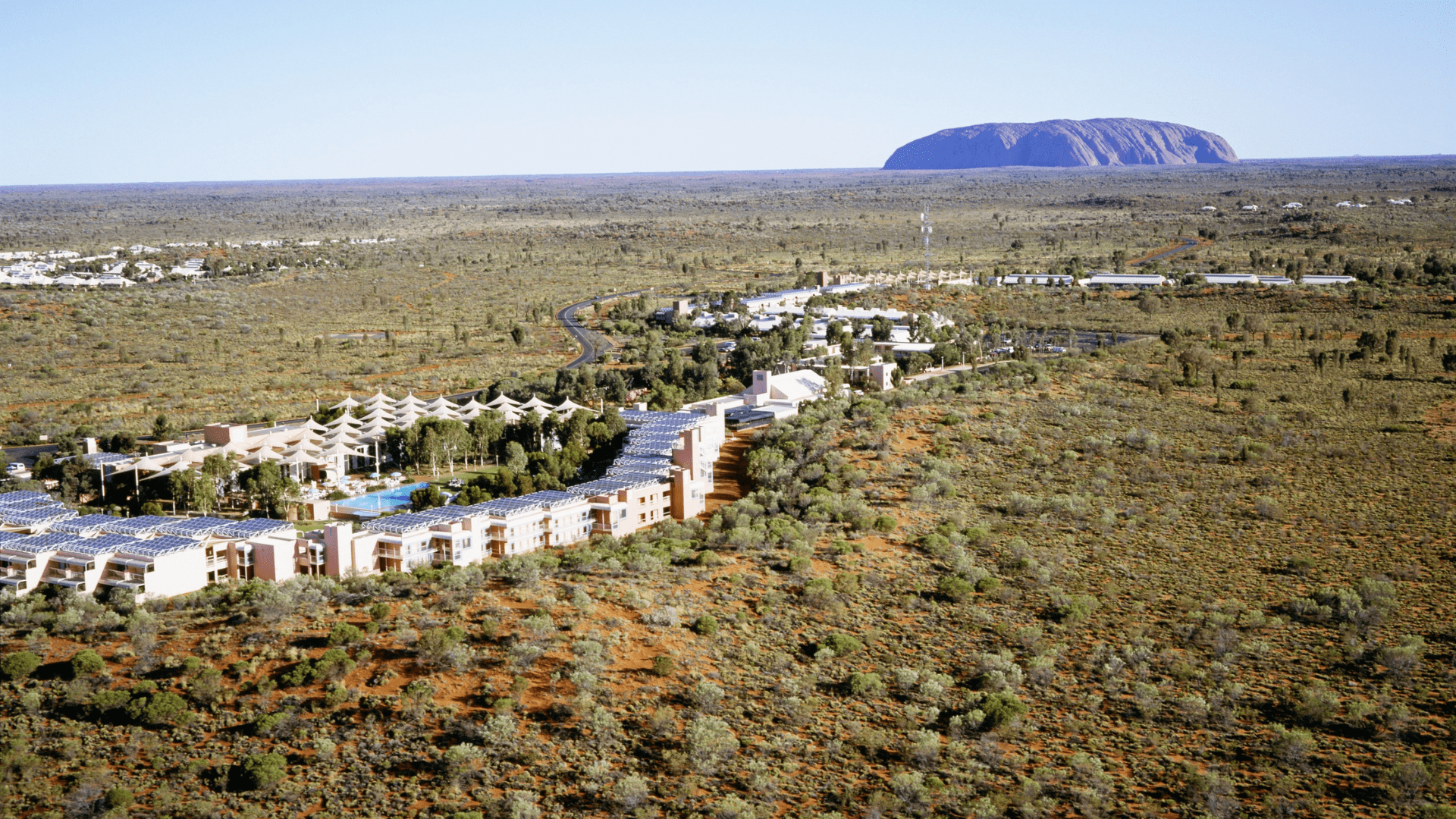
We stayed at Sails in the Desert inside Ayers Rock Resort and it felt like a true outback retreat. Spacious rooms, strong air conditioning and a pool were essential after hot days exploring.
Morning breakfasts overlooking desert vegetation became part of the routine.
Prices can fluctuate significantly depending on season, school holidays and regional demand, so travellers with flexible dates can often secure substantial savings simply by adjusting their stay slightly. Before confirming any booking, we strongly recommend reading our accommodation money-saving guide, which explains how to use Booking.com’s availability calendar to identify cheaper travel dates.
👉 Learn how to find cheaper hotel deals using Booking.com’s calendar tool.
Other Things to Do in The Red Centre
The Field of Light installation glows across the desert at night and feels surreal against ancient land.
Camel rides at sunrise fit the environment perfectly.
Helicopter flights reveal how isolated Uluru really is.
Kings Canyon, about three hours away, offers one of Australia’s best hikes with cliffs and hidden greenery.
Check out all of the activities available at Uluru here
Practical Tips
Carry plenty of water.
Respect restricted areas.
Wear a hat year-round.
Drive carefully at dusk — wildlife is common.
Why Uluru Stays With You
Uluru isn’t about adrenaline. It’s about perspective.
You notice wind patterns in sand, echoes against rock, and colours changing every minute. Days become measured by light instead of clocks.
You don’t leave with stories of action — you leave quieter.
And that’s why people return.