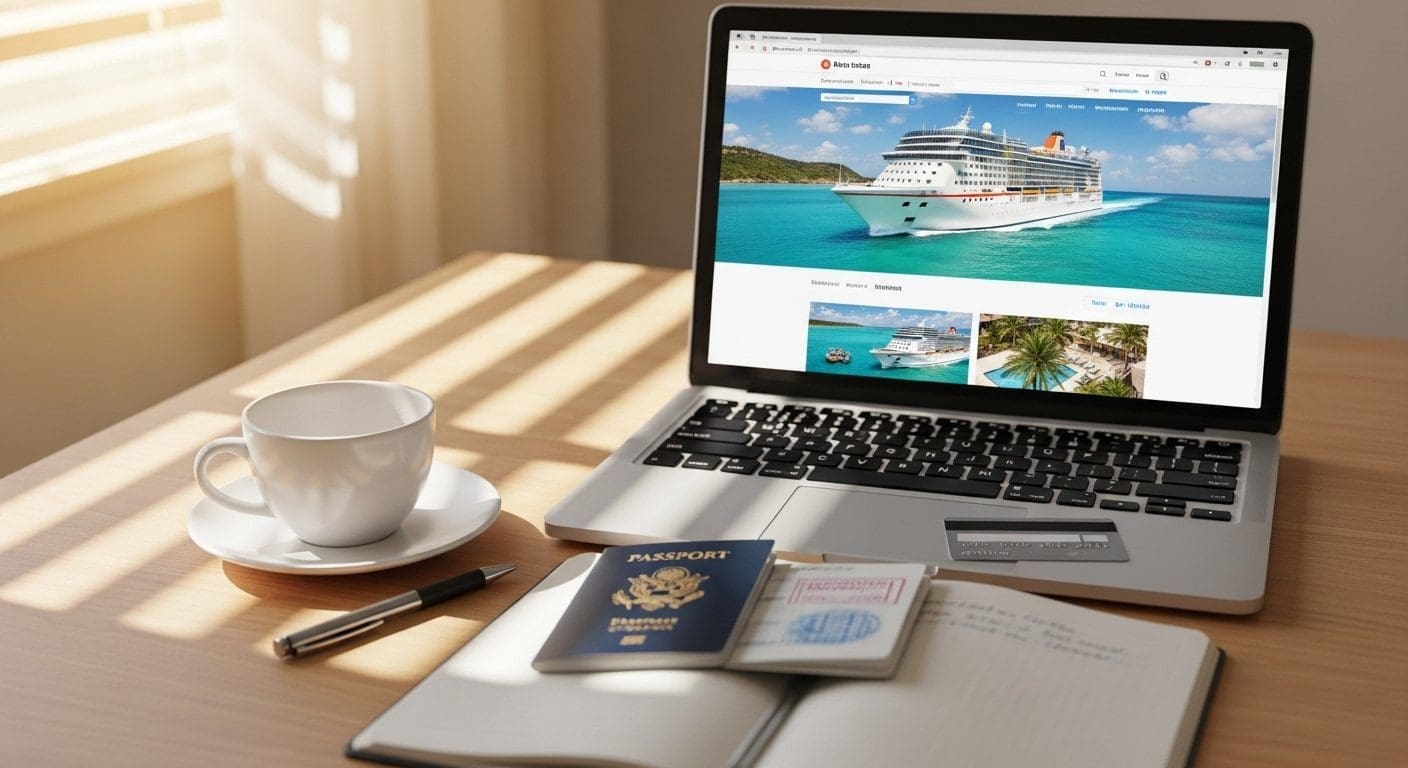
Introduction: What to Expect from Viking Cruise Dining
There’s a certain expectation that comes with stepping onboard a Viking Ocean cruise. From the moment you arrive, everything feels calm, refined, and quietly luxurious.
In this Viking cruise dining review, we’re sharing what the experience is really like — beyond the marketing and expectations.
It’s not the loud, high-energy atmosphere you might associate with larger cruise lines. Instead, it feels closer to a boutique hotel at sea — clean design, soft lighting, and an almost effortless sense of order.
Naturally, that expectation carries over into the dining experience.
You imagine elegant meals, memorable evenings, and restaurants that genuinely stand out. After all, Viking positions itself as a premium cruise line, and dining plays a central role in that promise.
But after spending time onboard, we realised something that isn’t often talked about.
Not every restaurant delivers in the way you expect.
If you’re still deciding whether Viking is the right fit overall, our guide to the best cruise lines for seniors compares Viking with other cruise lines that may suit a similar style of traveller.
In fact, by the end of the cruise, we found ourselves doing something completely unexpected — cancelling one of the most in-demand dining experiences, and returning to another restaurant multiple times.
If you’re planning a Viking cruise, understanding this dynamic will shape your entire onboard experience.
👉 If you’re still planning your trip, read our guide on Viking Ocean Cruise Tips .

Chef’s Table Review: When Expectations Don’t Match Reality
Before we even stepped onboard, one restaurant stood out above the rest: Chef’s Table.
These were our impressions during the Viking Mediterranean Odyssey cruise, where the atmosphere onboard felt polished from the start but the dining didn’t always unfold as we expected.
Part of the appeal comes from how you access it. Reservations don’t simply open for everyone at once — they’re released in stages depending on your cabin category. That structure immediately creates a sense of urgency, and with it, a perception of exclusivity.
When our booking window opened, we moved quickly. Like most guests, we didn’t want to miss out on what felt like a highlight experience.
That anticipation builds a very specific expectation. You assume that something this controlled, this limited, must be exceptional.
But the reality is a little different.
Chef’s Table isn’t a traditional restaurant. Instead of choosing your meal, you’re booking into a fixed tasting menu, often built around a theme and paired with wines. The important detail — and the one that shapes the entire experience — is that you don’t know the menu in advance.
At first, everything looks promising. The presentation is polished, the courses arrive with a clear sense of structure, and the wine pairings feel thoughtfully selected.
However, as the meal progresses, something begins to shift.
It’s not that the food is poorly executed. On a technical level, it’s perfectly fine. But it may not align with your personal preferences — and because the menu is fixed, there’s no flexibility to adjust.
That lack of control becomes more noticeable with each course.
Instead of choosing dishes you’re genuinely looking forward to, you find yourself simply moving through the experience. And that subtle shift — from anticipation to obligation — changes how the entire meal feels.
By the end of the evening, we weren’t excited. We were relieved it was over.
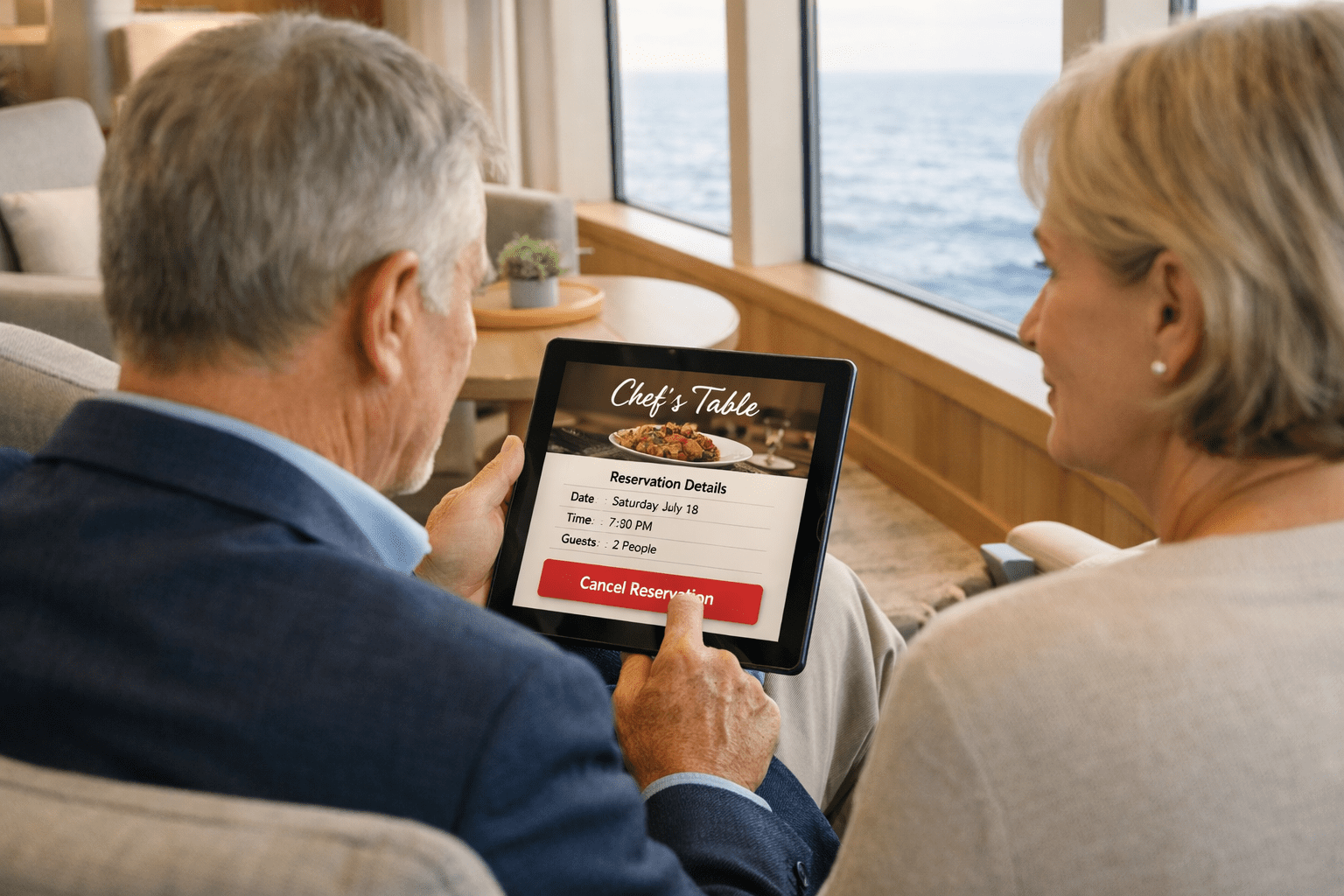
Looking ahead, we realised we had another reservation booked later in the cruise. Without hesitation, we cancelled it.
Chef’s Table isn’t necessarily a bad experience — but it’s one that depends entirely on whether the menu suits you. And because you don’t know that in advance, there’s always an element of risk.
Manfredi’s Review: The Restaurant We Trusted Most
After Chef’s Table, our expectations shifted.
We weren’t looking for another “experience.” We simply wanted a meal we knew we would enjoy.
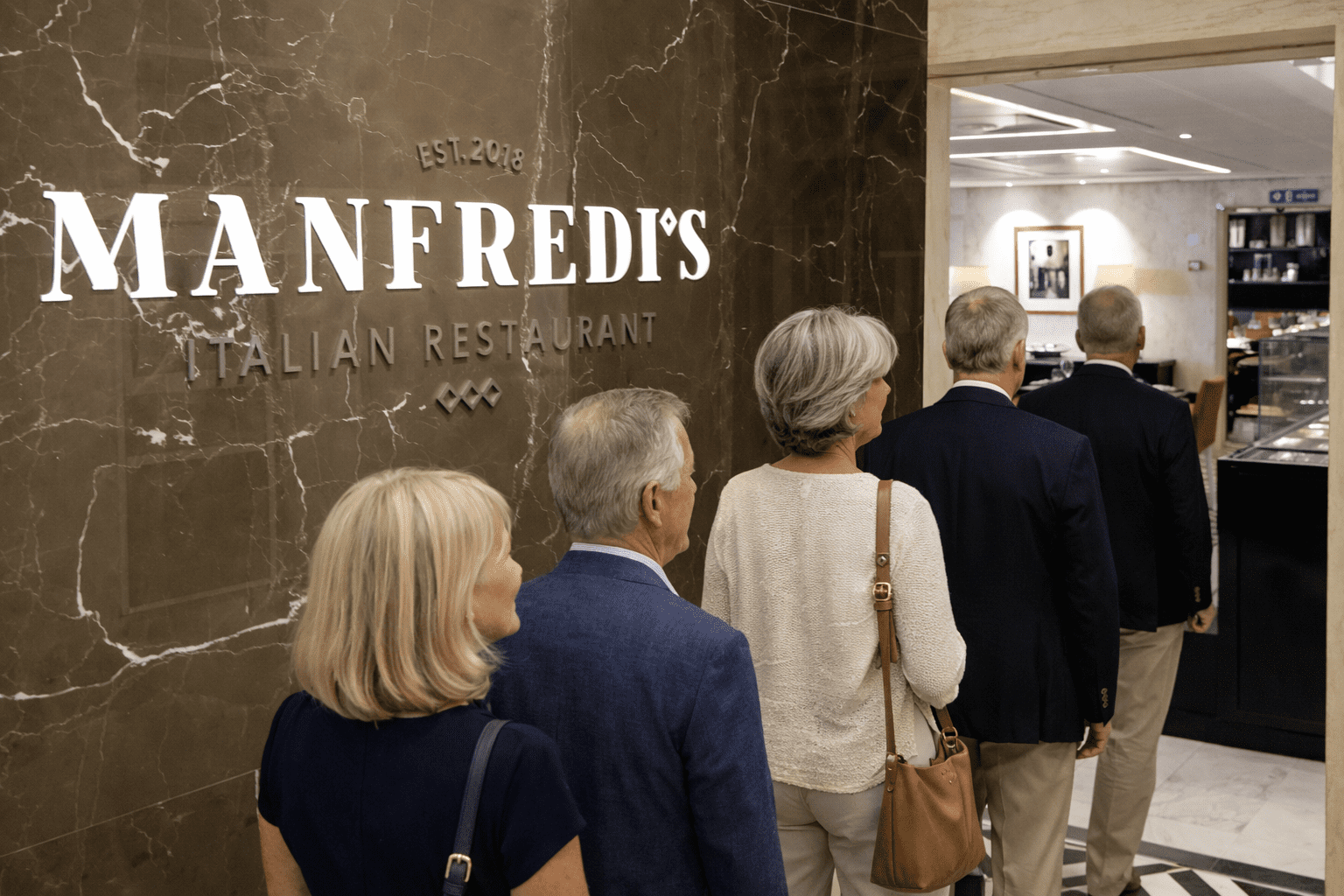
That’s where Manfredi’s comes in.
From the moment you sit down, the difference is clear. There’s no concept, no theme, and no restrictions — just a straightforward menu filled with Italian classics, steaks, and familiar dishes.
That sense of choice immediately changes the dynamic.
Instead of wondering whether the meal will suit you, you’re able to decide exactly what you feel like eating. After the structured nature of Chef’s Table, that flexibility feels like a relief.
The food itself is solid. The steaks are well prepared, the pasta dishes are consistent, and the portions feel satisfying without being excessive. It’s not trying to be overly creative or experimental — and that’s precisely why it works.
Of course, it isn’t flawless. There are moments where the experience slips slightly, whether it’s a steak not cooked exactly as expected or service that feels a little rushed during busier periods. But those moments are exceptions rather than the norm.
What stands out over time is consistency.
You sit down, you choose what you want, and you leave feeling satisfied.
And that reliability becomes more valuable as the cruise progresses.
After our first visit, we returned a few days later. Then we came back again.
By the third visit, it was no longer about trying everything onboard. It was about going back to what we knew would work.
The Restaurant (Main Dining Room): Reliable but Predictable
The Restaurant, Viking’s main dining room, quietly becomes the centre of your dining experience — whether you plan for it or not.
Unlike the specialty venues, there’s no reservation required. You can simply walk in at any time, which removes a surprising amount of friction from your day.
Breakfast here is extremely consistent. Eggs cooked to order, pastries, fruit, and lighter options appear in much the same format each morning. While the lack of variation might seem limiting, it actually works well — especially early in the day when you’re not looking for surprises.
Lunch introduces a bit more variety, occasionally reflecting the destinations you’re visiting. However, the overall pattern remains the same: well executed, but not particularly memorable.
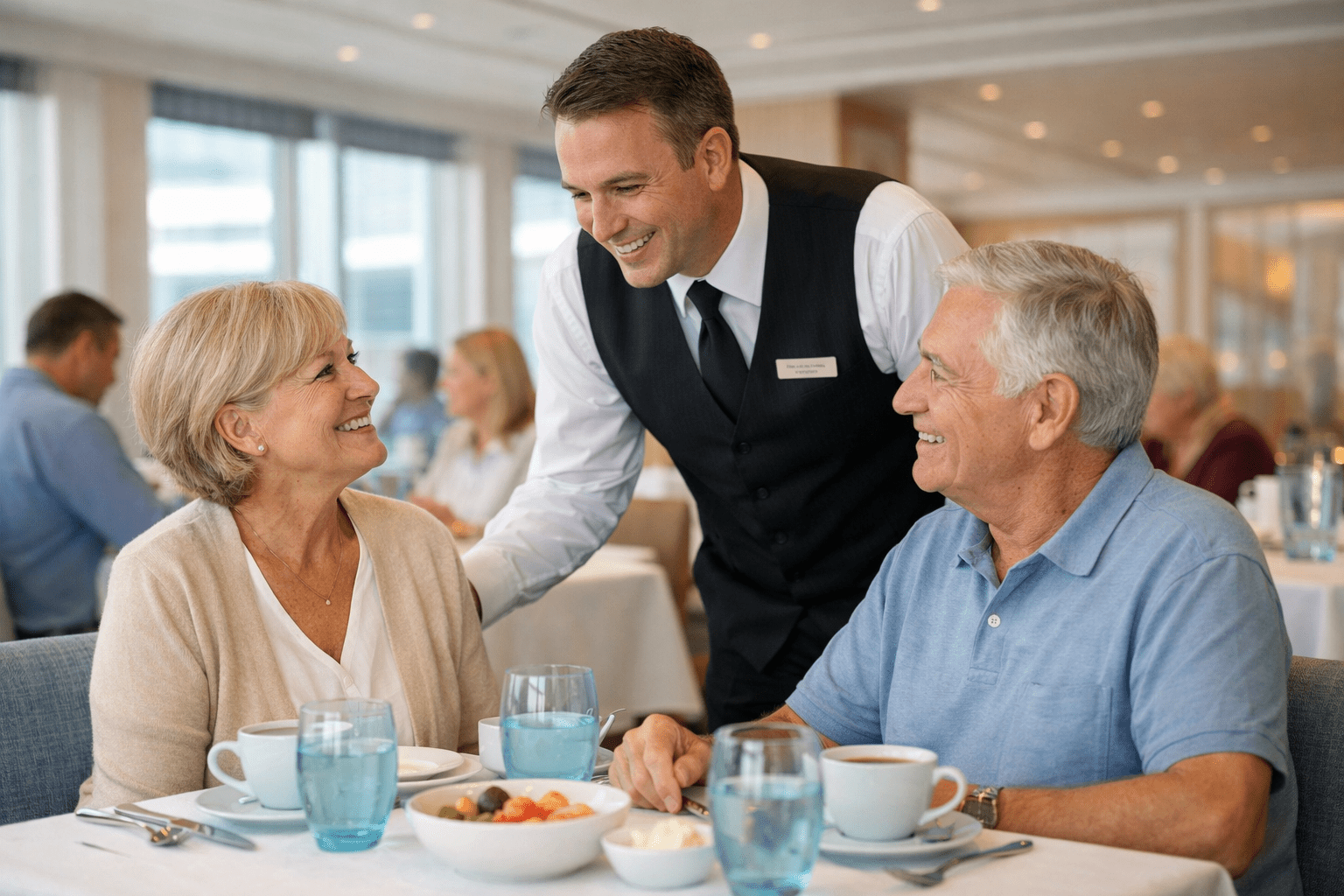
Dinner is where expectations naturally rise. The setting becomes more formal, the pacing slows, and the service becomes even more attentive. In this environment, the staff truly stand out. Over time, they begin to recognise you, remember your preferences, and create a sense of familiarity that enhances the experience.
When it comes to the food, however, a clear rhythm emerges.
Each meal is consistently good. Presentation is clean, flavours are balanced, and the menu changes daily. But very few dishes stand out in a lasting way.
You leave satisfied — but rarely excited.
And that’s the defining characteristic of The Restaurant.
It isn’t trying to be the highlight of your cruise. It’s designed to be the constant — a reliable option that works whenever you need it.
World Café Buffet: The Unexpected Highlight
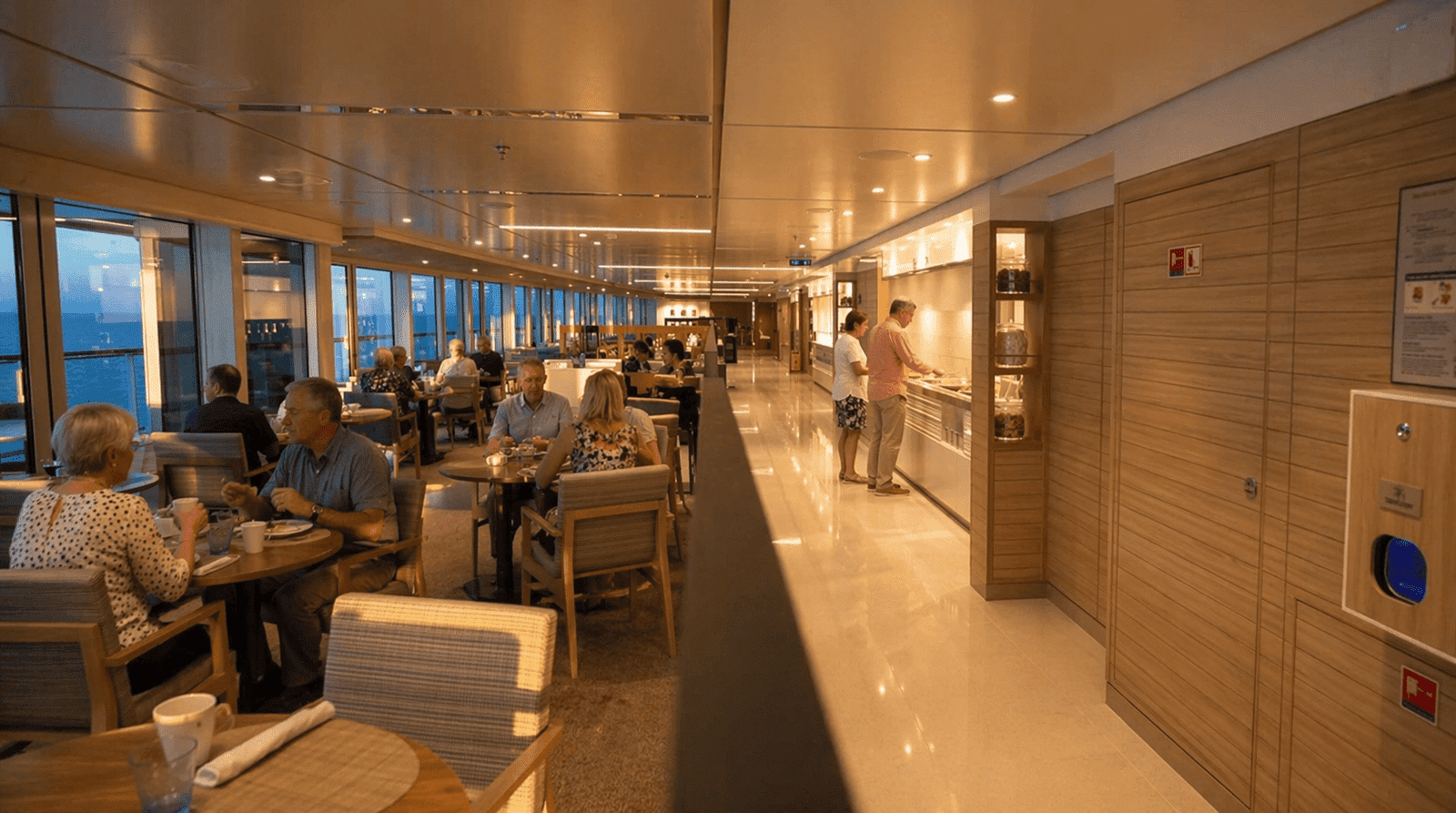
Perhaps the biggest surprise of the entire cruise was World Café.
As a buffet, it’s easy to underestimate. You assume it’s there for convenience — somewhere to grab a quick meal without much thought.
But over time, it became one of the places we returned to most often.
The reason is simple: flexibility.
Every visit offers a different combination of dishes, cuisines, and occasionally themed selections. Unlike the structured nature of other restaurants, you’re free to build your own meal based on what you feel like eating in that moment.
The food itself is generally good, though rarely exceptional. Some dishes stand out, while others are more forgettable — and that variation is part of the experience.
What makes World Café valuable isn’t the quality of any single dish, but the control it gives you.
There are no reservations to manage, no expectations to meet, and no commitment beyond what you choose to put on your plate.
After experiencing everything else onboard, that freedom became more important than we expected.
Pool Grill: Effortless Dining by Design
During the day, your priorities shift.
You’re by the pool, relaxing, perhaps returning from an excursion or simply enjoying time onboard. In that setting, the idea of changing for lunch or sitting down for a formal meal feels unnecessary.
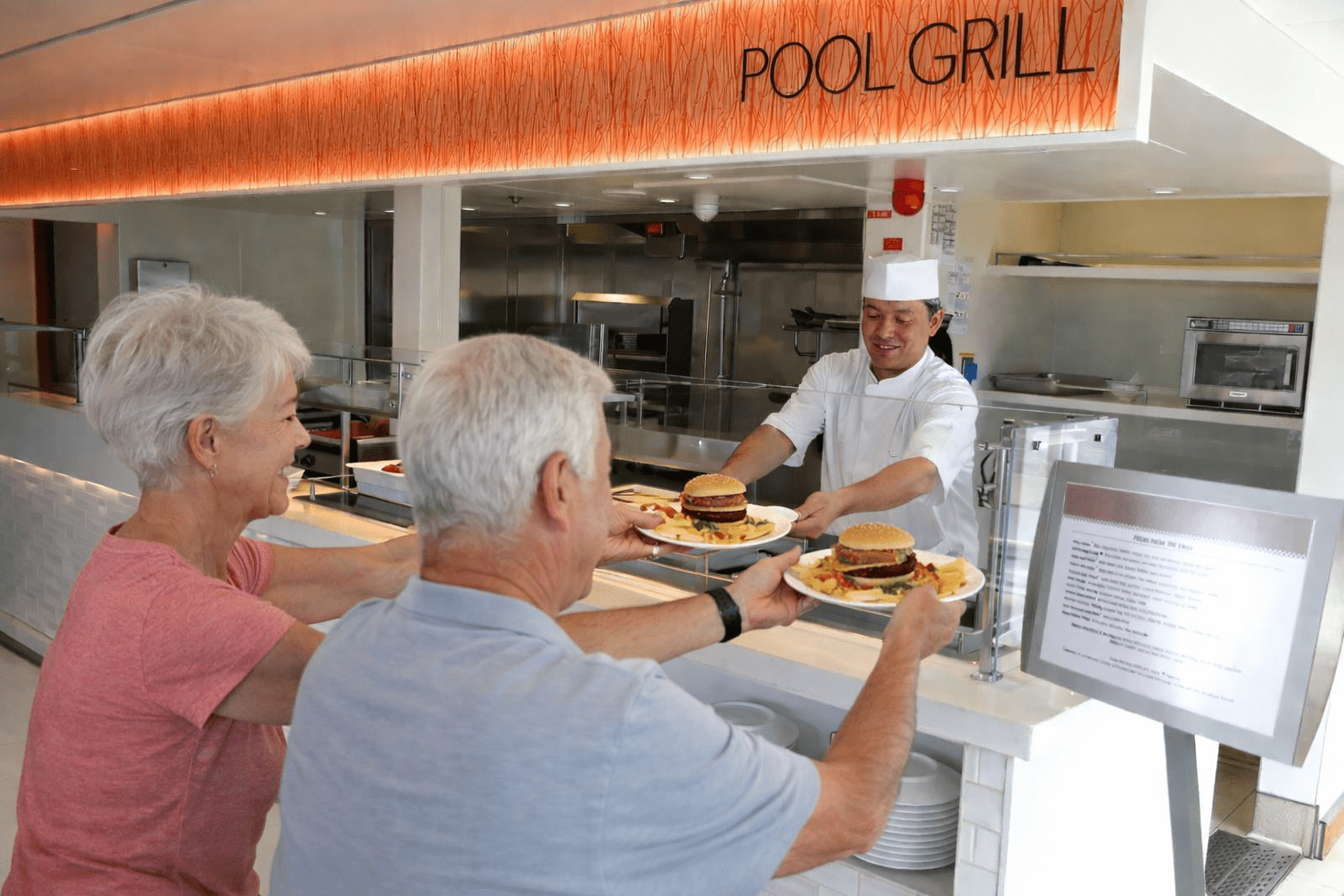
Pool Grill is designed for exactly that moment.
The menu is simple — burgers, hot dogs, fries, and a small selection of lighter options — but it delivers exactly what you need. Everything is prepared quickly, and the location makes it easy to grab food and return straight to your seat.
That convenience transforms lunch from an interruption into part of the experience.
If you’re also wondering how drinks fit into the onboard experience, our Viking Silver Spirits guide breaks down what the package includes, what it costs, and when it actually makes sense.
On sea days, the area becomes busier, but it remains manageable. There’s a steady flow of people, but rarely any sense of chaos.
It’s not trying to compete with the restaurants — and it doesn’t need to.
It serves a different purpose entirely.
Mamsen’s and Wintergarten: Slowing Things Down
Not every dining space on Viking is about full meals.
Mamsen’s, located within the Explorer’s Lounge, offers a quieter alternative. Inspired by Norwegian traditions, it focuses on lighter options such as open sandwiches, pastries, and waffles — including the distinctive brown cheese that many guests try for the first time here.
The setting itself makes a difference. Positioned at the front of the ship, it feels removed from the busier dining areas, creating a more relaxed and reflective atmosphere.
Wintergarten offers a similar shift in pace, particularly during afternoon tea. With its open layout and soft natural light, it becomes a place to pause rather than dine.
Neither venue is designed to be a main meal destination.
Instead, they provide balance — a way to slow down between more structured experiences.

Viking Cruise Dining Comparison Table
| Restaurant | Choice Level | Experience Style | What You’ll Notice | Rating |
|---|---|---|---|---|
| Manfredi’s | High | Relaxed | Consistent, reliable, easy to return to | ⭐⭐⭐⭐☆ (4/5) |
| Chef’s Table | None | Structured | Fixed menu, high risk if it doesn’t suit you | ⭐⭐☆☆☆ (2/5) |
| The Restaurant | Medium | Elegant | Consistent but rarely memorable | ⭐⭐⭐⭐☆ (4/5) |
| World Café | Very High | Flexible | Full control over your meal | ⭐⭐⭐⭐⭐ (5/5) |
| Pool Grill | Low | Casual | Quick, convenient, perfectly placed | ⭐⭐⭐☆☆ (3/5) |
| Mamsen’s | Low | Quiet | A slower, more relaxed alternative | ⭐⭐☆☆☆ (2/5) |
| Wintergarten | Low | Relaxed | Calm atmosphere, more about the setting than food | ⭐⭐☆☆☆ (2/5) |
Final Verdict: What Viking Dining Is Really About
By the end of the cruise, one thing became very clear.
Viking dining isn’t about chasing the most memorable meal.
It’s about finding what works for you.
That same mindset matters across the whole cruise, which is why our guide to Viking Ocean Cruises on a budget focuses on where to spend, where to save, and how to get the best value without feeling like you’re missing out.
And the key difference between each restaurant comes down to one simple idea:
Choice versus commitment.
Chef’s Table asks you to commit without knowing exactly what you’ll get.
Manfredi’s and World Café give you control — and that’s where we found ourselves returning again and again.
Once you understand that, the entire dining experience starts to make sense.