
Finding a quiet corner on a sea day can matter far more than the impressive size of the ship printed in a brochure. Yet the cruise ship space ratio quoted in reviews can give a misleading impression of how much room passengers actually have. A vessel might look exceptionally spacious on paper, only for its pool area to feel busy when everyone heads outside. Another, apparently less generous ship might provide comfortable lounges where it is easy to find a seat.
When we choose a cruise, we are not necessarily looking for the biggest ship or the longest list of attractions. We enjoy being able to read quietly, look out to sea, have a conversation without competing with background noise, and find somewhere pleasant to sit. Those are small pleasures, but they shape the whole experience. We began questioning the usual space figures after comparing Viking and Oceania, and that question became a much larger research project: what space can ordinary passengers actually use?
Why the Cruise Ship Space Ratio Can Mislead
Cruise reviews often publish a passenger space ratio alongside the ship’s length, passenger capacity and gross tonnage. A higher figure is commonly interpreted as meaning more space per person. It sounds logical, particularly when choosing between two ships carrying thousands of guests.
The problem is that the calculation does not measure the floor area available in restaurants, lounges, theatres or on sun decks. Instead, it divides a ship’s gross tonnage by the number of passengers, usually at standard double occupancy. That gives a useful broad comparison of ship scale, but it is not a measurement of personal elbow room.
Imagine two hotels with the same number of guests. One has a towering entrance atrium and large back-of-house areas. The other devotes more of its floor plan to gardens, sitting rooms and terraces. Judging which hotel feels roomier by its total enclosed volume would miss the most useful distinction. We believe cruise ships deserve the same scrutiny.
What Gross Tonnage Actually Measures
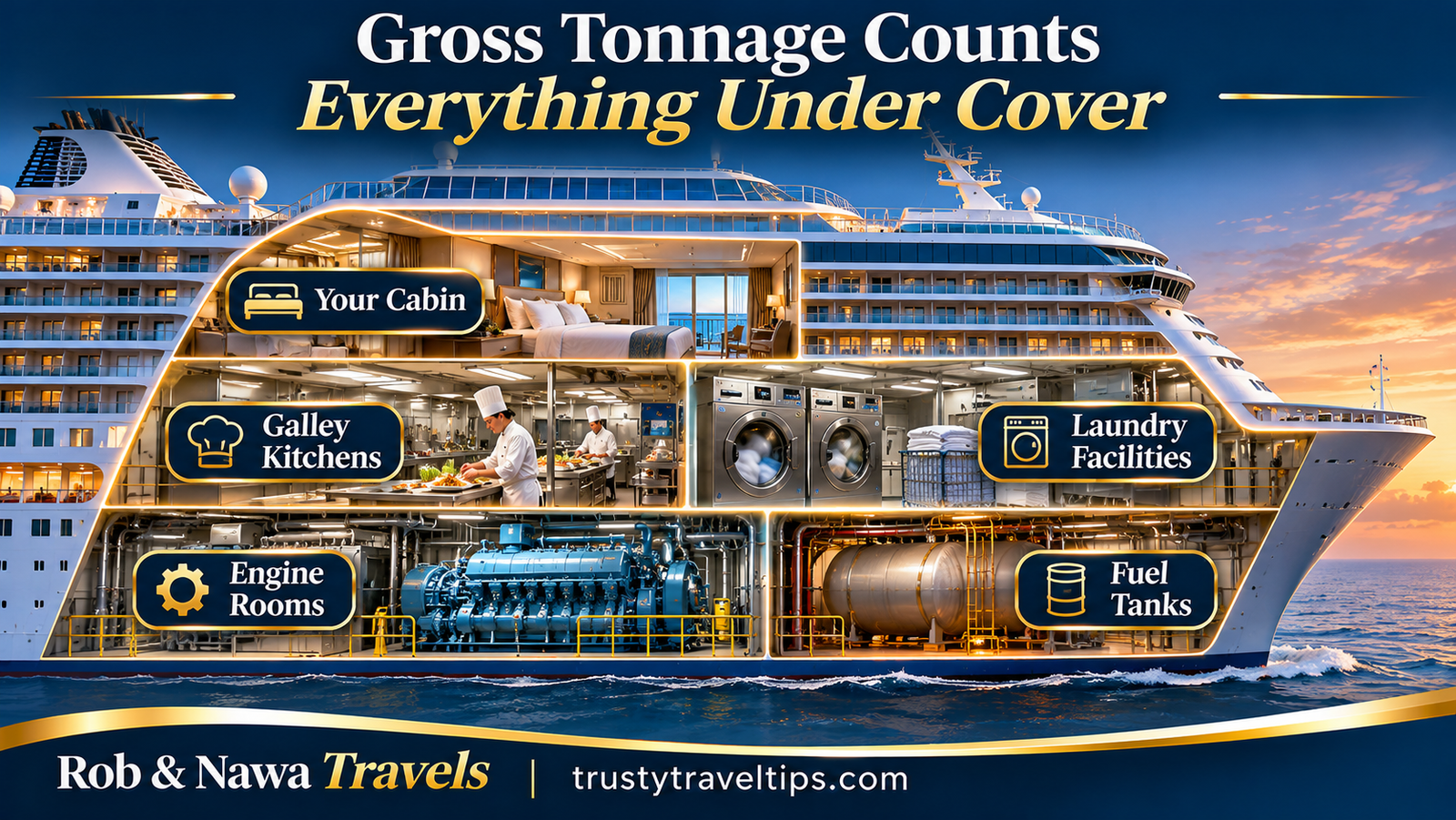
Gross tonnage, usually abbreviated GT, is a legitimate maritime measurement based on the enclosed volume of a vessel. It is not the ship’s weight, and a gross tonnage figure is not a number of square feet. The International Maritime Organization uses a formula related to the volume of enclosed spaces, a standard that also underpins several regulatory and administrative purposes.
On a cruise ship, that enclosed structure includes far more than the areas where passengers spend their leisure time. Cabins, corridors, crew facilities, kitchens, technical spaces and other enclosed sections all contribute to the vessel’s overall scale. Most of those places cannot help you find a sun lounger or a table for afternoon coffee.
Even the design of a high-ceilinged atrium can influence the enclosed-volume measurement without providing a corresponding increase in usable floor space. Gross tonnage therefore remains helpful for understanding the general size of a ship, but it tells us surprisingly little about how its public areas are arranged. Our objection is not that GT is wrong; it is that it is often used to answer the wrong question.
How We Estimated Usable Public Space per Passenger
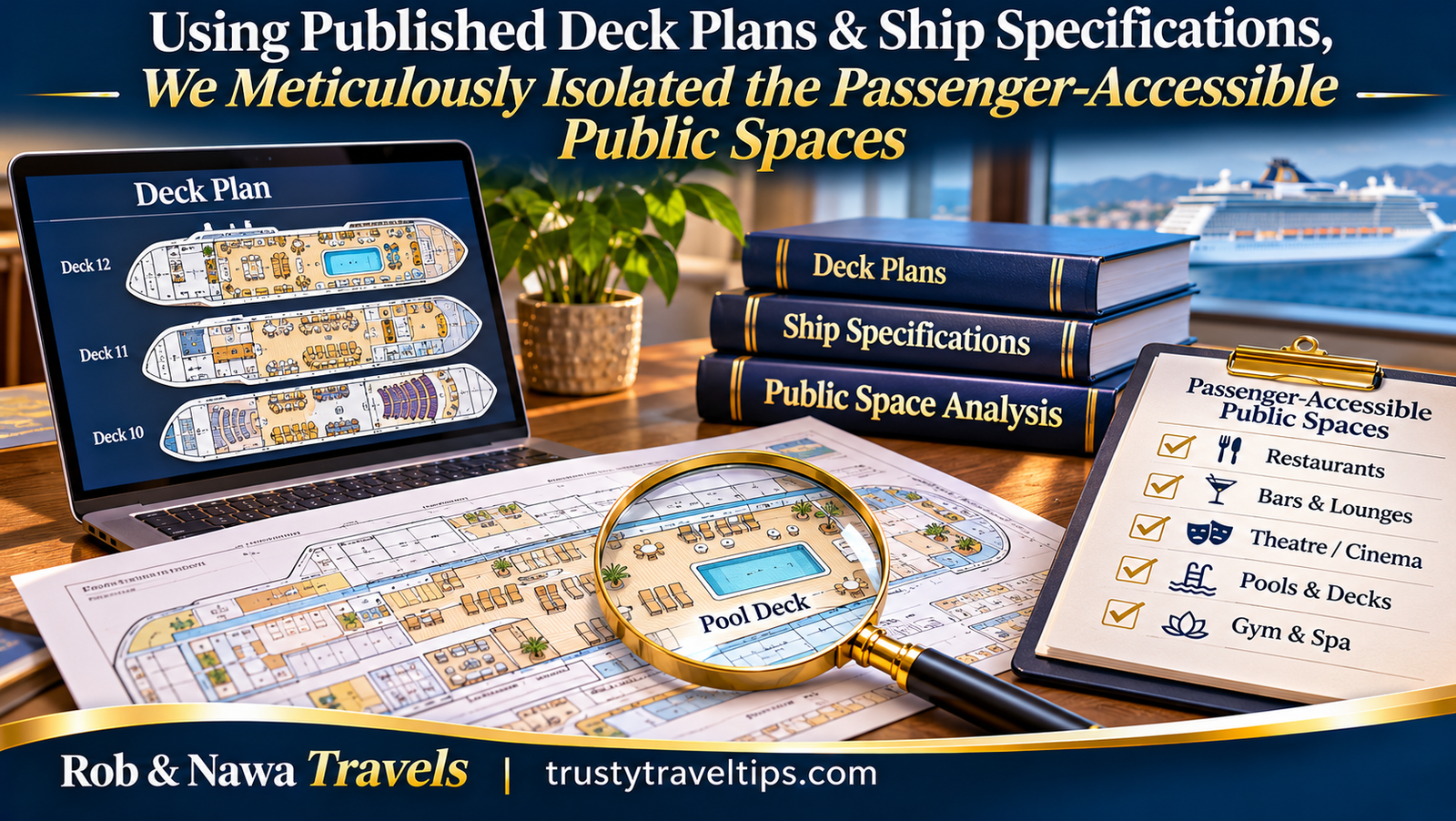
We wanted a comparison that reflected what guests can ordinarily access with their cruise fare. Our original project involved 144 deck-plan research models covering more than 150 ships across 14 major cruise lines. We worked from published deck plans, ship specifications and guest capacities, separating public floor areas from spaces that are private, restricted or used to operate the ship.
We counted the main restaurants and buffets, bars and lounges, theatres and showrooms, indoor recreation facilities, passenger-accessible pool areas and open decks. We excluded staterooms, private balconies, ordinary accommodation corridors, crew quarters, machinery spaces and venues restricted to particular passengers or requiring separate paid access. That distinction matters: a private suite terrace is wonderful for its occupants, but it should not inflate the space attributed to every passenger on board.
For each model, we estimated the accessible public floor area and divided it by the guest count at standard double occupancy. Crucially, we recorded indoor and outdoor space separately, rather than relying on a single headline figure. A warm-weather sea day and a cold, wet day can make entirely different demands on the same ship.
These figures are research estimates, not certified architectural measurements. Deck plans are not full engineering drawings, and actual passenger numbers vary by sailing. We use a consistent method to reveal meaningful differences, not to promise that a particular chair will be available at a particular time. Since the original video, our spreadsheet library has expanded to rankings covering more than 280 ships across 34 cruise brands; the examples below retain the estimates discussed in the video.
Norwegian Bliss vs Celebrity Ascent: Similar Ratios, Different Space
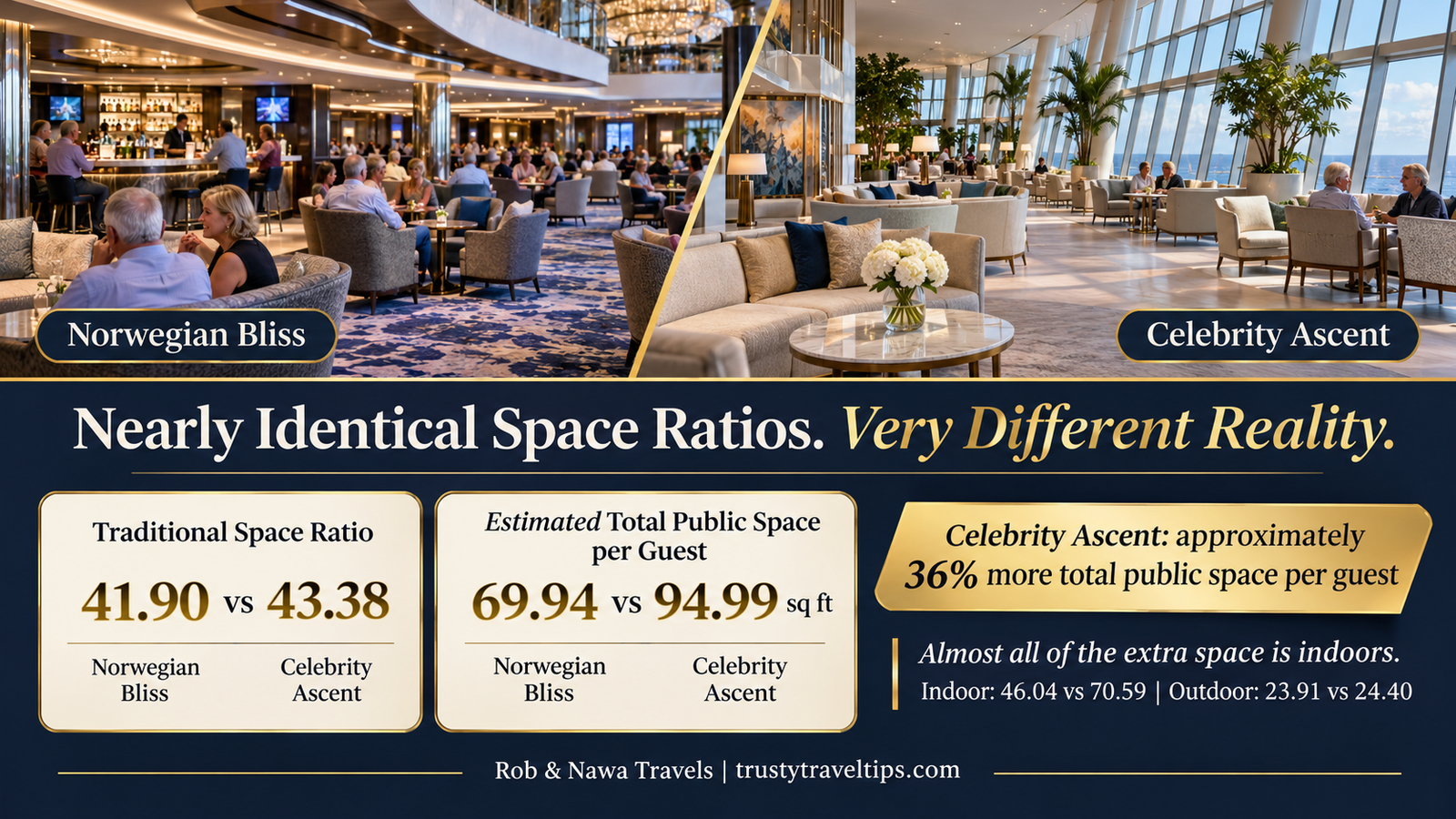
Two ships brought the weakness of the traditional calculation into sharp focus: Norwegian Bliss and Celebrity Ascent. They are substantial, modern cruise ships, but their conventional space ratios suggest they are remarkably alike.
In our research example, Norwegian Bliss measures approximately 168,000 GT and carries around 4,000 passengers at double occupancy. Dividing those figures produces a traditional ratio of about 41.9. Celebrity Ascent is smaller by gross tonnage, at approximately 141,400 GT, and accommodates roughly 3,260 guests. Its traditional ratio is about 43.4.
On a typical specification sheet, that difference looks modest. You could reasonably assume that passengers on both ships would enjoy much the same amount of breathing room. But when we estimated the actual indoor public floor area, the picture changed considerably.
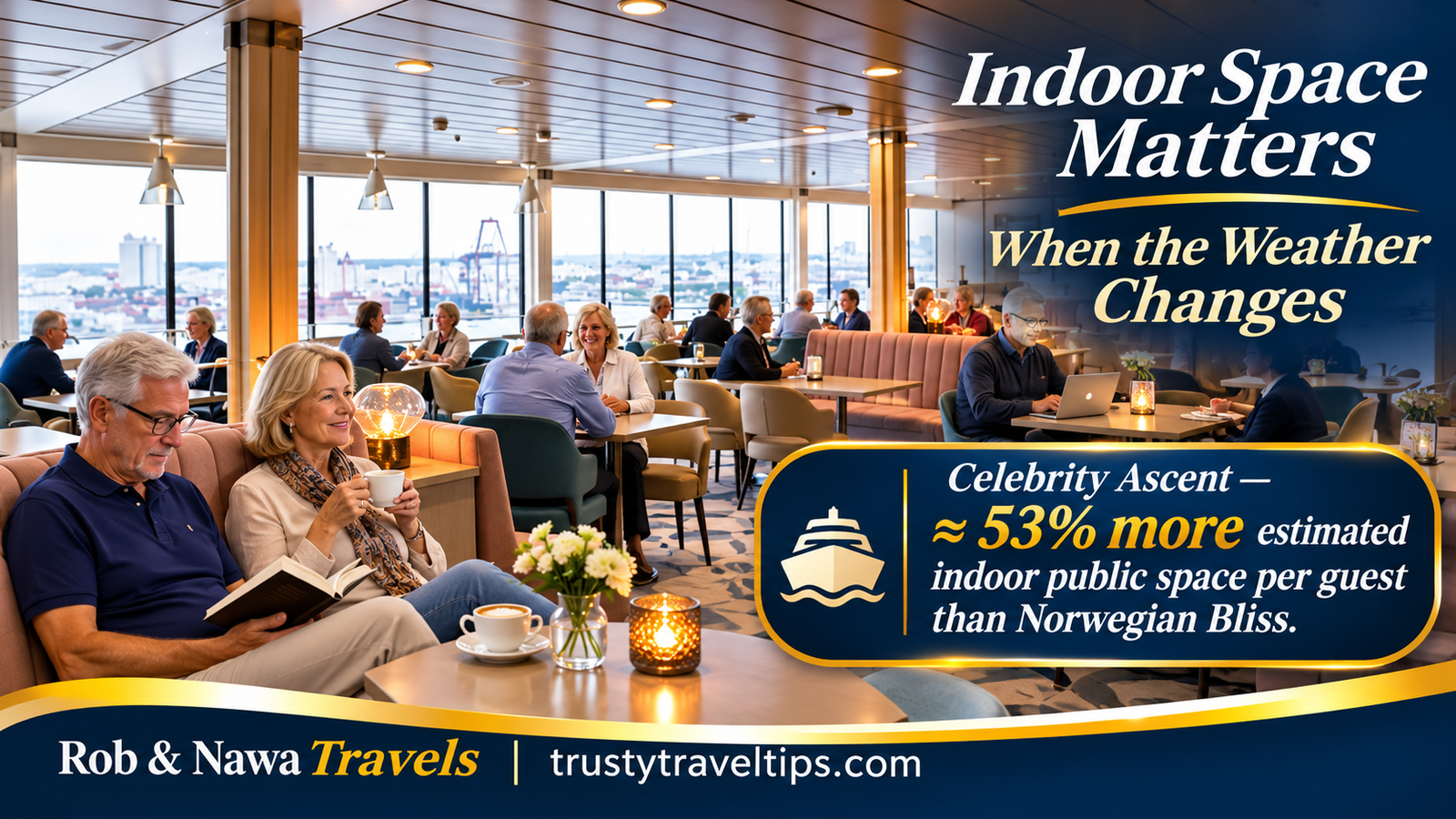
Our model puts Norwegian Bliss at approximately 46 square feet of indoor public space per guest, compared with 71 square feet on Celebrity Ascent. That is roughly 53% more indoor public floor area per passenger on Ascent, according to these estimates. Combining indoor and outdoor areas, the totals become approximately 70 square feet on Bliss and 95 on Ascent—a difference of around 36%.
It does not prove that one ship is always quiet or that the other is overcrowded. It does show why a tiny difference in the conventional GT ratio can conceal a far more substantial difference in the public floor area passengers share. A cruise ship space ratio alone cannot reveal that distinction. For us, that is information worth knowing before booking.
Why the Weather Changes Everything
Picture a Mediterranean cruise in summer. The sun is out, the sea is calm and passengers are spread around the pools, upper decks and outdoor bars. On that sort of day, generous open-air space can make a real difference. You might prefer a shady table outside to another lounge indoors, however attractive that lounge may be.
Now imagine sailing through the Norwegian fjords, Alaska or the North Atlantic when the weather turns cold and wet. The outdoor areas that seemed so inviting on a sunny afternoon may suddenly be much less appealing. People gather inside for coffee, lectures, reading, conversation or simply somewhere to enjoy the scenery without the wind.
This is why we do not believe a single total-space figure is enough. Indoor public space becomes especially important in cooler climates, while the amount and layout of outdoor space can matter more during warm-weather cruising. In the Bliss–Ascent example, most of the estimated advantage for Celebrity Ascent is indoors, which could become particularly relevant during poor weather.
If your next holiday involves the Mediterranean, our guides to luxury small-ship Mediterranean cruises and Mediterranean cruise lines for seniors offer further ways to compare atmosphere, ship style and comfort. An itinerary and a ship need to suit one another—not just look attractive separately.
Viking Ocean vs Queen Mary 2: Two Different Kinds of Spacious
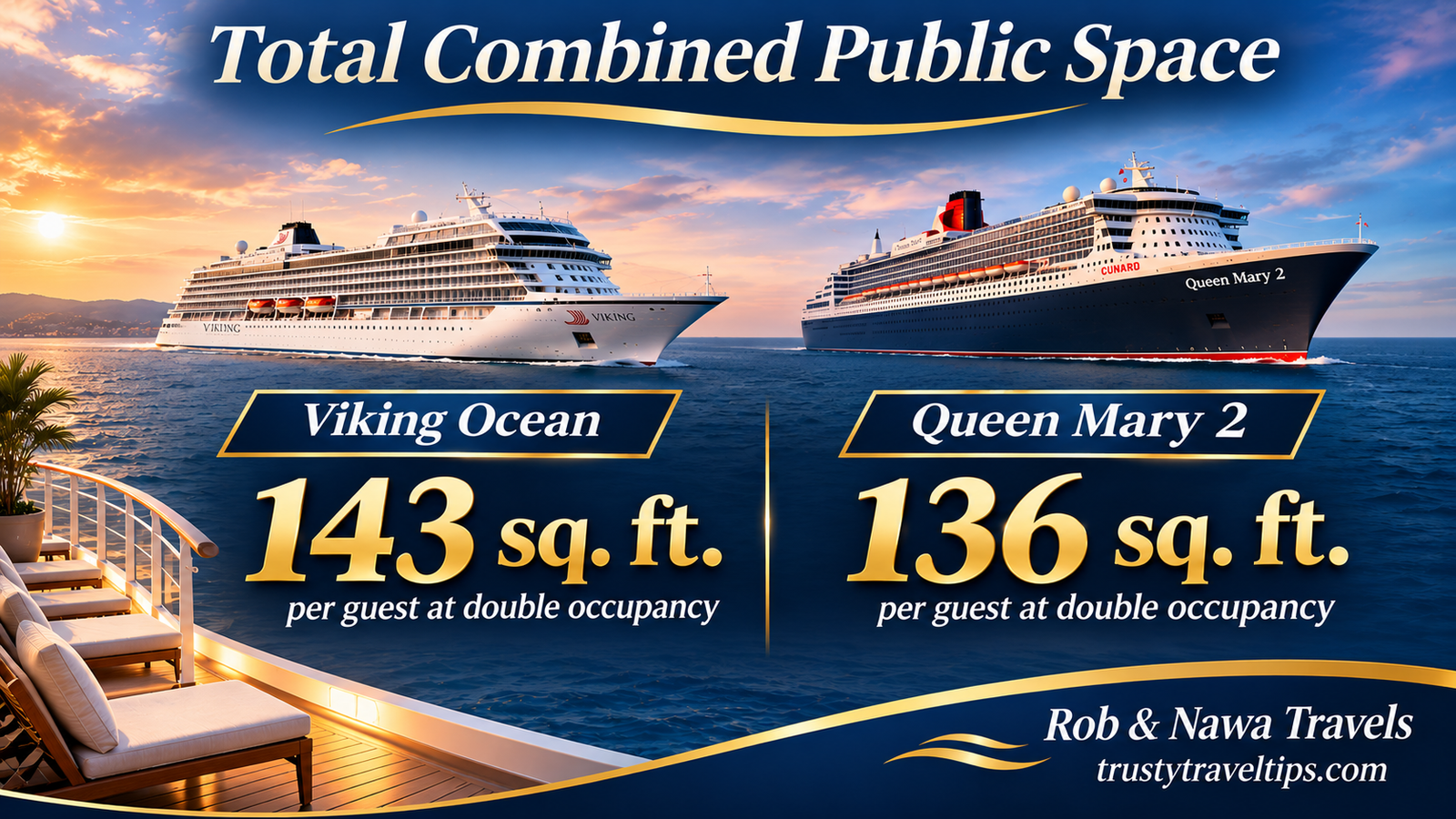
Our comparison between Viking’s newer ocean-ship design and Cunard’s Queen Mary 2 was particularly revealing because these vessels provide very different cruising experiences. Viking is an intimate, adults-only product with a calm Scandinavian atmosphere. Queen Mary 2 is a much larger ocean liner, known for a very different style of travel.
The difference in overall scale is dramatic. In our research comparison, Queen Mary 2 is over 149,000 GT and accommodates around 2,759 passengers at standard occupancy. Viking’s newer ocean design is approximately 54,300 GT with 998 guests. Yet their traditional passenger ratios are almost identical: about 54.1 on Queen Mary 2 and 54.4 on Viking.
That similarity might lead a reader to expect the same overall feeling of spaciousness. Our floor-area models tell a more interesting story. For indoor public areas, we estimated approximately 102 square feet per passenger on Viking, compared with 81 square feet on Queen Mary 2. Viking therefore has an estimated indoor advantage of about 25% in this comparison.
Outdoors, the relationship reverses. Our figures suggest around 41 square feet of outdoor public space per Viking guest and approximately 54 square feet on Queen Mary 2—roughly 33% more on the Cunard ship. When indoor and outdoor spaces are combined, the totals are much closer: approximately 143 square feet per guest for Viking and 136 for Queen Mary 2.
Neither set of figures tells you which ship you ought to prefer. They tell you that the location of the space can matter as much as the amount. Someone planning cooler-weather cruising may value Viking’s greater estimated indoor allocation. A passenger who loves walking open decks and sitting outside could see a different advantage in Queen Mary 2.
Retractable Pool Roofs Need Special Treatment

There was another complication we could not ignore: both designs have pool areas protected by retractable glass roofs. Viking’s main pool and Queen Mary 2’s Pavilion Pool can provide a sheltered environment when conditions are less inviting outside.
In our research model, we treated those roof-protected pool zones as indoor space because they can serve as climate-protected public areas in cold or wet weather. Without a consistent rule, comparisons between ships with open pools and ships with covered pools could become misleading for the very itineraries where shelter matters most.
Of course, opening a roof on a sunny day changes how the area feels. Our indoor designation is a modelling choice, not a claim that passengers never experience these spaces as outdoor facilities. It is another reason we explain our methods alongside the results rather than presenting the numbers as indisputable facts.
Why a Spacious Cruise Ship Can Still Feel Crowded
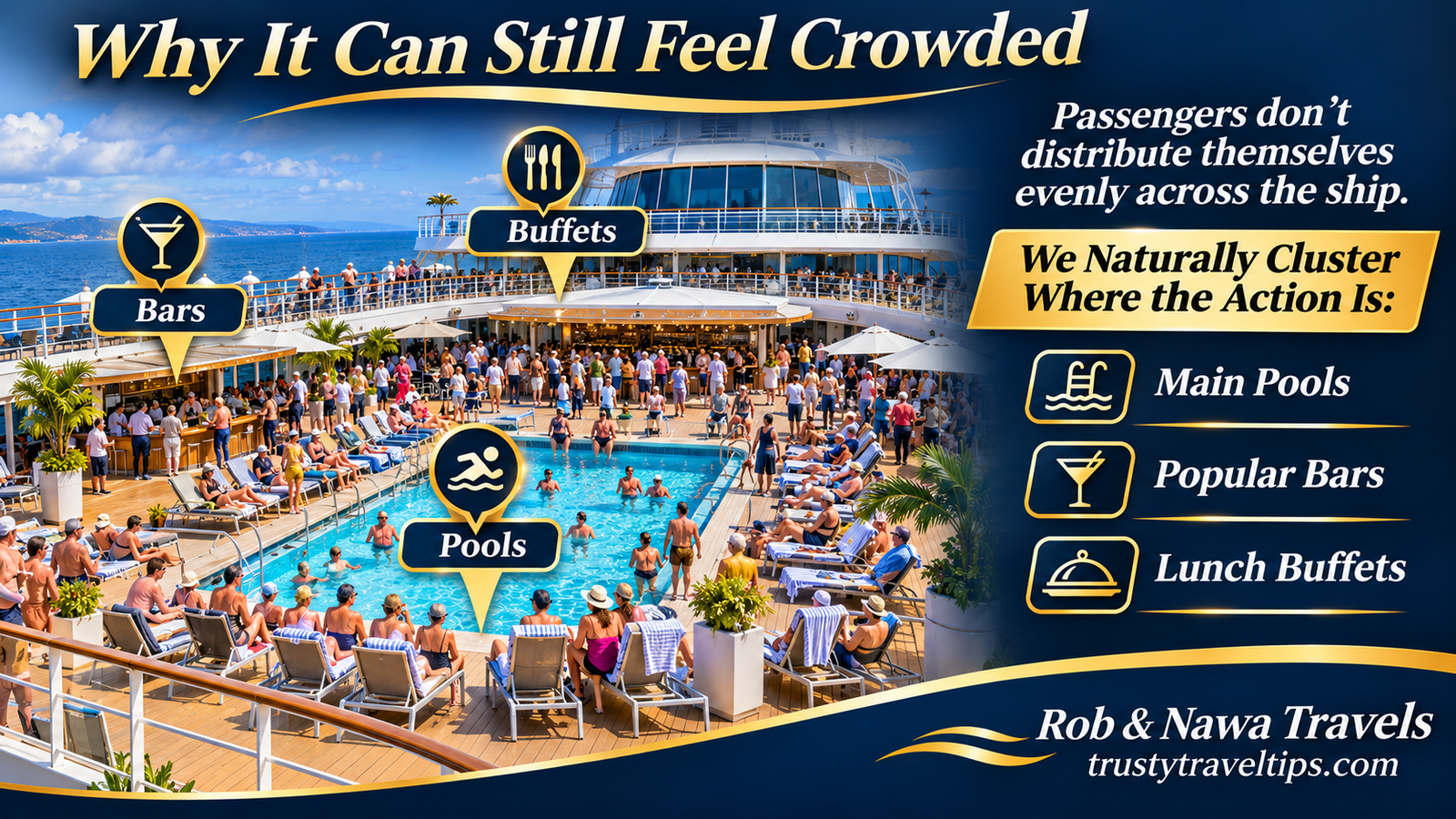
Here is where our own experience becomes important. We have enjoyed several Viking cruises, and we value the atmosphere and thoughtful design. Yet on some warm-weather sea days, we have struggled to find an available sun lounger or even a vacant table around the main pool.
That experience is not proof that Viking ships are generally overcrowded. It illustrates something that no deck-plan measurement can completely predict: people congregate in the places they like best. A ship may offer beautiful, underused lounges elsewhere while its most popular pool area feels busy. A restaurant can experience a lunchtime rush even when the ship has a generous total public-space allowance.
Weather, time of day, passenger habits, the location of facilities and the way people move between them all affect how crowded a ship feels. Public floor space per guest is therefore a better starting point for our research, not a perfect crowding forecast.
When you read reviews, it is worth noticing comments about seating availability, buffet queues, sheltered lounges and busy pool decks. Those observations can add the human element that a mathematical comparison cannot capture.
How to Choose a Ship That Suits Your Journey
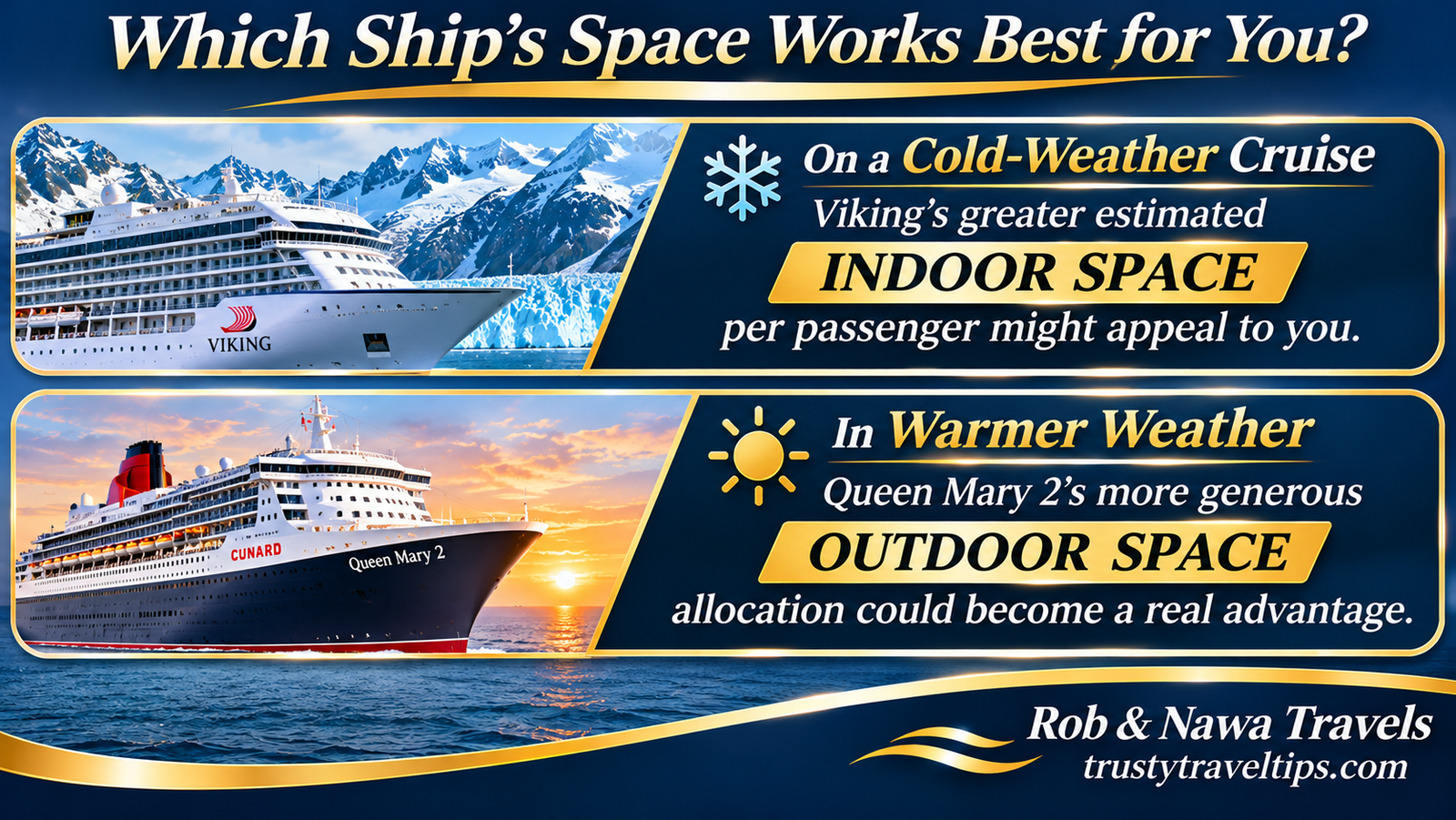
We would start with the type of voyage you actually want. If you are dreaming of warm afternoons by the pool, study the ship’s open decks, outdoor seating and shade as closely as its restaurants. If you are heading north in autumn, think about the lounges, indoor promenades, sheltered viewing areas and places where passengers can spread out when the weather closes in.
Then look at passenger numbers and the design of the public rooms. Two ships with similar capacities can distribute their space very differently. A large atrium makes a striking impression, but a range of smaller, comfortable lounges might be more useful to you. Equally, the presence of a wide outdoor deck means little if you prefer spending your time indoors.
We would also resist selecting a cruise entirely on space. Ports, time in each destination, onboard atmosphere and fare inclusions still matter. For Mediterranean planning, our article on the best Mediterranean cruise itineraries for first-time cruisers explores the route itself, while our 2027 Mediterranean cruise price comparison provides a separate perspective on value.
Once you have a shortlist, the public-space estimates can act as another filter. If two itineraries appeal equally, knowing which ship offers more accessible indoor or outdoor area may help you make the final decision with greater confidence.
Explore Our Cruise Comparison Spreadsheet Library
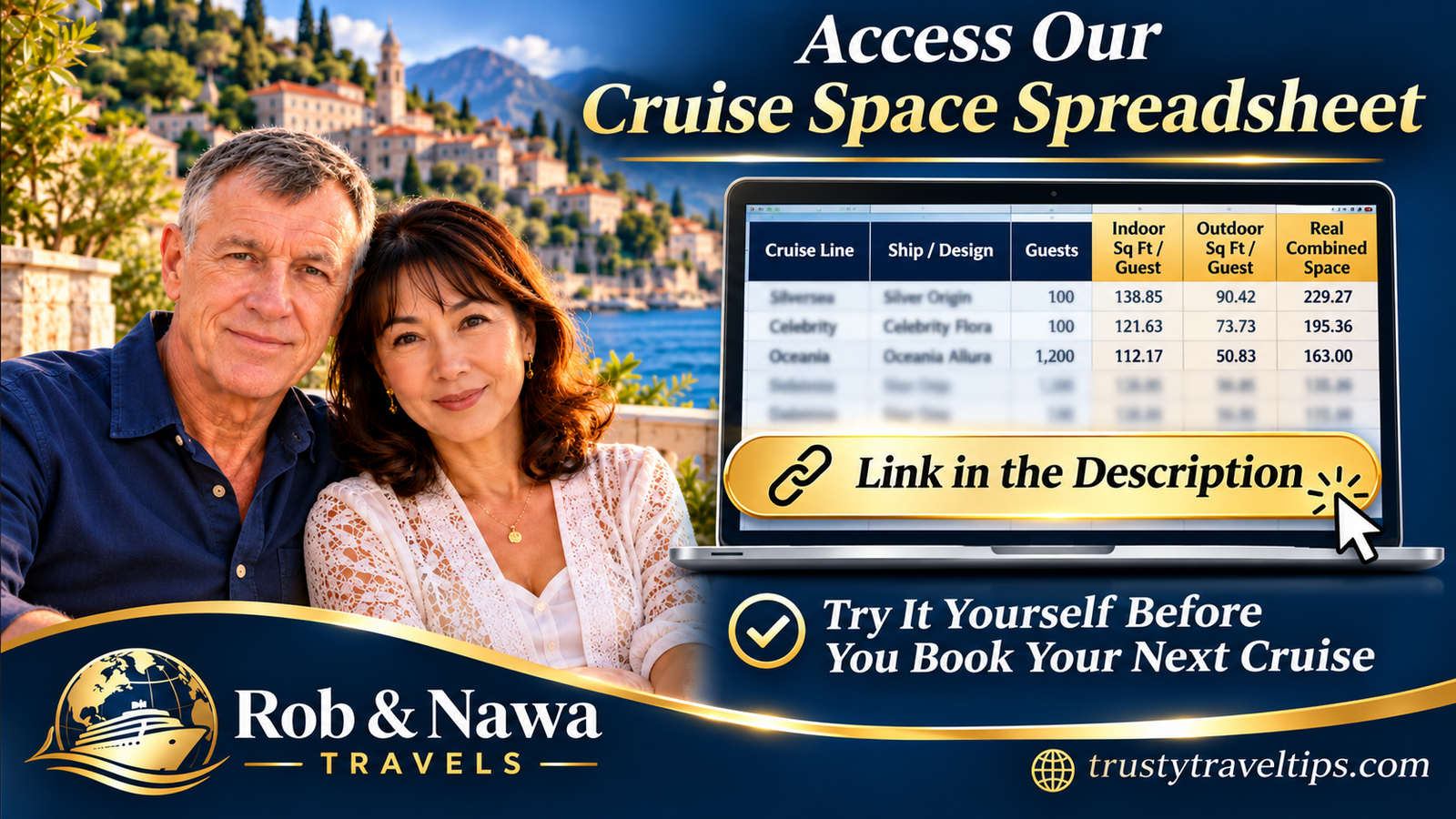
Rather than asking viewers to take our conclusions on trust, we have made the underlying research available through our Cruise Comparison Spreadsheet Library. It includes the guest-space research as well as other ship and cruise-line comparisons. The expanded rankings cover more than 280 ships across 34 cruise brands, with indoor, outdoor and total space figures.
The library lets you explore ships according to the areas that matter to your own holiday. Someone considering a winter voyage may pay particular attention to indoor space, while a traveller planning a sunny itinerary may begin with outdoor decks. We recommend treating every figure as an estimate and reading the accompanying notes before drawing conclusions.
If you are moving from research to shopping, you can also browse luxury cruise options or compare Mediterranean departures. These are affiliate links; we may earn a commission if you book through them, at no additional cost to you. We are not travel agents, and our research is intended to help you compare rather than steer you towards a particular booking.
The Bottom Line: Measure the Space You Can Enjoy
A bigger cruise ship is not automatically roomier, and a higher cruise ship space ratio does not guarantee an uncrowded pool deck. The Norwegian Bliss and Celebrity Ascent estimates revealed a substantial difference that their conventional ratios barely suggested. Viking and Queen Mary 2 showed something equally important: two ships can have similar total public space while allocating it very differently between indoors and outdoors.
That is the lesson we hope readers take away. Look beyond gross tonnage, consider where you will actually spend your time, and match the ship’s usable space to the weather and style of cruise you enjoy. The best ship is not necessarily the largest—it is the one whose space works best for you.