
We spent 2 days in Interlaken in December as part of our European train journey, and it quickly became one of the most visually striking stops of the trip.
Visiting in winter gives Interlaken a distinct atmosphere. Snow rested lightly on rooftops, the surrounding peaks looked sharper against the cold sky, and the town moved at an unhurried pace. During our stay, we didn’t encounter heavy crowds — in fact, it felt more like a working town than a tourist hub, with locals going about their day. After some of the larger European cities we had just visited, the slower rhythm was a welcome change.
We came hoping to see snow. While there was only a light dusting within the town itself, the nearby mountains were capped in white, creating that classic Swiss alpine backdrop we had imagined.
This guide is based entirely on our December visit — what’s realistically worth doing in winter, what surprised us in terms of costs, and how to structure 2 days in Interlaken when snow, shorter daylight hours and mountain weather all come into play.
2 Days in Interlaken in Winter: Quick Summary
- Ideal stay: 2 days is enough for winter sightseeing
- Best for: Scenic views, relaxed travel, and alpine atmosphere
- Key highlights: Mürren, Höhematte Park, lake walks, mountain views
- Winter trade-offs: Shorter daylight hours and limited lifts
- Cost level: Expensive (especially mountain excursions)
- Getting around: Excellent train connections and local transport
- Best approach: Focus on one major mountain trip + slow exploration
Is 2 Days in Interlaken Enough in Winter?
For most travellers, two days is enough. If you’re visiting primarily for winter sports such as skiing or snowboarding, you may choose to stay longer. For us, the focus was sightseeing rather than high-energy alpine activities. At this stage of our lives, we’re more interested in scenic views, comfortable walking and soaking in the atmosphere than racing down a mountain.
Getting to Interlaken is easy by train. You can arrive from Bern or Lucerne and we came from Lucerne after a couple of days spent there and the nearby Mt. Pilatus. You can read about it in our Lucerne Travel Guide.
Interlaken itself is compact and easy to navigate. The real question isn’t how much time you need in town — it’s how you choose to spend it.
Winter does limit some hiking routes and seasonal lifts, but it enhances the alpine setting in other ways. Snow-capped peaks, frosted paths and quiet lake edges give the region a calm, cinematic quality that feels distinctly different from other times of year.
Two days allowed us to:
-
Explore the town at a relaxed pace
-
Visit one major mountain excursion
-
Enjoy the lakes and viewpoints
-
Avoid rushing between expensive activities
If we were returning in winter again, we would structure it exactly the same way.
Day One: Winter Views & Lakes
Winter Viewpoints Around Interlaken
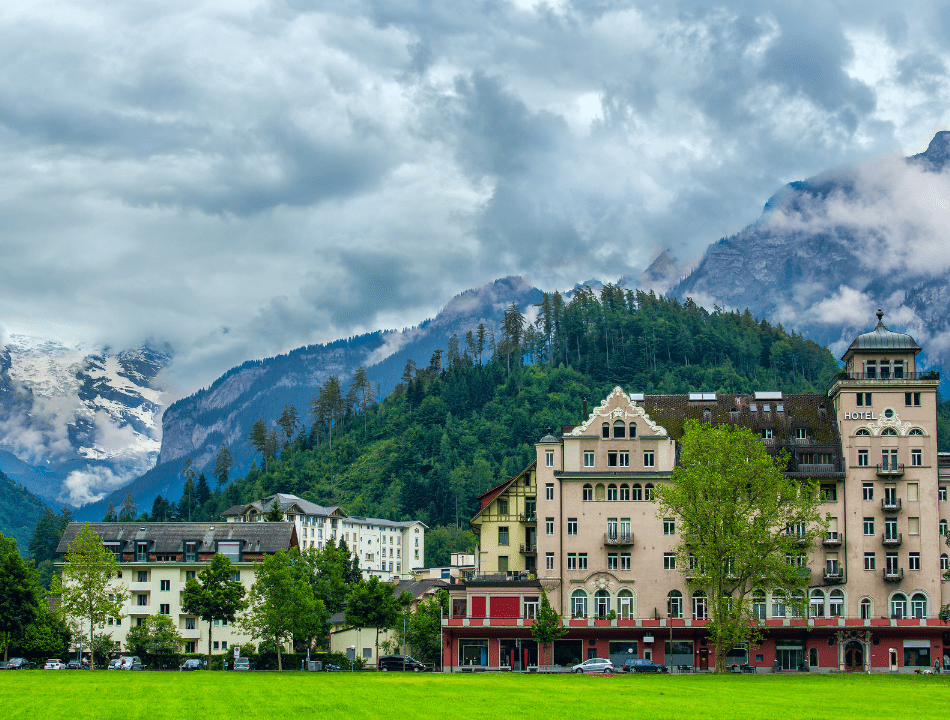
One thing to be aware of in winter is that not all viewpoints operate year-round. For example, Harder Kulm — one of Interlaken’s most popular summer viewpoints — is typically closed during the colder months, and the funicular does not run.
Instead, winter views come from the surrounding mountains that remain accessible, such as Jungfraujoch or certain mid-altitude villages like Mürren and Wengen. Even without going high into the Alps, simply walking along the Aare River or around Höhematte Park gives you clear views of the surrounding snow-covered peaks.
In winter, the scenery feels closer and more dramatic. The mountains dominate the horizon, and even at town level you’re constantly aware of the alpine setting.
Walking Interlaken in Winter

Interlaken is flat and easy to explore on foot, even in colder months.
No first day in Interlaken is complete without spending time in Höhematte Park, the wide open green space that forms the heart of the town. Stretching between the two main train stations, this large meadow is framed by the Eiger, Mönch and Jungfrau peaks in the distance — a view that constantly reminds you that you’re in the heart of the Swiss Alps.
Today, Höhematte doubles as Interlaken’s official paragliding landing zone. Even in winter, when conditions allow, you may see colourful canopies drifting down against a snowy mountain backdrop — a striking contrast to the stillness of the park below.
The park also holds cultural significance thanks to the Yash Chopra Statue. Yash Chopra was a highly influential Indian film director whose romantic films frequently featured Swiss landscapes, helping introduce generations of Indian travellers to the region. His connection to Interlaken was so strong that a statue was unveiled in his honour in 2011, and it has since become a small pilgrimage site for Bollywood fans.
Even if you’re unfamiliar with his work, the statue represents an interesting layer of Interlaken’s international appeal. It’s a reminder that this alpine town has long been part of cinematic imagination.
In winter, Höhematte feels especially atmospheric. The grass may be lightly frosted, the mountains appear sharper in the cold air, and the open space gives you uninterrupted views in every direction. We found it to be a peaceful place to walk, sit briefly, and take in the scale of the landscape before moving on to explore the rest of town.
Surrounding the park you’ll find cafés, chocolatiers and small restaurants — making it a natural place to pause for coffee or simply enjoy the mountain light as it shifts toward late afternoon.
Day Two: A Winter Day Trip to Mürren
On our second day, we decided to visit Mürren, a car-free mountain village perched high above the Lauterbrunnen Valley.
Getting there is part of the experience. From Interlaken, we took the train toward Lauterbrunnen and then continued by mountain transport — a combination of train and cableway/funicular that gradually lifts you into a different world. As the altitude increases, the scenery becomes more dramatic and snow coverage more consistent.
Mürren is a well-known winter base for skiers and snow enthusiasts. In peak season, it’s popular for its access to the Jungfrau ski region, and the village has that classic alpine-resort feel — wooden lodges, chalet-style apartments and hotels scattered across the hillside, all facing enormous mountain views.
When we arrived early in the morning, however, it was surprisingly quiet.
Instead of crowds of skiers, we mostly saw workers operating machinery and clearing snow from paths and rooftops. The stillness added to the atmosphere. It felt less like a busy resort and more like a functioning mountain village going about its daily rhythm.
We spent a couple of hours simply walking through town. Snow lined the paths, rooftops were thickly dusted, and the mountain backdrop — particularly the Eiger, Mönch and Jungfrau peaks — felt almost theatrical in scale.
For Nawa, this was a special moment. She had never walked knee-deep in snow before, and Mürren delivered that experience in the most picturesque setting imaginable. Watching her step carefully through the powder, surrounded by alpine scenery, became one of the highlights of our entire Swiss journey.
We eventually settled into one of the local cafés for a relaxed brunch. Sitting inside a warm chalet-style space while snow blanketed the landscape outside felt quintessentially Swiss.
Mürren doesn’t overwhelm you with attractions. Its appeal is atmosphere. In winter, that atmosphere is amplified — quieter streets, crisp air, and panoramic views that stretch far beyond the valley below.
For us, it was the perfect winter day trip from Interlaken.
What Interlaken Is Like in December
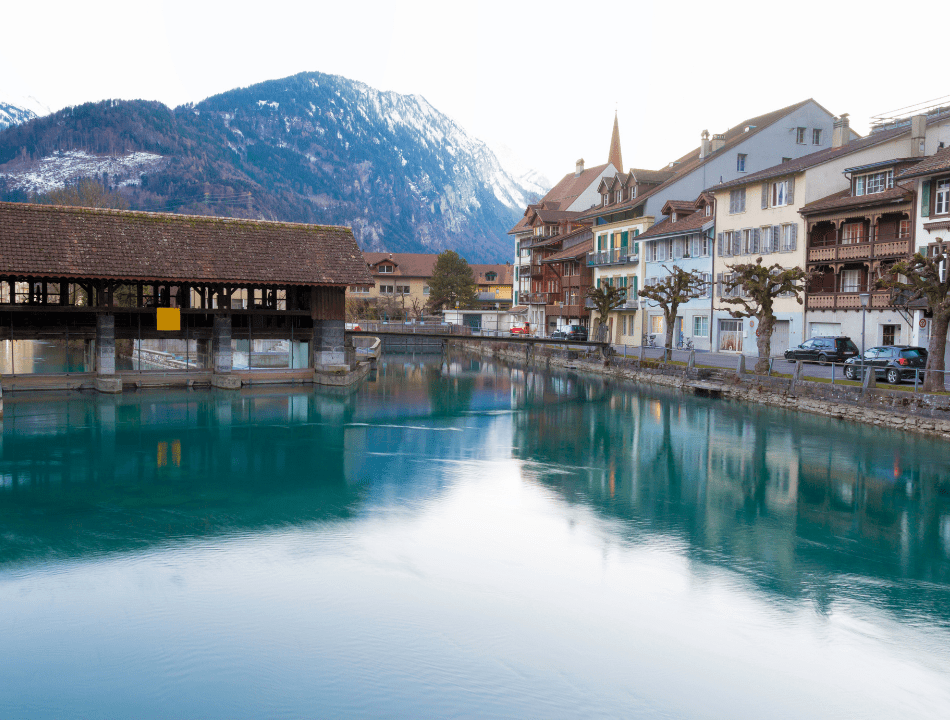
December felt calm.
We did not experience heavy crowds. Restaurants were available without long waits. Transport ran smoothly, though some summer-only routes were closed.
The shorter daylight hours are something to factor in. It gets dark early, which means starting mountain excursions earlier in the morning is important.
The upside?
Snow transforms the region into something cinematic.
Where to Stay in Winter
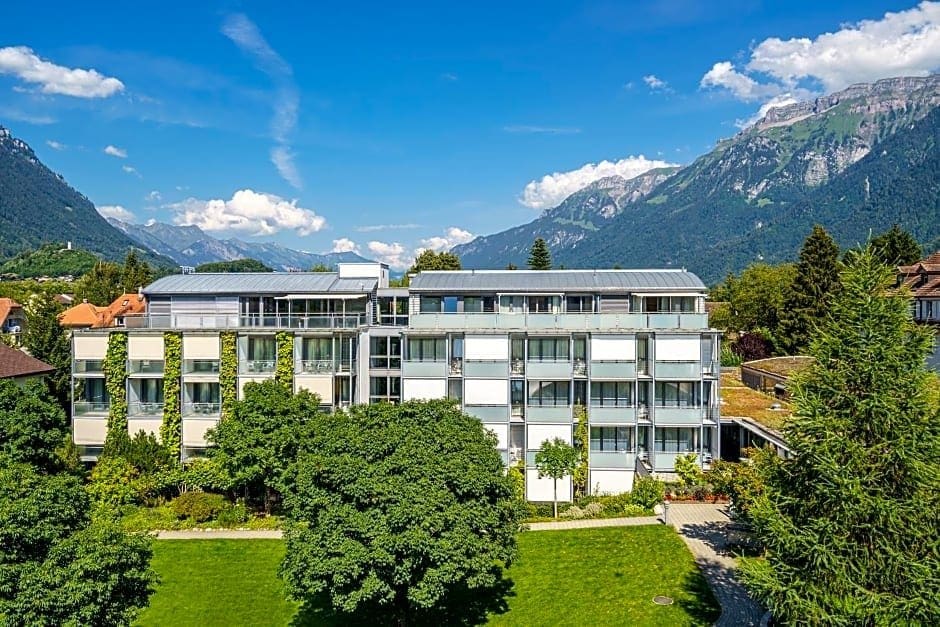
In winter, staying close to the train station makes practical sense. Cold weather makes extra transfers less appealing.
We stayed at Hotel Artos Interlaken, which was comfortable and within walking distance of the station. Buses also stop nearby, which we used a couple of times getting to and from the town centre.
If you’re comparing accommodation options across the region, especially between Interlaken, Wilderswil and higher alpine villages, our guide to finding accommodation in Switzerland explains how to choose the right base depending on transport, budget and season.
Prices fluctuate significantly in winter depending on ski demand and holiday periods, so comparing availability on Booking.com before committing can save you money. Our guide on How To Find Cheaper Hotel Deals is a must read before you book.
Travel Costs in Winter
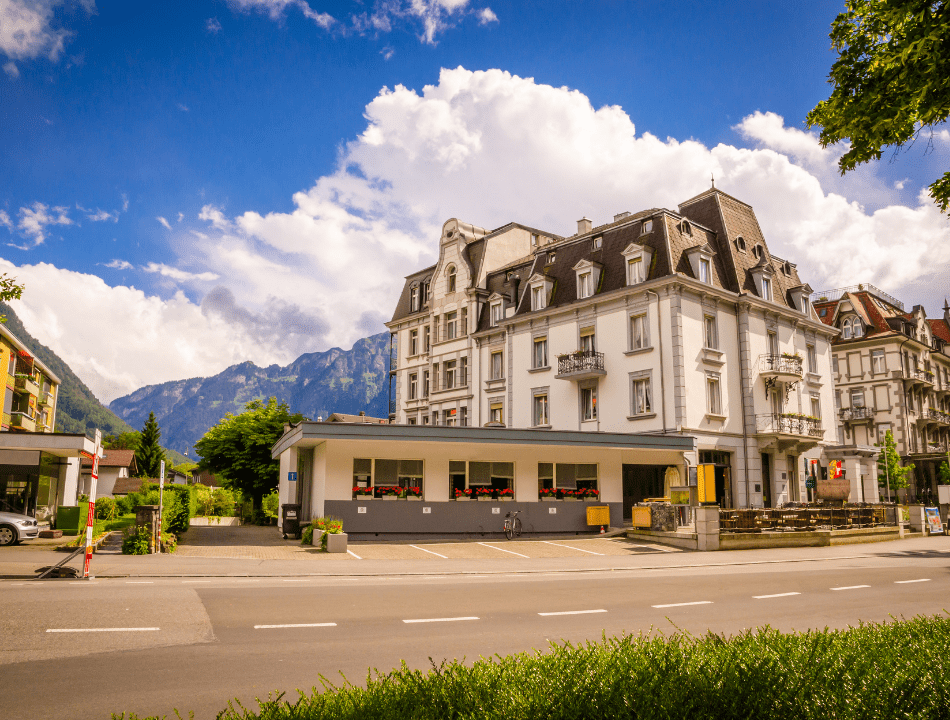
Switzerland remains expensive regardless of season.
Budget meals start around CHF 15–20, while casual sit-down dining can reach CHF 35–45 per person. Coffee typically costs CHF 4–6.
Mountain excursions are the main cost driver. In winter, the temptation to “do it all” can quickly inflate your daily spend.
Switzerland uses the Swiss Franc (CHF), not the Euro. If you’ve been travelling elsewhere in Europe and using Euros, this is the point where the currency changes.
Card payments are widely accepted across Switzerland, including on public transport, in restaurants and for mountain excursions. You generally won’t need large amounts of cash, although having a small amount of CHF can be useful for minor purchases or smaller establishments.
Using a low-fee card such as Wise can help reduce foreign transaction and currency conversion costs when paying for rail passes, hotels and alpine excursions. We’ve found the Wise app particularly convenient because it allows you to convert funds into different currencies in advance and see exchange rates clearly before spending.
What we recommend avoiding is airport currency exchange counters or selecting “pay in your home currency” at card terminals or ATMs. That option often applies dynamic currency conversion at an unfavourable rate. Choosing to pay in Swiss Francs instead usually gives you a better exchange rate through your card provider.
In an already expensive country, small currency decisions can quietly add up.
How to Get Around in Winter
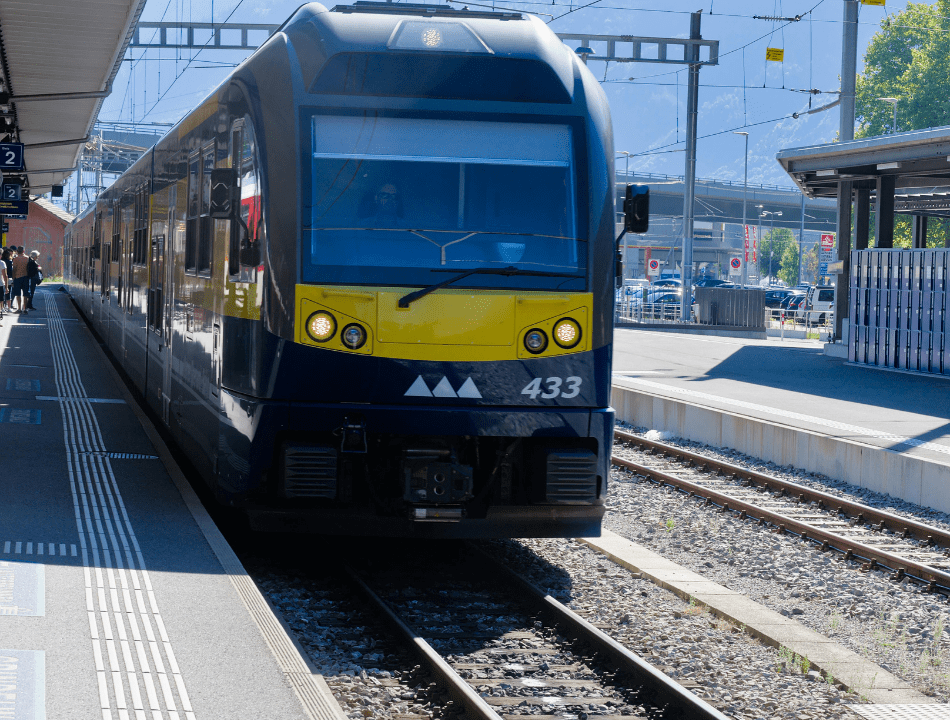
Interlaken is extremely well connected by train. If you’re planning your route in advance or comparing rail passes, checking timetables and ticket options through Rail Europe can make it easier to map out longer-distance journeys before you arrive in Switzerland.
Even in December, rail services to Lauterbrunnen, Grindelwald and surrounding villages ran smoothly.
The SBB Mobile app is invaluable for checking live timetables and platform changes, particularly in winter when weather can affect conditions.
Interlaken works especially well as part of a wider rail itinerary. If you’re combining this stop with Lucerne, our guide to 2 days in Lucerne shows how easily the two destinations complement each other.
Final Thoughts on Our Interlaken Travel Guide: Would We Return in Winter?
Absolutely.
Interlaken in winter feels calmer, more atmospheric and more cinematic than we expected.
Two days felt balanced. We saw enough to appreciate the setting without exhausting ourselves or overspending on every mountain excursion.
Would we return? Yes — particularly in winter.
There’s something about seeing the Jungfrau region dusted in snow, with frozen paths and quiet streets, that makes it feel like the postcard version of Switzerland.
If you approach it with realistic budgeting and a flexible weather plan, Interlaken in December can be one of the most memorable stops of a Swiss rail journey.
Watch our video on our visit to Interlaken